I didn’t understand how special New Zealand was until we started driving through it. Four weeks on the road, driving nearly 5,000km, this country surprised us every day, and somewhere between the early-morning starts, the scenic drives, and the amazing hikes, it completely stole our hearts.
Below you will find our 4-week road trip itinerary that let us hit the iconic spots without feeling rushed. We balanced geothermal wonders, beautiful beaches and Māori history on the North Island with epic fjords, glaciers, and hikes on the South—perfect for first-timers in a campervan or rental car. We chose late summer for the best weather and slightly fewer crowds than in January, although some places were busier than others.
Quick Facts / At-a-Glance Summary (for the Skimmers 😊)
- North Island (11 days) → Ferry → South Island (15 days)
Why this split? The South Island has more dramatic scenery per km, so we allowed extra time there. - Rental car and hotels or a campervan? We went with the rental car option combined with travel hotels, but this itinerary would also suit those who prefer a campervan. It is worth noting that if you choose to travel in a campervan, you cannot simply park and sleep anywhere, as freedom camping is heavily regulated. See freedom camping rules 2026
- When to go? We chose late summer/early Autumn (February into March) for the BEST weather and fewer crowds than in January. If you want fewer crowds but unpredictable weather, opt for Spring (Sept – Nov).
- How to get there? We flew with Singapore Airlines from London Heathrow, including a 5-day stopover in Perth, WA, on the outbound journey, and a 2-day stopover in Singapore on the return. You can purchase a “round the world” ticket or select different stopovers based on your airline choice.
- Apps used: Wikiloc (for hiking), Grok and ChatGPT for driving stops on our transfer days, Get Your Guide (for booking “experiences”), and Polar Steps for recording our journey and adding photos and notes. Uber works especially well in NZ for evenings when you want a few drinks without driving.
- Itinerary – We worked with friends who knew New Zealand well to make the most of our time. We arranged our trip through Flight Centre, who were excellent (see budget separately)
- Best Tip: On drive days, we would ask Grok or ChatGPT for scenic routes and stopping points. Both apps suggested excellent stops not listed in the books.
- Budget: You’ll have to read through the blog to the end 😊
Detailed Day-by-Day Itinerary
North Island (11-day Itinerary)
Days 1–2 – Auckland. We arrived early morning after an overnight flight from Perth, leaving our luggage at the hotel since we were too early for check-in. To wake ourselves up, we hiked up Mount Eden, the highest point in central Auckland, offering 360-degree views of the skyline and harbour. Other highlights included the Sky Tower and enjoying quality food and drinks by the harbour. We also took a 12-minute ferry to Devonport, a beautiful seaside town, where we hiked to North Head for excellent views back to the Auckland skyline.
Days 3–4 – Bay of Islands / Northland (Paihia base). It rained during our two days here, so we missed the Hole in the Rock trip. However, we visited the Waitangi Treaty Grounds, which were fantastic, and we learned a lot about Māori culture. We also found a great pub, The Tipsy Oyster, with superb food, good beer, and a lively atmosphere. The rain made the Haruru Falls and the Whangarei Falls superb. Its a long drive to Paihia so if you are looking to shorten your trip, missing it out would save at least 2 days.
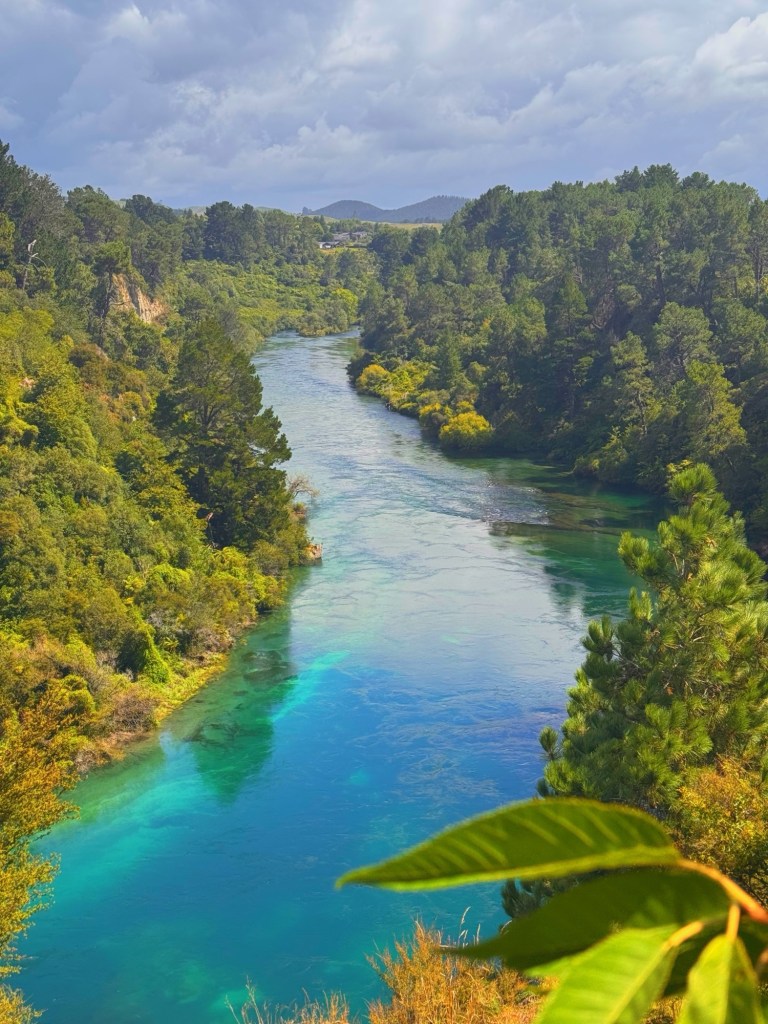
Days 5, 6, 7 & 8 – Rotorua, Mount Maunganui and Tapau. We used Rotorua as our base for exploring the area. The geothermal features were excellent, bubbling mud pools, geysers, hot springs and volcanic landscapes. Waio Tapu is the most advertised, but I preferred some of the free ones because they were much less busy. The highlight of our North Island trip was the Māori cultural experience just outside of Rotarua. Mount Maunganui was a great day trip, and my favourite hike was to Huka Falls, north of Tapau, which also has a non-hiking viewpoint.
Day 9 – Napier. We spent one night in Napier, a beautiful coastal city in the Hawke’s Bay wine region and recognised as the Art Deco Capital due to its well-preserved 1930s architecture. After a devastating earthquake in 1931, the city was rebuilt quickly in the Art Deco style, featuring bold geometric patterns and vibrant colours. We enjoyed exploring iconic structures like the former Masonic Hotel and its distinctive domes.
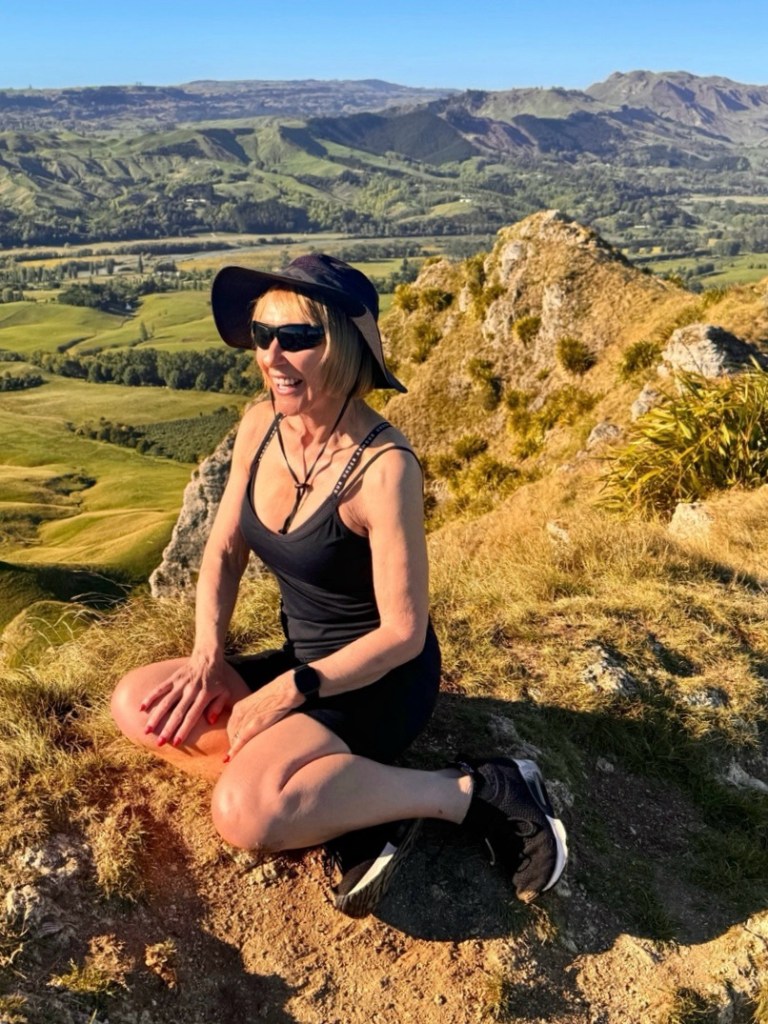
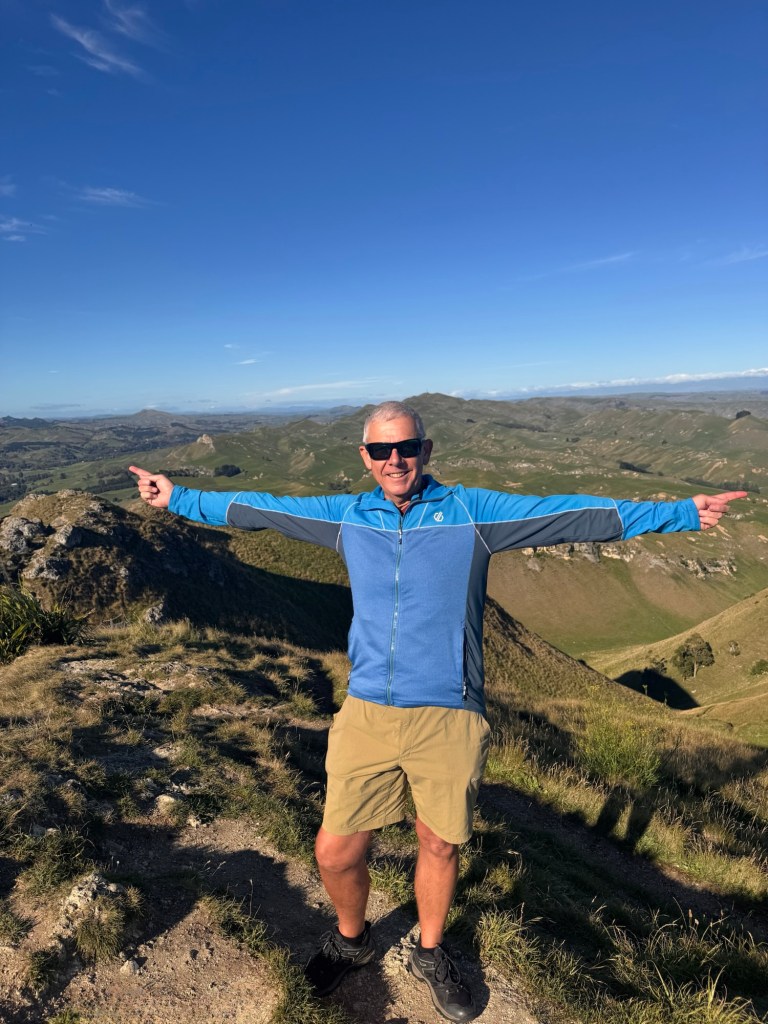
The next morning, we hiked Te Mata Peak for stunning views of the vineyards and coastline. The final leg of the drive to Wellington took us through the scenic Remutaka Ranges, offering breathtaking views.
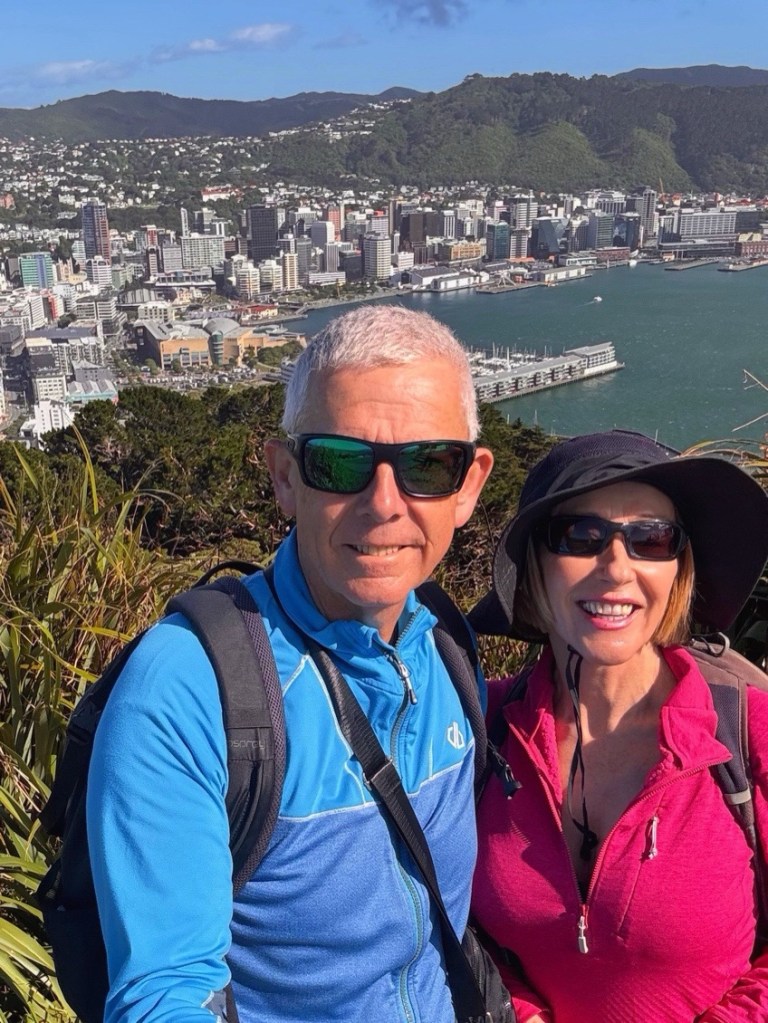
Day 10 & 11 – Wellington. Wellington was my favourite among New Zealand’s cities. Surrounded by beautiful waters and lush, green hills, we hiked up Mount Victoria for breathtaking views of the harbour and CBD. As a pub girl rather than someone who prefers fancy restaurants, we enjoyed The Old Bailey, a lively city pub with excellent beer and food, where we chatted to other travellers and shared stories of our trips so far.
Day 12 and 13 – Ferry Crossing to South Island and Nelson
This is a fantastic example of Grok coming through. When you leave the ferry, there are three routes to Nelson: one is the State Highway; the second is a longer scenic route via SH63; and the third is via Queen Charlotte Drive, which is the one we drove. It is twisty and narrow in places, but it offers breathtaking viewpoints to enjoy the landscape. Nelson is a wonderful place to stay and is recognised as one of the sunniest spots in the country. While it has a lively atmosphere, my main focus was that it serves as the gateway to Abel Tasman, an excellent area for walking. If you enjoy hiking, you won’t be disappointed. We relied on Wikiloc for all our routes, so be sure to check it out.
After hiking, we were hungry and discovered The Vic Pub (what a surprise) serving an excellent roast dinner. I love vegetables and miss them when we’re on the road. This roast didn’t disappoint, and we managed to order extra veg too! 😊.
Days 14 and 15 – Kaikoura. Take your time driving from Nelson to Kaikoura, as it takes you through New Zealand’s renowned Sauvignon Blanc region, Marlborough. Over the years, we’ve visited some excellent wineries in South Africa and Australia, so we didn’t plan for a long stop. However, I did want to visit the Cloudy Bay winery, a personal favourite of mine.
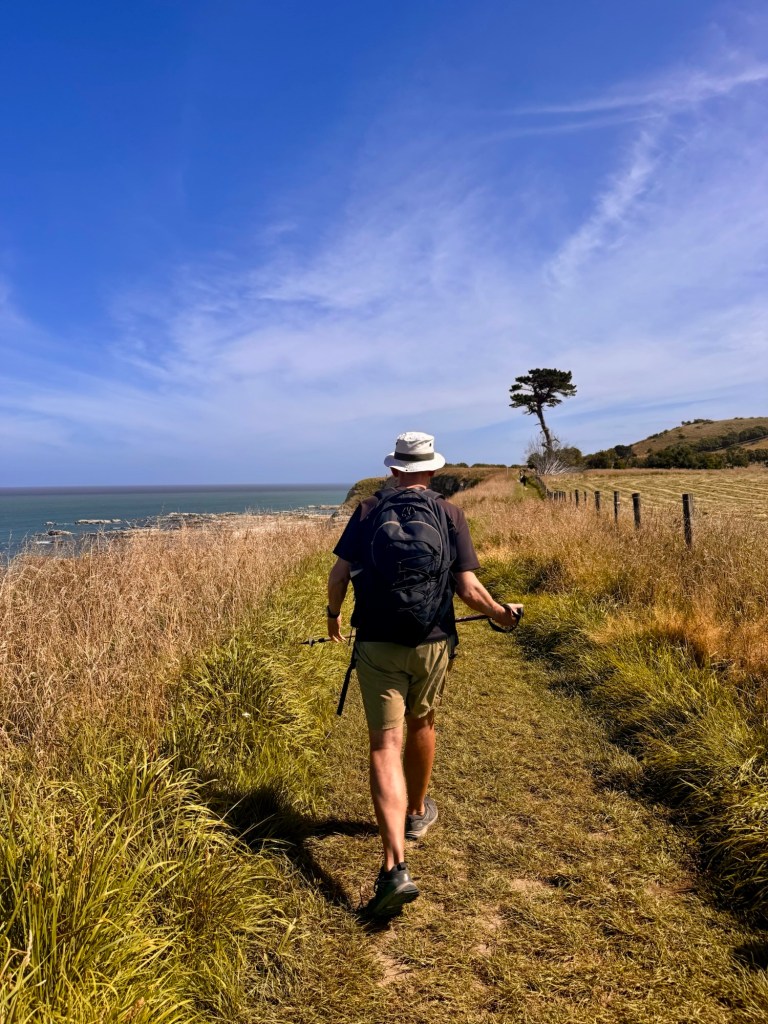
Kaikoura is famous for its stunning marine wildlife experiences, including year-round whale watching, dolphin swims, seal colonies, and fresh crayfish. Upon arrival, we did the 10k coastal walk, which reminded me of being back in Cornwall, it was beautiful. The next day, we had booked to go whale watching, but the sea was too rough, so neither the boat nor the plane was operating. We didn’t have time in our itinerary to stay an extra night, but I’m sure it would be worth it. They do offer a refund if you don’t see whales!
Day 16 – Christchurch. The AI apps performed exceptionally once again. ChatGPT uncovered three hidden spots between Kaikoura and Christchurch that most tourists overlook. I won’t share them, as then they wouldn’t remain secret 😊
We were only in Christchurch for one night, so after taking the Gondola up to Mount Cavendish Summit for panoramic views of the city, we enjoyed the tram tour on restored heritage trams, which stopped at many of the city’s key sites. We’d usually walk, but time didn’t permit. In the evening, we met with one of Jamie’s cricket friends and his wife. Stuart plays for England over 70s, and they won the over-70s World Cup, beating Australia in the final. It was lovely to share a few drinks with familiar faces.
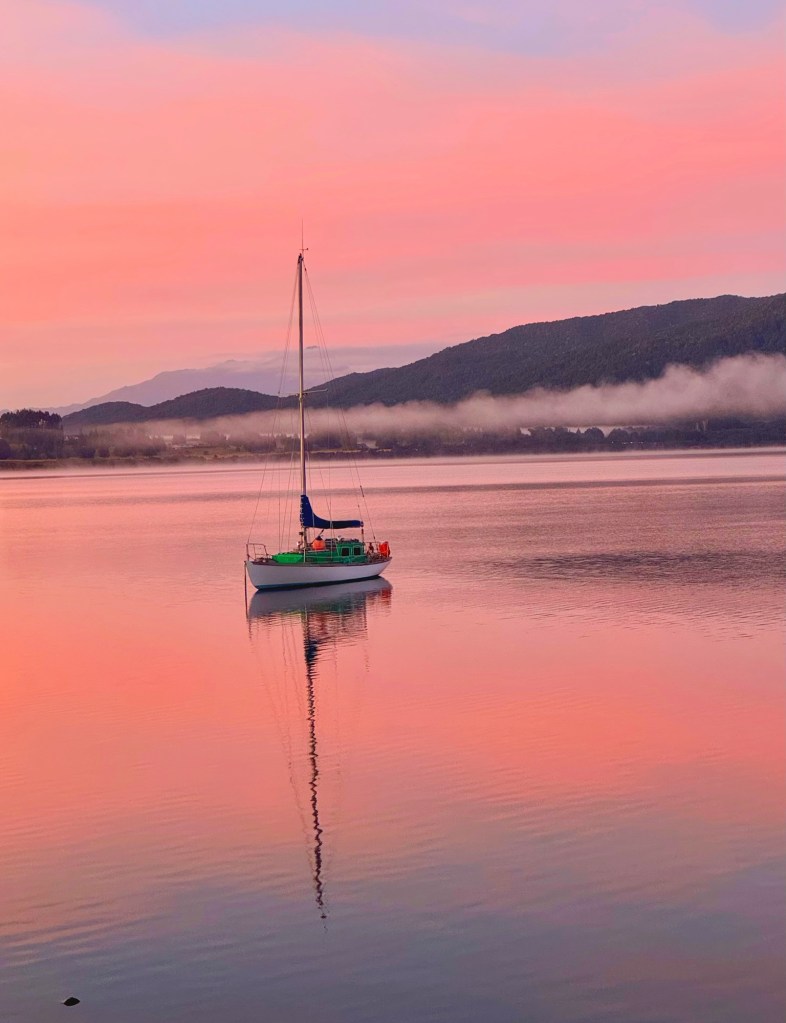
Days 18, 19 and 20 – Te Anau. This was my favourite place on tour. It’s a serene gem on the shores of New Zealand’s second-largest lake, Lake Te Anau — a vast, mirror-like expanse of deep blue that perfectly reflects snow-capped mountains and lush forests. Its beauty lies in the dramatic contrast: calm waters meeting rugged Fiordland peaks, ancient rainforests and a peaceful small-town vibe.
Sunrises and sunsets here are magical, painting the sky with vibrant pinks, oranges, and purples over glassy reflections. This is where we visited the glow-worm caves, which also allowed us to take in the beauty of Lake Te Anau as the glow-worm cave was accessed by boat only.
The hiking was world-class. Its proximity to the Kepler Track, lakeside walks, and steeper routes, with dramatic scenery, waterfalls, rainforests, and mountain ridges, made me think I could have stayed here much longer. The Abel Tasman (mentioned earlier) and Kepler tracks are part of the 10 official New Zealand Great Walks managed by the Department of Conservation. Both are located on the South Island and are recognised for their scenic beauty.
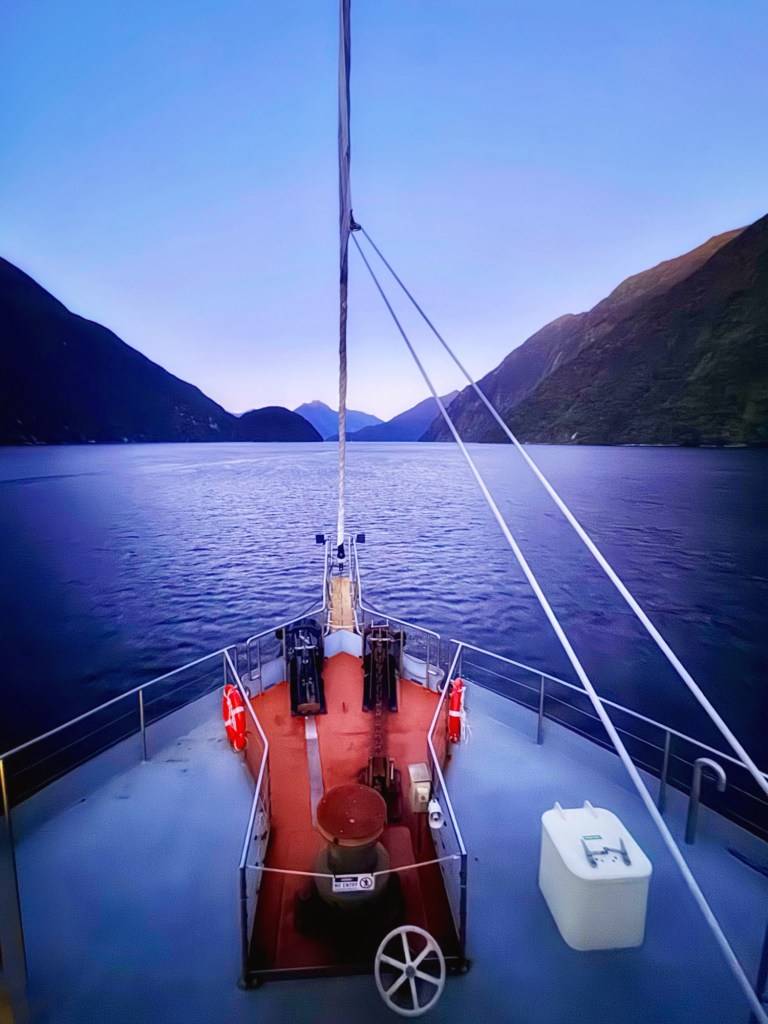
Day 21 – Doubtful Sound Overnight Cruise. Before I tell you why this was one of the most magical experiences ever, let me say this. Two fjords offer this experience: Milford Sound and Doubtful Sound. Milford Sound is easier to access and receives around 7,000 visitors a day. Doubtful Sound is more difficult to reach and has approximately 100–200 visitors daily. Since I don’t like crowds, this was a clear choice.
The beauty of an overnight on Doubtful Sound is profound and serene — a vast, remote fjord in Fiordland National Park that’s also more untouched than Milford Sound.
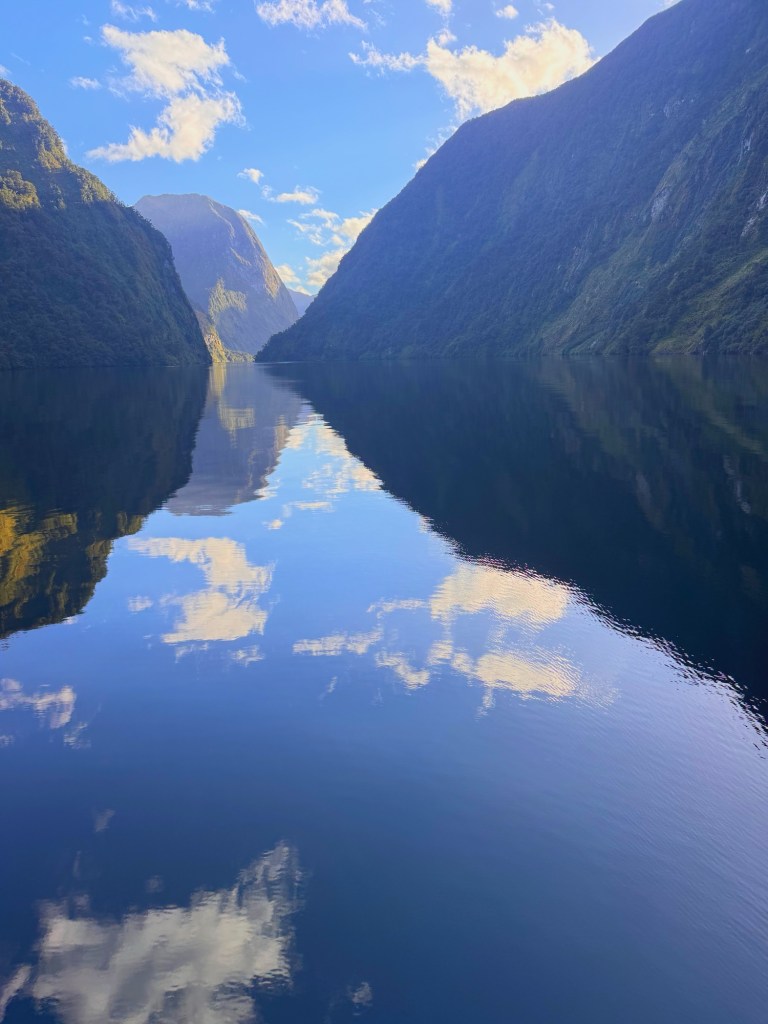
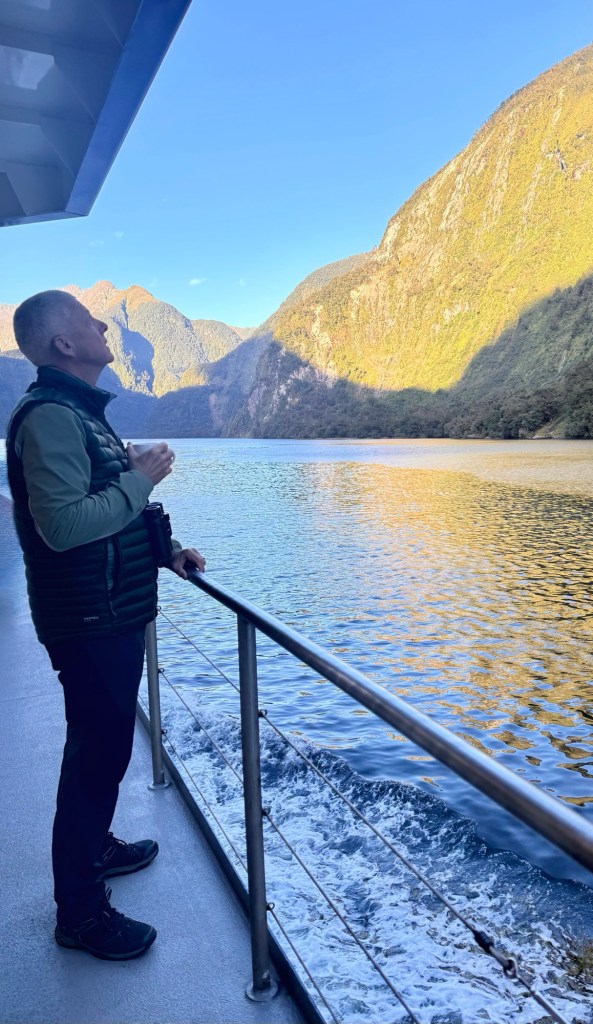
Cruising its deep emerald waters (up to 421m), you’re surrounded by towering, rainforest-covered cliffs rising dramatically from the sea, with countless cascading waterfalls (especially after rain) and misty skies. The scale feels vast yet intimate: glassy reflections create perfect mirror images of mountains and forests, while wildlife like dolphins, seals, and penguins may appear. The famous “Sound of Silence” descends at night — profound quiet broken only by nature and the stars were dancing through the turbulent air. We saw dolphins, a colony of seals, when our captain sailed into the Tasman Sea (not for the faint-hearted), and the giant albatross.
Sunrise and sunset are ethereal: soft light bathes the fjord in golden hues, clouds drift low over jagged ridges, and the water turns liquid silver or deep blue. It was raw, pristine, breathtaking and restorative. Phones don’t work!
Days 22 and 23 – Queenstown. Jamie and I held mixed opinions about Queenstown, often called New Zealand’s adventure capital. It definitely lived up to its reputation, and we enjoyed the hiking, using Wikiloc to search for the best options for the time available. The scenery was stunning, with turquoise waters mirroring the surrounding mountains, though it was very busy. Locals mentioned that it’s even more gorgeous in winter, when the mountains are covered in snow.
We discovered a fantastic “brewery” bar and superb restaurants, but by the time we arrived in Queenstown, we felt our appetite boating experiences was full. That said, there were plenty of excellent options if you were still up for it.
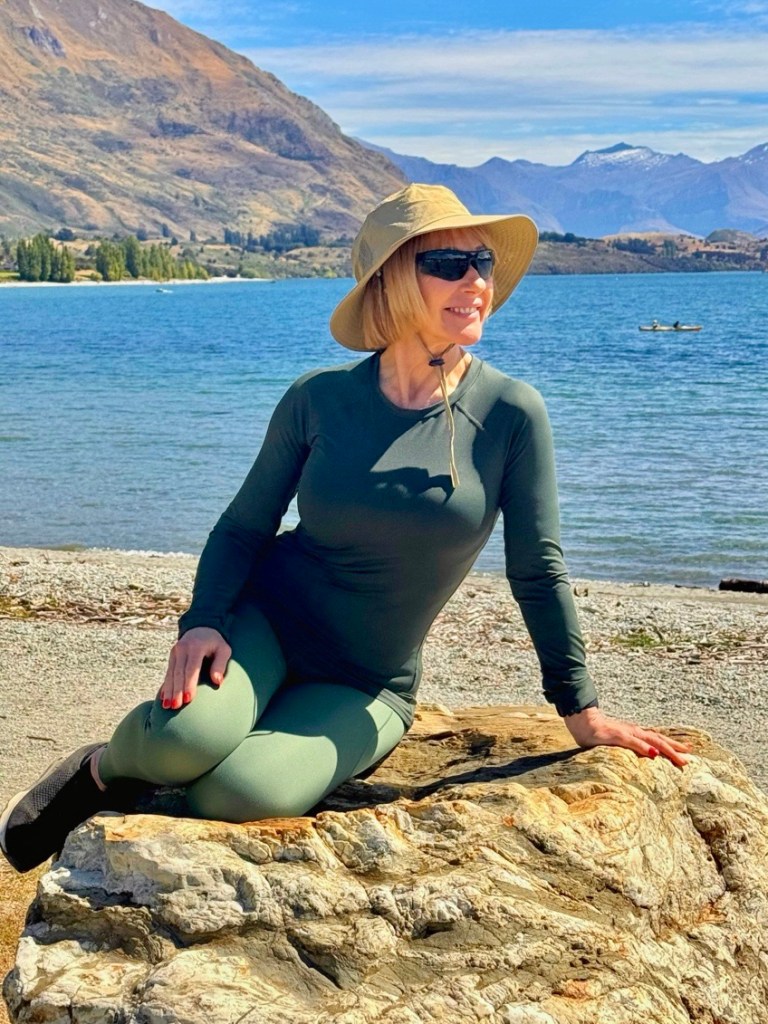
Day 25 – Wanaka. Another stunning lakeside town, more relaxed than Queenstown and surrounded by dramatic alpine scenery. We were only here for one night, and for us, that was sufficient to do some hiking and take in the scenery.
Day 26 and 27 – Franz Josef. Another huge highlight of our trip, and unlike Kaikoura, where we were unlucky with the weather, which cancelled our whale watching, the weather gods were very kind to us.
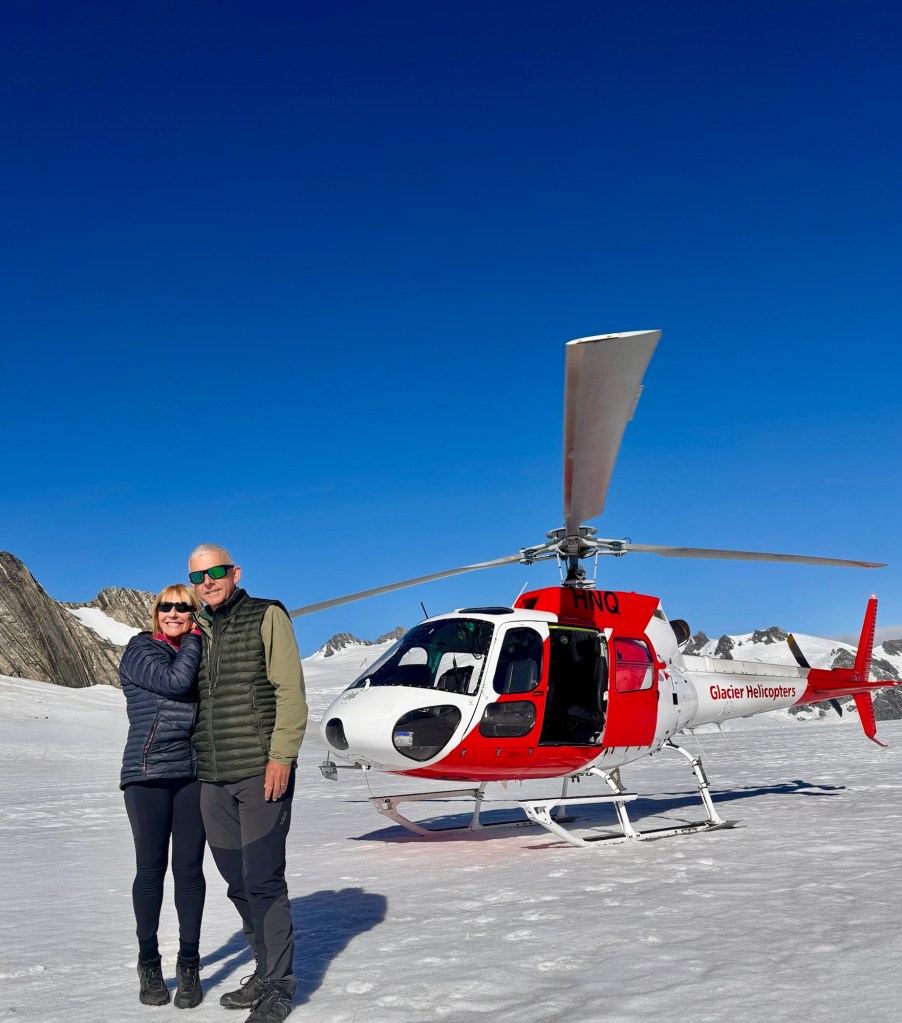
We took a helicopter from Franz Josef to both the Fox and Franz Josef glaciers, and it was the most exhilarating, once-in-a-lifetime experience.
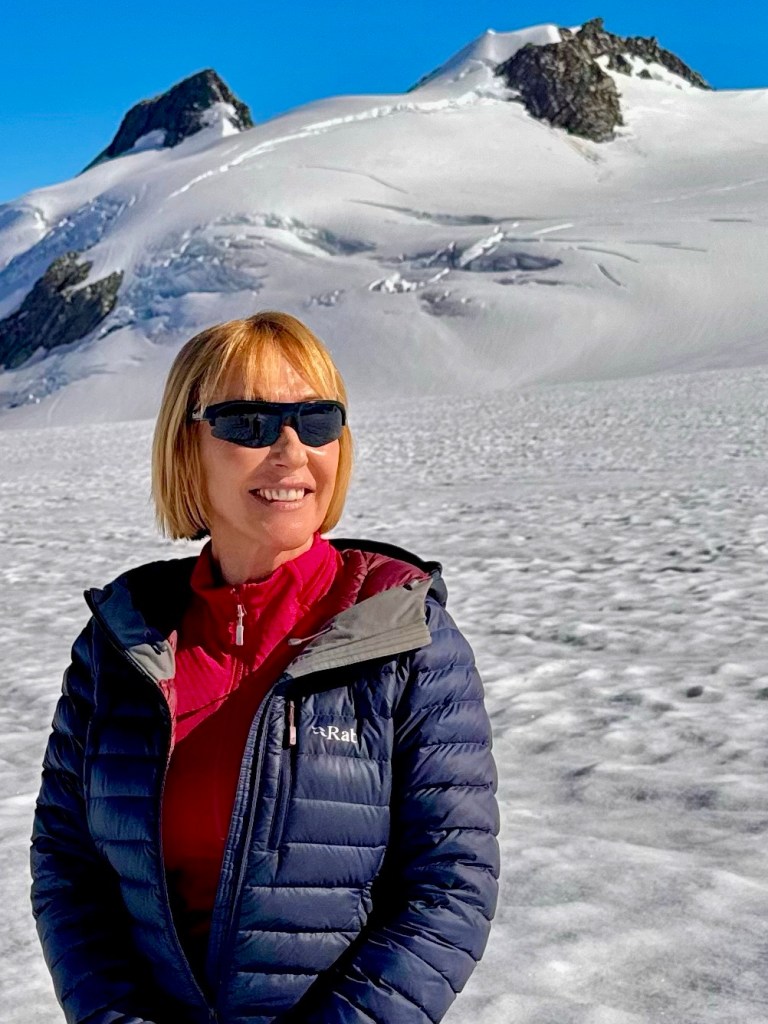
Sitting in the front of the helicopter with the pilot, the flight was thrilling, climbing dramatically into the rugged Southern Alps. The views are jaw-dropping, endless ice fields, deep blue crevasses, towering seracs, and surrounding snow-capped peaks—creating a surreal, otherworldly sensation as the massive glacier unfolds below like a frozen river carving through mountains.
The landing is gentle but awe-inspiring: we touched down on a flat snow/ice field high up, and we stepped out into crisp, cold air amid vast silence broken only by wind and distant ice cracks. For me, it was humbling and dreamlike. The isolation hits hard: no crowds, the glacier’s eerie blue hues, and epic panoramas.
We booked early in the morning, so we had the rest of the day to hike around the surrounding area, again using Wikiloc to find suitable routes.
I loved the Franz Josef vibe, which I can only describe as a backpacker and hiker’s adventure hub.
Day 28 – TranzAlpine train to Christchurch and flight home (via Singapore). We were somewhat underwhelmed with this journey operated by Great Journeys New Zealand, and we felt we would have appreciated the scenery more if we had driven ourselves, stopping to admire the stunning views. Yes, the scenery was breathtaking – vast plains, braided rivers, deep gorges, alpine valleys, and mountain peaks, along with impressive engineering feats like the Otira Tunnel and viaducts in Arthur’s Pass National Park. However, the train was busy, and the scenic “open” carriage was crowded with people eager to take photographs. For me, being in the mountains is the greatest feeling in the world. But being on a packed train, just looking out at them through the window, was not for me.
Budget
The Flight Centre invoice for car hire, accommodation, Premium Economy flights, the overnight Doubtful Sound experience, and the TransAlpine train was £15,375. If you travelled in economy, you could reduce the cost by about £3,000. Using a campervan instead of hotels would lower it further. Remember, you still need your spending money. The standard of our travel accommodation was very good. Mostly, we had a kitchenette, a king-size bed, and great showers. This significantly cut our dining expenses and allowed us to wash clothes on the go, reducing packing.
We covered thousands of kilometres, crossed the Cook Strait, and experienced both the vibrant geothermal centre of the North Island and the rugged, majestic wilderness of the South—showing that four weeks is the perfect amount of time to truly fall in love with this country without rushing. New Zealand doesn’t just reveal stunning scenery; it leaves you with a deep sense of awe, freedom, and connection to nature. It has been the ultimate road trip, providing us with stories, photos, and a greater appreciation for one of the world’s most magical destinations.
 Living-your-best-life