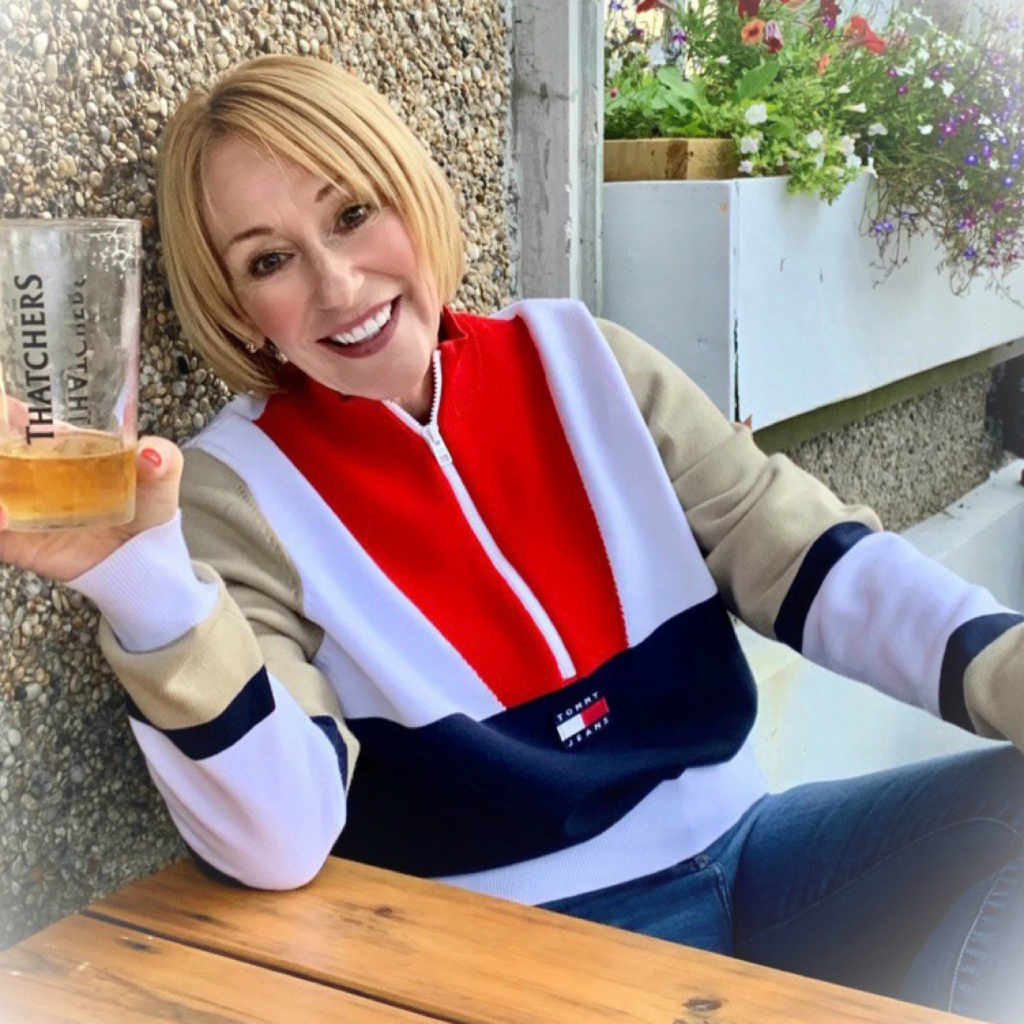
I Would Walk 500 Miles

and I would walk 500 more

It’s been a wonderful week spending time with our family. Our grandchildren give us so much pleasure and laughter, and our new grandson is growing so quickly that he’s nearly out of his Moses basket.  It was also incredibly hot, and now we’re back in Cornwall; it’s noticeably cooler but more humid, which isn’t great for my hair! 😊. 

I also had my first Rheumatology appointment before lockdown.  It worked OK by telephone, and I’d prepared my notes beforehand.  We agreed that I’d have some investigative MRI scans of the cervical spine and an ultrasound scan of my arms, hands, and fingers due to some new symptoms I’ve experienced.  I guess these will continue for a while, so I won’t have any updates in the short term.

We’ve had the most amazing Summer in Cornwall, and the walking has been superb.  Since the start of the UK lockdown on 16th March until today, our FitBit shows we have walked over 3,000 kilometres.  To put that into perspective, Moscow is 2,500k from London, and Cairo is 3,500k.  Norway is about the right distance, at 3025k from London!  Not surprisingly, the soles of our walking shoes have worn away 😊.

We’ve loved living in our cottage in a bustling village.  The pavement is opposite our house,  but people still walk on our side of the road and look into the window whilst we’re sitting in the evening.  I can’t complain, though, as I do it too, especially at Christmas.  I love looking at all the beautiful Christmas trees on display. It’s like those Christmas scenes you see on cards with houses all lit up and families inside, and it’s definitely my favourite time to peer in.  Jamie and I could always close our curtains, but we chose not to as we love to see the activity outside our window.

My blogs are mostly about living the best life you can with chronic pain.  Last week, I talked about positive and negative motivation and the difference between the two.  This week, I wanted to talk about negativity in general, as it really can hamper our ability to be happy.

Negativity is a tendency to be downbeat, disagreeable, and sceptical. It’s a pessimistic attitude that always expects the worst. It’s important to mention that depression and/or sadness are not the same as having a general negative disposition.  

Negative people tend to moan a lot, convinced that the whole world is against them. They are usually victims of “something”, whether it’s a difficult boss, a bad relationship, bad luck, or their upbringing. They rarely look at other factors – such as hard work.  Apparently, there’s also a neurological explanation for why some people are so negative. It has to do with the part of the brain called the amygdala, which functions as an alarm and is constantly looking for danger, fear and bad news.

For many people, being negative is just a part of life. However, it is something that you can train yourself out of with a little bit of practice.  I love the Ant Middleton books; they are easy to read and focus on embracing positivity and a positive attitude in your everyday life. 

I often see articles suggesting that you remove negative people from your social media or your friendship groups.  I agree, and during my career, I’ve found that the most successful people have made it a rule to avoid negative people. This is because negative people can affect your attitude.  For example, when I thought about writing my blog, my friends and family were brilliant, encouraging me and supporting my goals.  My husband Jamie continues to compliment me on my blogs and inspires me every week. Acquaintances are sometimes different.  Before sharing my story, I had someone say I’d find it impossible as bloggers were mostly much younger than me!   If I’d listened to that negative person or believed in what they said, it would have affected my confidence and possibly even stopped me from writing.  My blog has been successful, and I’m in the top 10% of traffic for WordPress blogs, which is amazing.

I’ve also experienced negative people during my working career; they’re always the ones who make you doubt yourself.   I’ve noticed that when I’m around positive and enthusiastic people, they raise my energy levels. Negative people do the opposite; they tend to drain my energy, and I just want them to go away.

As I said earlier, whatever life throws at us, we must try and live “our best life” as we only get one shot.  When you struggle with illness and chronic pain, positive people help and give positive reinforcement when doubts and worries creep in.  Negative people make you believe your doubts.  Negative people generally have a problem for every solution, and positive people have a solution for every problem.  Don’t waste your time trying to accommodate them; do what I do and remove them from your life, starting with social media.

Finally, I want to talk about the ice cream manufacturer Ben and Jerry’s, which made headlines this week when the company’s social media team published a Tweet about migrants and refugees directed at the home secretary.   Whilst many people agreed with their position, a large proportion didn’t and personally, I don’t think the Corporate world should get involved in politics.  Ben and Jerry’s are part of a massive global conglomerate called Unilever, and perhaps if they paid the taxes HMRC thinks they should pay, we could spend more money helping the people who need it most. 

Until next time, stay safe #stayalert and remember positive thoughts in the morning can change your whole day xx.

A Cause for Celebration (or not!)

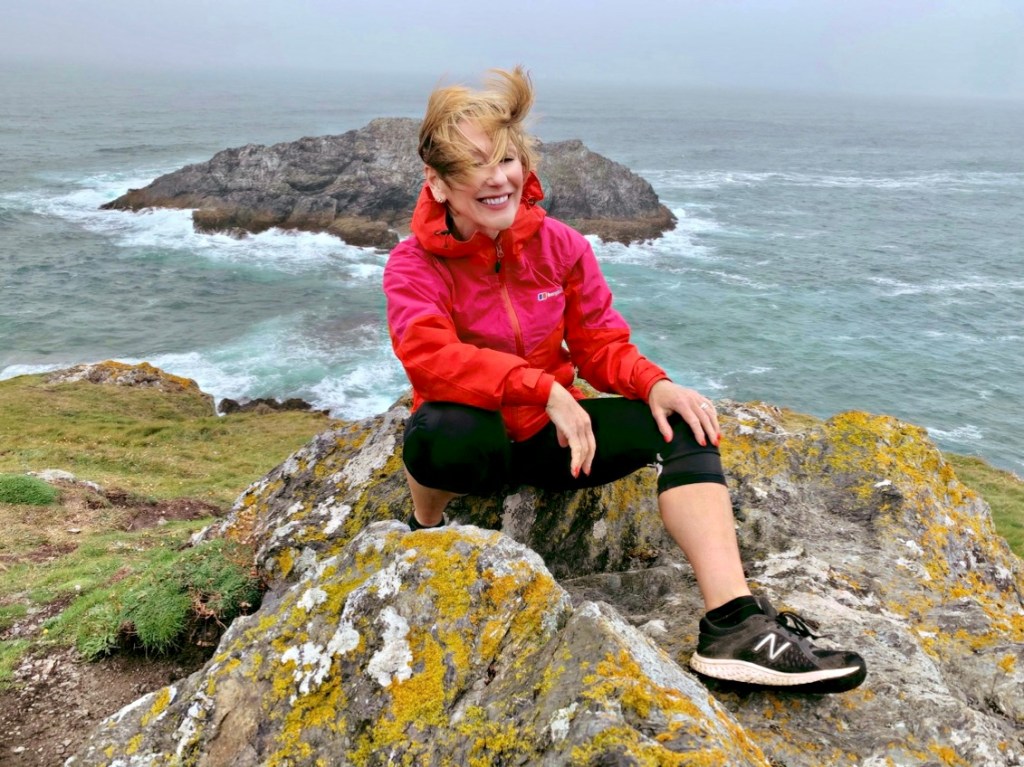
The answer my friend is blowing in the wind!

Everyone who sees my social media photos must think we have sunshine 24×7 in Cornwall, so I thought I would post a blog picture in the rain for a change.  Jamie and I have full waterproofs, and I love to walk in the rain; I really appreciate the smell of the earth as it has a natural calming effect on my overactive mind.  We’re so close to nature here it really is beautiful in all weather conditions.

I’m also happy to report I finally have my first Rheumatology appointment since the COVID-19 lockdown, and it’s next Monday on my birthday!  I’m not changing it as I’ve waited too long, so hopefully, all will be well as I’ll get the results of the MRI scans and blood tests from February. We’re off out for dinner after the appointment and up early the following day to drive “up country” to see our family and grandchildren, so a lovely week to look forward to.  We also hope to exchange contacts on the house, so a busy time all around.

Like me, many people with an autoimmune disease go through periods of feeling relatively normal and then have the sudden onset of severe symptoms called “flares”, making it difficult to find the motivation and energy to be active.  Self-motivation has always played a big part in my working life and private life, and I thought it would be useful to write about my experience of both.

There are two types of motivation: positive and negative.  Positively motivated people will achieve something because of their enthusiasm or interest without pressure from others.  For example, being a star performer at work, living a fit and healthy lifestyle or even saving for a deposit on a house.  It’s when a person knows where they’re going and how they will get there and adopts that positive attitude towards achieving their goals.   

Motivation is our internal energy force that determines all aspects of our behaviour; it also impacts how we think, feel and interact with others. Sport is a great example, as high motivation is widely accepted as an essential prerequisite in getting athletes to fulfil their potential.  My daughter is a triathlete, mostly focused on the Half Ironman (70.3 distance) and her self-motivation to train never ceases to amaze me.

Negative motivation can best be described as wanting to escape an existing condition.  Although it tends to display the same characteristics, the results are markedly different from those of positive motivation.  Negative motivation is rooted in fear.  Fear means you are acting on the pressure of losing something – your current job, your money, or your lifestyle. 

The main difference between the two is that positively motivated actions will likely have a positive outcome.   If someone is negatively motivated, their actions may have an undesirable negative outcome. a A film I watched called Deep Water is great example of negative motivation.  It’s a documentary film based on the true story of Donald Crowhurst and the 1969 Sunday Times Golden Globe Race around the world alone in a yacht, and it doesn’t end well.

Positive and negative motivation also applies in the workplace.  We’ve all had a boss who uses negative motivation to get their employees to work harder or perform better (yes, the stick rather than the carrot).  These people focus on giving their team negative feedback, threats, or disciplinary action.

I certainly prefer carrots, and I would like to think that during my career, I always tried to be a positive motivator (and still do).  Positive motivational leaders are visionaries and tend to build a shared vision, rallying their team.  I’ve been very lucky to work for some outstanding people who, whilst results-oriented, were able to motivate and develop their teams to adopt their shared vision.  They pursue information to reduce uncertainty and find ways to do things better, and often cut through red tape and bend the rules when necessary to get the job done.  More importantly, they persist in seeking to achieve goals despite obstacles and setbacks.  They see setbacks as manageable circumstances and don’t take anything personally.   I’ve only worked for a “negative motivator” once, and I hated it and made a mental note never to repeat that kind of behaviour.

Finally, I wanted to chat about Gin.  Jamie and I are late to the party, but what has happened to Gin? It’s amazing!  A few months ago, in one of my blogs, I said I don’t drink spirits, but all has changed since we found the gin “tinnies” in Sainsbury’s. 

From “mother ruin” to the “hipster” drink gin has now become, it’s a real success story.  There are now pink gins, gin in beautiful artisan bottles and those flavoured with honey, rhubarb, mangoes and strawberries; the list is endless. Flavoured gin has increased in abundance, but it’s not just gin. Flavoured tonic is expanding in every direction, providing gin drinkers with exciting new ways to serve their favourite gins.

In 2018, it was revealed that UK gin sales had soared by 254 per cent over the past decade. The spirit was officially named Britain’s favourite drink when a record 47 million bottles were sold in one year! To keep up with demand, the number of UK gin distilleries has more than doubled, from 152 in 2013 to 315 today.  Gin has become so popular in Britain that the Office for National Statistics (ONS) added it back to the basket of goods it uses to measure inflation after a 13-year absence.

Gym?  I thought you said “Gin”, yes please 😊.  Until next time, stay safe #stayalert and enjoy the Gin xx

Behind the Mask

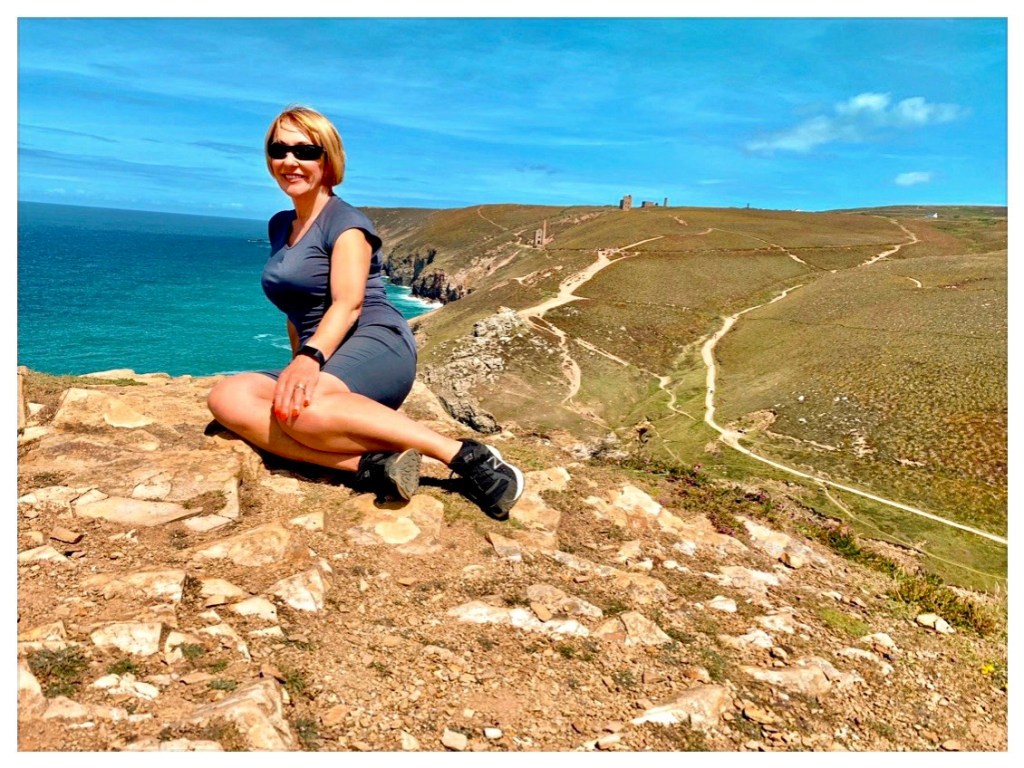
Chapel Porth, Cornwall

Life in St Agnes is great.  The weather has been amazing, and our work has started to pick up, too, which is really good news.  Our Hampshire house is nearing exchange, and we’re just waiting for the searches to come back, which have taken longer than normal due to the backlog from the lockdown.  We anticipate completion during August, but Jamie and I admit it will be difficult to tear ourselves away from Beech Cottage.

We miss our family, though and will probably head back “up country” before we complete the house to see our family and grandchildren.  We were back two weeks ago to welcome our new grandson; we now have three, which is wonderful: a girl and two boys.   The journey from Cornwall takes just over 4 hours, which isn’t too bad, especially with a few good podcasts.

Like everyone else, I’m wearing my face mask for shopping.  The evidence seems clear that masks can help prevent the spread of COVID-19 and that more people wearing masks for indoor activities will help.  I also understand this is not about “me”, as there is strong evidence to say that the best benefit of wearing a mask is for people who have COVID-19 to protect them from giving COVID-19 to other people.

However, masks and makeup don’t mix 😊.  I don’t wear much make-up, but I do wear some, and it’s now covering the inside of my mask.  Many YouTube videos are advising us to emphasise the eyes; it’s definitely all about the eyes and not about my red lipstick! Obviously, I appreciate that looking good is not the point of wearing a face mask; however, it’s just possible there’s just something attractive about a little mystery, a little obscured identity. Apparently, the masks draw attention to two of our hottest and most controllable features, our eyes and hair, and thankfully, I’ve now had a haircut!

Whilst the mask is not my favourite accessory, it did make me roll my eyes to see hundreds of demonstrators gathered in London to protest against wearing them days before it became mandatory. Ultimately, I think wearing a mask suggests that you actually care about the people you interact with and whether they live or die.” It’s that simple.

Moving on, I mentioned earlier that our work has started to pick up, and throughout my career, one of my strengths has been to identify the best salespeople and hire them.  My theory was always to employ people better than me.  Some people are afraid to do this, worried their new hire will be so good they’ll make them look bad.  I don’t agree – everyone needs really smart people in their team.  They bring a fresh perspective; they see things you might not have seen by yourself.  Good leaders recognise their own weaknesses and limitations, as I did.  Why would you recognise a weakness and then not hire someone smarter than you who can plug this gap? It’s not only the best outcome for the team and, ultimately, the business, but for your own personal development too.

So that’s why Jamie set up our search and recruitment company 12 years ago to find these top performers for our clients.  Many people ask us why we differ from the hundreds of other recruiters, and that’s a great question.  We both worked in the financial technology industry and have a much better understanding than most of our competitors about the roles we are recruiting for. Still, there’s another, more important reason.

It’s a fact that most sales professionals perform well at interviews, but research shows that 50% of sales hires underperform against expectations, a figure that is constantly on the rise in our new world.  We know that top sales performers are alike in one crucial way: they all have a high degree of emotional intelligence, which they can’t “fake” during an interview.  Whilst a candidate’s skills are important, salespeople are very good at enhancing these and covering up their flaws.  Characteristics such as emotional intelligence are vital in identifying high achievers.  We’ve spent years comparing the profiles of top performers with average ones in sales roles, and nearly 90% of the difference in their profiles was attributable to emotional intelligence factors rather than cognitive abilities.   Hopefully, our business will improve over the coming months as we enjoy what we do.  We would like to continue working for the next 3-5 years, but we’ll see how it goes and, if not, find other ways of making some money and keeping our brains active.

Finally, I’ve had many messages asking me if the antibiotics worked.  Well, yes and no.  They cleared my chest infection, so I can now walk uphill again without my chest frantically whistling. While my sinusitis is a little better, it hasn’t gone completely, so mixed results.

I’m also patiently awaiting my next Rheumatology appointment.  Most hospital departments were reallocated to the frontline during the lockdown, which was understandable, but as they have restarted, I’m hopeful I’ll be seen soon.  I was due to start on new medication before the lockdown, and I also had several MRI scans and blood tests for which I’m waiting for the results. I find it reassuring to know that my treatment is working properly and to go through the physical assessments to assess how my AS is progressing.  Without these appointments, I get nervous and worry about the future.  I’m the kind of person who needs to know the full picture to deal with it in the best way possible.

Thank you for reading and sharing my blog to raise awareness for autoimmune disease.  I doubt any of us could ever have imagined living in a world where it’s normal to walk into a bank wearing a face mask and ask for money?

Until next time, keep safe, and #stayalert!

xx

Up Shit Creek

Don’t mess with the Bull!

So, what happened?  The official term is “up shit creek without a paddle”, a Scottish slang term meaning to be stuck in a bad situation without any way of fixing it. The bad situation is shit creek‘, and the ‘paddle’ is the solution.  Our shit creek incident happened last Saturday during our walk along a section of the South Coast of Cornwall.

The main difference between the North and South Cornish coasts is surfing vs sailing.  We are located on the North Coast.  There’s an amazing rugged feel to the north coast, the undulating dunes, jagged cliffs, and the amazing surf-bashed beaches.  The well-known destinations of Padstow, Rock, St Isaac, and St Ives are all located on the North Coast.

The South Cornwall coast is different.  You’ll find spectacular coastlines, hidden coves and beaches, wooded river valleys and estuaries, fantastic sailing waters, cliff-top walks, lush sub-tropical gardens and superb fishing towns and villages such as Mousehole and Mevagissey.

The walking can be equally difficult on both coasts for different reasons.  Last Saturday, we were walking from Porthallow to St Anthony, returning a “moderate” 11-mile hike.  This walk started in the fishing village of Porthallow (pronounced ‘Prallow’), a cluster of whitewashed cottages with pilchard cellars and net lofts on the picture-postcard quayside.  The route also takes in the beautiful Helford River, and the first leg passed without incident. 

On the return journey, we were tempted by the idea that we could cross Gillan Creek via steppingstones as it was nearly low tide.  This would save about 1.5 miles off the return leg, and even though the stepping stones were not passable (too much slime), we decided to wade through the creek regardless.  This in itself was quite a challenge. Low tide was still over an hour away; the creek was a mixture of water and green slime, and even with my shorts rolled up as far as they would go, I only just made it without falling in or getting wet. 

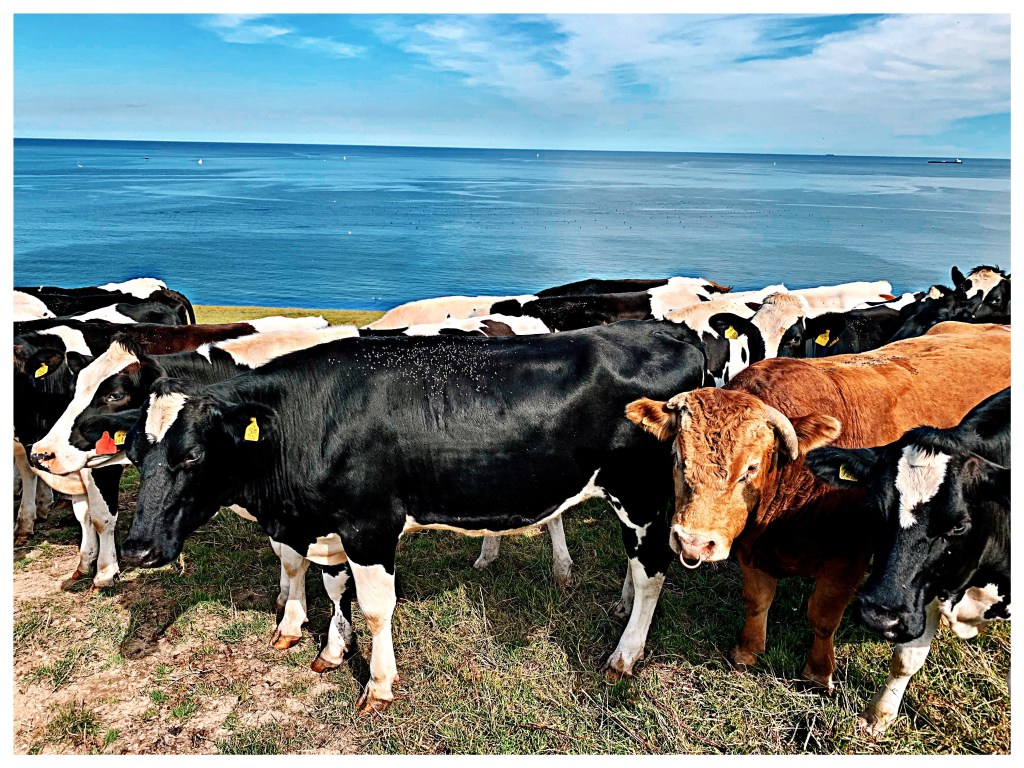
By the time we reached the incident scene, we were tired and ready to finish.  About a mile from the car, the field we had crossed earlier was now full of cows and a rather evil-looking Bull.  They had surrounded the only exit point.  We approached tentatively and tried to work our way around the herd towards the style. However, the cows had a different idea and completely surrounded us, leaving us with one escape route through an area of overgrown brambles.  With our legs now covered in blood ripped from the brambles, our only option was to jump a five-bar gate and wait until the herd had moved to a different area of the field, which they eventually did.  On arrival at the car park, we must have looked a bit of a sorry sight to the rather neat and tidy people who were sightseeing.

Moo-ving on, I thought it apt to continue to talk about finding solutions to problems and “coaching” was a very valuable part of my career.  Many organisations offer a training budget as part of their benefit package.  This can be very valuable to employees to enhance their skills.  However, in some circumstances, I think coaching is better.  Essentially, the difference between training and coaching is that training is about transferring knowledge while coaching is about enhancing the knowledge or skills you already have, mostly around improving results.

Training is excellent for things like new-hire induction, procedures, technology, and new governmental regulations. It trains something specific and can be a one-time event. 

Coaching, on the other hand, sometimes has a bad reputation because it’s so often used to deliver critical or constructive feedback.  If you can handle this, it’s a superb way of developing critical thinking and decision-making.

Unlike training, which is mostly group-based, coaching is normally carried out on a one-to-one basis.  I was lucky enough to work with an excellent coach during my sales management career, and I can honestly say that I had some real lightbulb moments 💡.  The ability to find solutions to problems has helped me through many of life’s challenges (apart from getting surrounded by cows!).

I write my blog to raise awareness of autoimmune diseases. As my readers will know, in addition to my ankylosing spondylitis, I have endured months of sinusitis, which I thought was getting better.  However, it decided to move onto my chest, so reluctantly, I succumbed to taking antibiotics.  Having a productive cough is a classic sinus infection symptom. You feel a heaviness in your chest and a rattling when you breathe. On top of this, you may have bronchitis, so it’s essential to get it treated.

I am on Day 2, so I’ll let you know how I get on.  I’m not convinced they’ll work, though.  The doctor said in her experience, they were more miss than hit and recently, researchers in Southampton have discovered a ‘hidden reservoir of bacteria’ in the nose that can prevent antibiotics from being effective in the treatment of chronic sinus infections, so we’ll see.

Finally, this week, I wanted to leave you with some facts on cows 😊

  • Cows can lie down for up to 14 hours a day
  • They can’t sleep standing up
  • They can eat up to 50kg of food a day
  • They can drink up to a bathtub of water a day or 60 litres
  • And finally, Cows have their favourite companions – just like us! I suspect the brown one with the ring through its nose in the picture took a real liking to Jamie and me last Saturday.

Whilst our Cornish adventure continues, keep safe, #stayalert and watch out for the Cows.

Life’s a Beach

St Agnes, Cornwall

Our first week living by the sea in St Agnes has been lovely.  We’ve worked efficiently, and the walking has been superb.  For the last 20 years, our visits to this beautiful village on the North Coast have been in Spring, Autumn and Winter, but being here in the Summer has been wonderful.  The sea is the most amazing mix of aqua and deep blue, and whilst Cornwall is busier than at other times of the year, it’s been so good to see the hospitality industry welcome guests again, as it’s been particularly hard hit here in the South West. 

We’ve been to the pub for a pint, we’re off out for dinner tonight for the first time since early March, and Jamie is playing his first game of cricket on Sunday.  We’re also making good progress on our new home in Hampshire, but as with all these transactions, they are always slower than you would like.  More on this next week.

This week, I want to discuss mistakes and how we can learn from them.  Jamie and I had a learning experience last year with our house sale.  We originally accepted an offer on our house in May 2019, but we pulled out 2 days later and decided to take the house off the market.  We’d been trying to sell since 2018 and, reluctantly, reduced the price several times.  When we eventually received an offer, we were tired of tidying up for viewings, weary of time wasters and generally tired of trying to sell. We accepted the offer even though it didn’t feel right.  Pulling out was extremely difficult as we put our life plan on hold.  When we marketed it again this year, it sold within 4 weeks at the asking price (which was a good deal higher than the offer we accepted last year). 

So, what did we learn?  It was a mistake to put the house on the market when the property sector was on a downward spiral, but we were so keen to push on with our plan that we went ahead anyway.  It was also a mistake to accept an offer we weren’t happy with.  Fortunately, Jamie and I were able to acknowledge those mistakes, and we were prepared to make the difficult decision to change our plans.  By doing so and being patient, we have benefited in the long term.

Like most people, I’ve made many mistakes during my career, too, some of which, unlike our house sale, weren’t rectified in time.  No one is immune to making mistakes, but it’s not good enough to carry on as before, as it puts us in danger of repeating the same errors.  When we don’t learn from our mistakes, we inflict unnecessary stress on ourselves and others.  You can’t start to learn anything from a mistake until you admit that you’ve made it, which is the part many people find difficult.  It’s like the old interview question:

“talk about a recent mistake you’ve made and what you learned from it”?

I love that question, and whilst it’s old hat,  it really does help you to determine whether someone really can acknowledge and learn from their errors.  In my view, failure is a critical step in the path to eventual success. The most successful people are those who know how to learn from their mistakes, not people who never make mistakes, and I can tell you, there are loads of those people around 😊.

A great quote from the inventor Thomas Edison (paraphrased) about his experiments: “I have not failed. I’ve just found 10,000 ways that won’t work.” As such, he was encouraged to try new things, take risks, and learn through trial and error

That said, dwelling upon mistakes is not so good.  This will diminish your self-confidence and affect your performance.  Moreover, when you dwell on mistakes, it can trigger the habits of procrastination and perfectionism, as well as other emotions such as anger, stress, worry, fear, and frustration. This is certainly no way to live.  We wouldn’t have sold our house had we dwelled on the mistakes from the previous year, and considering that mistakes are a positive and transformative force in your life, you can see how many people have it all wrong.

Moving on, thank you for all the responses on my sinusitis; I appreciate people taking the time to write to me.  There were some great tips, and whilst it hasn’t gone away, I feel it’s improving. 

As readers of my blog know, I write my story to raise awareness of autoimmune disease, and I often get questions about flare-ups and how I manage them.  The classic sign of autoimmune disease is inflammation, which can cause redness, heat, pain and swelling.  All autoimmune diseases have flareups when they get worse and remissions when symptoms get better.  Treatment depends on the disease, but in most cases, one important goal is to reduce inflammation.

During a flare-up, my body feels like it’s on fire. I have aches and pains everywhere, especially in my neck and back. I feel swollen and bloated, and my teeth hurt as sinusitis kicks in.  I am more anxious than usual and feel lethargic, and all I want to do is “wallow”.  However, I’ve learned that wallowing only makes things worse, and I’ve got much better at managing my medication.  In addition, I also make sure I look after myself better.  I drink lots of water, eat loads of fruit and veg, force myself to continue to workout (which takes tremendous willpower), and get sufficient sleep. 

It’s also crucial to suppress inflammation during flares, and for severe flares, I have taken the steroid prednisone, which generally improves my symptoms within days, but I don’t like to take them too often.  It’s not fun, but learning to manage the bad times enhances lifestyle.

Finally, this week, I want to talk about Karen! Originating in the US, A Karen, in case you didn’t know, is a term used on social media to denote a typically middle-aged woman who is unaware of her ‘white privilege’.  I learned this in a week-long trailer for a BBC podcast called No Country for Young Women.

Basically, the interpretation is that any woman of my generation who fails to accept her “white privilege” is obnoxious, angry, entitled, and often racist.  However, for the same reason, it’s also why the Karen meme is so wrong. Because it’s the other side of the same coin. It judges people — specifically women — on their colour, sex, age and social background!

There are lunatics on both sides of this culture war, and if we carry on like this, the end result will not be good.

Until next time, stay safe, #stayalert and #bekind.  My grandson finished school yesterday for the summer holidays.  Next year, he moves into a different class.  He was delighted when told about his new teacher and when I asked him why he said: “She is very kind Nana”….

X

Living in a Material World

With a great hat comes great responsibility

This is my last blog from our current home; I’ll be sad to leave, but I don’t get too emotional over these things, and I’m ready to move on to the next phase of our life.  Last week, I said our house purchase had fallen through, so our furniture is going into storage, and we are heading off to Cornwall for the Summer.  Our business is completely portable as all our applications are in the “cloud”, and we’re currently interviewing via Zoom, so all is good.  I’ve also stopped worrying about my haircut; it doesn’t seem important in the overall scheme of things 😊.

This move has certainly made me think about “material possessions”.  We live in a highly materialistic society, and, to some extent, lockdown has taught us that the best things in life are generally not “things”.

During my lifetime, our society has grown more materialistic.  Social media is partly responsible, and there’s a lot of emphasis on the brand of clothes you wear or what car you’re driving.  Some people look at others who live in luxury and think they live a happier life than theirs. This is the impression that society embeds in our heads and leads to many of us spending our time trying to earn more money rather than achieving happiness.   In addition, our society doesn’t help as it’s constantly bombarding us to buy more because we live in a society that only functions if people continue to spend.

Whilst I don’t spend excessively, I do like nice clothes.  I’m fortunate that I’ve weighed around 56 kilos since my early 20’s, so the clothes I bought years ago still fit, and I do look after them. There’s also an argument that wanting more is a good way to motivate ourselves.  I’ve worked hard since I was 18, often long hours in stressful roles, as has my husband Jamie, and it’s helped us to achieve a lifestyle that we are very content with.  That said, there are always compromises, and I do feel I could have been a better  “Mum” if I hadn’t worked so hard.   Finding a happy middle ground so you can have nice things but not too many seems like a good plan to me.

The opposite of materialism is minimalism, and this also sounds attractive 😊.  This is someone who prioritises living with less to achieve freedom.  Freedom can be defined in many ways: financial freedom, freedom from “stuff,” and even freedom from a place.  When you have a house full of new clothes or all the newest gadgets, it’s more difficult to up the stakes and start travelling.  Stuff often weighs you down psychologically and geographically. If we can stop buying and holding onto everything, consider the benefits!  Perhaps we have succeeded in life when all we really want is only what we really need.

Moving on, Jamie and I have saved so much money and eaten a healthier diet by not being able to eat out or go to the pub, and I wanted to talk about the benefits of a healthy diet when living with an autoimmune disease.  I’m a great believer in cooking and eating good food, as it has a very positive impact on our overall well-being.

One thing most people in the autoimmunity field agree on is that there’s a lack of evidence-based information about dietary treatments for autoimmune diseases. The best suggestions are following a good diet and exercise regime for general health. 

I’ve spoken previously about new evidence supporting the Microbiome and Autoimmunity, which I’m continuing to investigate.  I’ve also discussed the importance of Vitamin D, which I now take.  The nutritional management of autoimmune disease usually emphasises foods to boost the immune system, which I ensure I includeAutoimmune diseases are painful and disruptive to everyday life.  At their core, they have one thing in common: an out-of-control immune response linked with systemic inflammation and the right diet can help ease pain. I generally avoid sugar and focus on fruits, vegetables, healthy fats, fish and organic meat.

My stepdaughter Ellie is a fabulous example of what a good diet can achieve.  Ellie has IBS and Fibromyalgia, and I also suspect an undiagnosed autoimmune disease, possibly Lupus.   Over the years, Ellie has had to cut out many food groups as they made her feel so ill.  It has taken her a long time to find the right food combinations to suit her, and she now eats a pescatarian and a low fodmap diet.  I cannot emphasise enough how well Ellie looks and feels; it has made such a difference in every aspect of her life.  She has started an Instagram account (ellie_sw15) diarising her journey to a healthier and fitter lifestyle, including all the recipes and photos of the wonderful food she makes.  Following Ellie’s experience, I’ve seen first-hand how a good nutritional diet can make such a difference to the way we feel both physically and mentally. 

Talking of healthy food, I want to end this week’s blog chatting about fish and chips.  Freshly cooked, piping hot fish and chips, smothered in salt and vinegar, wrapped in newspaper, and eaten outdoors by the sea is perfect.

The potato is thought to have been brought to England from the New World in the 17th century by Sir Walter Raleigh, although it’s believed that the French invented the fried potato chip.  Both Lancashire and London claim to being the first to invent this famous meal – chips were a cheap, staple food of the industrial north whilst fried fish was introduced in London’s East End.

So are fish and chips any good for us, nutritionally? Fish and chips are a valuable source of protein, fibre, iron, and vitamins, providing a third of the recommended daily allowance for men and nearly half for women.  Apparently, there are now around 8,500 fish and chip shops across the UK; that’s 8 for every 1 McDonald’s, making fish and chips the Brit’s favourite takeaway.

This time next week, I’ll be eating my fish and chips by the sea from the best fish and chip shop in the UK, and I can’t wait.  I also can’t wait to go to the pub on 4th July, and Jamie and I will be first in the queue 😊.  I know, such style, fish and chips and a pint of lager and I’m a very happy girl.  You can take the girl out of the North, but you can’t take the North out of the girl!

Cheers, Prost, Santé, Yamas, Cin cin, Salud

Until next week, stay safe and #StayAlert xxxx.

What is Normal?

Normality is a paved road; it’s comfortable to walk, but no flowers grow on it.

As we tentatively begin our return to normal, it feels wonderful to me, and this week has been much better than last, especially seeing our family.   I found social distancing challenging as I would have dished out hugs and kisses galore in our old world, but we all managed and were thankful for being able to visit.   I’ve also had a Costa coffee, shopped for furniture, and booked a visit to RHS Wisley, who have opened their gardens, so all is good.

However, the meme above made me think about the changes many of us drove to our behaviour during lockdown, some of which I hope will stick around.

My blog readers will know that walking is a big part of my life as the exercise helps with my Ankylosing Spondylitis.  Normally, whether walking in our home County of Surrey or other parts of the UK, we see very few families enjoying the fresh air, even during school holidays.  However, the lockdown seems to have changed people’s behaviour.  I smile to see families walking, cycling, and swimming in the rivers like I did growing up.  I’ve seen families taking picnics together, exercising together and living a much healthier, lower-cost lifestyle.   The amazing weather has certainly helped, but I hope this behaviour doesn’t change when the material world comes back to distract us.

I accept that people have had more time to appreciate the countryside, and working from home has improved work/life balance.  Whilst I like the idea of a better work/life balance, I discussed the disadvantages of working from home full-time in a previous blog.  This week, I want to talk about business travel as I guess the closest you can get to a business trip now is taking your laptop from the home office to the kitchen.  Business travel has completely gone, and no one is sure when or if it will return.

Companies use video conferencing facilities such as Zoom or BlueJeans, which works well.  I’ve been on several Zoom calls myself, personal and business, and used this technology long before the lockdown started.  Interestingly, I’ve also learnt about video voicemail options like Loom, providing the expressiveness of video with the convenience of messaging.  This is great news for the environment, especially as today is World Environment Day 2020, but is technology a viable replacement for face-to-face meetings?  Is the human connection important enough for business trips to resume?

According to the Harvard Business Review, a face-to-face meeting is 34 times more successful than written communication, which makes complete sense to me.   Their research concluded that a video call comes closer but is still less effective.  I think the business trip will win because people still want human interaction; it’s a business style that I don’t think will change.  That said, if COVID-19 has taught us anything, every decision must be considered in light of our new way of working.

Personally, I’ve had some of my best adventures on business trips; many of my stories I’ll save for another day.  I often travelled alone and, as I didn’t want to spend nights away from home, I would try and keep my European trips to one day.  I would take the earliest flight out of Gatwick with a late return.  Early and late flights and a full day of client meetings were a tough gig.  However, seeing many European cities and experiencing life outside the UK was rewarding.   

On a rare overnight trip to Frankfurt, I arrived late in the evening in preparation for an 8 a.m. meeting the following morning.  I usually took room service, but I fancied venturing out for dinner and armed with my book, I set off from my hotel to find a nice restaurant.  After walking for about 5 minutes, a police car pulled up and asked where I was headed.  Dressed in my smart business suit and high heels, I advised him I was leaving for dinner.  “Not that way”, he kindly informed me, smiling; you’re heading to Bahnhofsviertel, Frankfurt’s redlight district 😊.  I’ve never been good at reading street maps!

Moving swiftly on, last week, I said that my Ankylosing Spondylitis had been particularly bad.  It’s still painful, and my gym workouts have focused on “core strength” this week.

Core exercises train your pelvis, lower back, hips, and abdomen muscles.  This improves balance and stability; most physical activities depend on stable core muscles.  The extensive walking we do around the coastal paths and in the hills depends on having a strong core, too, avoiding losing balance and falling.  Our core muscles play a huge role in everyday activities, from getting out of bed to bending over, but, most importantly, for me, they help with posture and keep me standing up straight.

Our core muscles are the base of support for our entire body.   They completely surround and support the spine and pelvis and connect the upper and lower body, effectively transferring forces from one to the other.  Sometimes, like now, I hurt too much to do my full core workout, and I have to limit specific areas of my regime, but I have other gentler exercises that take over when this is the case.  I’m starting to feel better, and my pain level is reducing; thank you so much for all the lovely messages I received last week after writing about my flare-up.  I rarely admit pain as I don’t handle sympathy well, but the messages were great 😊…

Lastly, I want to talk about the horrific death of George Floyd.  Like me, many people will have struggled to watch the shocking video of his death.  Racism is such a huge issue and too big a challenge to address by one individual person.  However, we need action rather than words; collectively, we can make a difference.  If every parent and every grandparent took the advice of Nelson Mandela and applied it to their family, it would be a start.

“No one is born hating another person because of the colour of his skin, background, or religion. People must learn to hate, and if they can learn to hate, they can be taught to love, for love comes more naturally to the human heart than its opposite.”   

Nelson Mandela, Long Walk to Freedom

We must all take responsibility to educate our children and grandchildren by following the actions and words of this great man.

Until next time, stay safe and #StayAlert.

Easing Lockdown

The easing of lockdown has started, but it hasn’t made any difference to our daily life; we still can’t see our family, which is frustrating.  Whilst I accept the strategy and understand why this is the case, it did make me smile when the gradual return to school was announced;  the youngest children returning first who are notoriously good at not touching things they shouldn’t and maintaining personal space 😊. 

Jamie and I continue to do our gym workouts and long walks, and whilst we can now do unlimited exercise, I already feel like a fitness freak, so doing more exercise isn’t on my agenda.  I do, however, like to dress up once in a while; when you wear the same “comfort” clothes every day, you adopt the characteristics of your clothes, whereas putting on a dress or a different pair of jeans and a little makeup can make you feel more positive. 

Dressing up is important to me from a work perspective, too.  I’ve always been a very nervous presenter, but presenting to an audience has been a necessary part of my job.  I gave internal company presentations on our sales performance and external presentations to clients when we were bidding for business.   I often felt ill beforehand, and my legs would shake, so on those presentation days, I would make an extra effort to “power” dress, and I’m sure it helped me psychologically.  I still present today, although not as much, and I dress up to boost confidence.  Currently, in COVID, I try to intersperse the comfort days with clothes to boost energy and mood levels, which fluctuate during these difficult times. 

I write my blog to raise awareness of autoimmune diseases and emphasise how we can help ourselves live our best lives.  I get a lot of questions every week on this subject from readers who want to understand more about my self-help daily regime, and I’m really pleased to hear that my blogs are helpful.

People like me who suffer from autoimmune disease must deal with chronic pain, chronic fatigue, and many other side effects daily.  To add to the chaos, there’s the additional stress problem, which can induce flare-ups, making things worse.   Autoimmune disease can complicate everything, even trying to motivate ourselves to eat well and exercise.  There are many barriers to self-help, including accessibility of exercise equipment, cost, and time, so it’s often easier to talk about self-help than to put it into practice.

Last week, we discussed the concept of “clean eating”, but as I pointed out, adopting this way of life takes a lot of time and effort.  This week, I want to discuss the importance of Vitamin D, which doesn’t have the same cost or time barriers.

Known as the sunshine vitamin, Vitamin D is produced by the body in response to our skin being exposed to sunlight.  It’s one of the few nutrients we can’t get enough from food. Our bodies are designed to make Vitamin D from sunlight, yet modern life has made that difficult. The result is a worldwide deficiency in Vitamin D, even in sunny locations. 

As we know, Vitamin D is essential for strong bones, and deficiency has traditionally been associated with rickets, a disease in which the bone tissue doesn’t properly mineralise, leading to soft bones and skeletal deformities.   But increasingly, researchers have been focusing on the consequences of Vitamin D deficiency in other areas and have found many health issues outside of its role with rickets. These include skeletal diseases like osteoporosis, certain cancers, cardiovascular disease, autoimmune diseases, and psychological disorders.

I know from my regular blood tests that my Vitamin D levels are too low, and research concludes that people with ankylosing spondylitis or other chronic inflammatory diseases have lower Vitamin D levels than the normal population.  I suspect my avoidance of the sun exacerbates my deficiency, too.  Don’t get me wrong, I love the sun, but to protect my skin, I wear a factor 50 sun cream on my face every day (even on rainy days and in Winter).  I don’t expose my skin to the sun during the high sun index hours of 10am to 4pm, and even on holiday, I love to sit on the beach but under the shade of my umbrella.  I use an umbrella when sitting in the garden and wear a cap or hat and sunglasses when walking to protect my face.  I have taken this approach since my late 30s when I saw first-hand the damage the sun can do to your skin.  I am also aware of the risk of skin cancer, which is another good reason to protect our skin from UV radiation.

So, what can we do about this Vitamin D deficiency? Apparently, only 20% of our vitamin D is meant to come from our diet, with the remaining 80% provided by our skin from UV-B exposure to the sun.  A simple blood test can determine Vitamin D levels. The amount of Vitamin D needed to correct any deficiency will depend on the severity of the deficiency and your individual medical conditions. The time of year will also impact your needs. For example, if you are on the low end of normal blood levels and heading into the winter months, you would need a bit more than if you were heading into the summer months if you like to spend time in the sun.

Before my next blood test, I will investigate Vitamin D supplements to see if they make a difference to my Vitamin D levels.  I’ll also keep my readers informed of any improvements in my well-being.  I understand that supplements should be taken with a meal containing fat. Studies have shown that when taken on an empty stomach versus with a meal containing fat, there was an average of 32% more vitamin D absorption in the fat-containing meal.

Finally, the new government message #StayAlert resonated with me as the “alert” message was a big part of my sales training.   It was good to remind myself of the definitions of “alert.”

  • Adjective – quick to notice any unusual and potentially dangerous, vigilant
  • Noun – the state of being watchful for possible danger.
  • Verb – warn (someone) of a danger or a problem.

Working in sales, we needed to be “alert” every day.  Being at least two moves ahead of the client and the competition was important to win business.  By being alert and quick to notice any unusual circumstances or changes in our client’s buying behaviour, we could identify challenges or problems and act upon them before they became “show-stoppers”.  Selling complex software solutions worth millions of pounds to banks requires you to think about every possible scenario and act on it before anyone else.

A good example of this is a racing car driver.  They know that the fastest path through a tight turn is to begin the turn just a moment earlier than most people would think to do so.  Those fractional advantages make all the difference on the racetrack and our everyday lives.

We should consider the outcome of every move we make and every step we take.

Until next time, keep safe and keep alert xxx

Lockdown

This week, I have received many questions from my blog readers asking how I keep up my exercise regime during the lockdown.  Not only is exercise very important to me, but it also helps to alleviate the pain of my autoimmune disease, Ankylosing Spondylitis.  I also believe that if I suffer from Coronavirus, I want to be as healthy as possible to fight it. 

So, the answer is that I do five 40-minute workouts per week in our “homemade” gym.  There are some great fitness instructors online helping us to come up with innovative ways to use our own body weight in our workouts.  Our home gym workout now extends to using everything around us, including our stairs, chairs and garden steps.  In addition to these five weekly workouts, we walk from home daily.  We’ve found some beautiful circular walks in our local area, and last week, I averaged around 18,000 steps per day. 

I’m sceptical about most things I read online these days.  I don’t believe anything written in our newspapers as journalists put whatever spin on a subject to fit their political agenda.  But if you stick to journals (like The New Scientist) and regulated bodies, their information will be more accurate.  This is because they need to be peer-reviewed. This means that other academics have read them before publication and checked that they are making claims backed up by their evidence.

Therefore, I have taken the advice from the Centre for Perioperative Care (CPOC) experts, who say that keeping healthy will help reduce the risk of becoming severely ill with the virus.  Fortunately, most people who get the virus are sick for about a week before improving. However, that’s when the more dangerous symptoms kick in for others.  It appears that the virus can migrate down into the depths of the respiratory tract, and when the virus reaches the lungs, pneumonia begins, and I want to be as strong as possible in case that happens.

In addition to keeping healthy, I’m keen to keep up my beauty regime!  I’m fairly low maintenance as I’m mostly a DIY girl.  I’ve never visited beauty salons, I don’t have sunbed sessions or spray tans, I don’t have hair extensions or false lashes, and I do my own eyebrows, nails and waxing; however, DIY is not something I do for my hair.  I have always budgeted to visit the hairdressers every 6 weeks.  I have no idea what my real hair colour is, and I’m not keen to find out.  So, I’ve bought myself a hair dye from Boots, which will arrive around the 28th of April, so I’ll reveal it all after this necessary experiment!  If you notice that my social media account has gone quiet, it will be apparent something has gone very badly wrong!  Jamie has also offered to cut my hair, and we’ll be watching some “YouTube” videos first!

Our virtual social life also picked up a bit this week.  We had a great FaceTime call with our friends over a bottle of wine last Saturday night.  We all dressed as if we were going out, and I enjoyed both the dressing up and the chat.  Another friend organised a Zoom quiz (6 teams), which was good fun, and so lovely to see everyone.

In Covid World, the other regular daily event is to watch the briefing from the Government.  One of the journalists asked what we might have done differently as a country knowing what we know now, and it got me thinking about hindsight. 

There is probably an event in our lives every week when with the benefit of hindsight – the wisdom that comes from viewing actions after seeing the consequences – we think we shouldn’t have done that or should have done it this way instead.

But when it comes to life-changing situations like the Coronavirus pandemic, is 20:20 vision after the event fair for official bodies to assess where the fault lies?   Will that process of re-examination go too far? Or is it the only way we learn lessons for the future?

I don’t have the answer, and the question is too big to think about without breaking it down into manageable pieces.   I guess we all reflect on the things we could have done differently.  However, I also realise that if we spend too much of our life regretting our past, our biggest regret will be that we didn’t focus our time and energy on changing the present and the unwritten future.

During my sales training, I was taught that if you don’t have a plan, you won’t achieve your dreams, which I have always stuck by.  So, spending time planning our present and future seems like a much better idea.

Every goal and every dream must take the form of a plan. The old saying “get what you plan for” is so true. Your dream won’t just happen. You must sit down regularly and plan your strategy for achieving the dream. Think through all of the details. Break the whole plan down into small, workable parts. Then, set a time frame for accomplishing each task on your “dream plan.”  These plans don’t need to be complex; wanting to live a healthy, happy life with family and friends is a wonderful ambition.  However, being fit and healthy takes a lot of hard work, and it also means making big changes to daily life.  A plan is even more important when you have an illness or an autoimmune disease, as the focus is often on the disease itself.

The plan is also iterative.  Jamie and I had our remaining work years, and our retirement plan worked out.  When I was diagnosed with ankylosing spondylitis, I thought my retirement might look very different, especially if the disease progressed and my mobility was affected.  Six years after that diagnosis, my situation is still OK, even though the disease is active.

I planned to start taking biological drugs to slow its progression.  I suffered an allergic reaction to the drugs on the first attempt and, after waiting 2 years for a new natural, Coronavirus has intervened.  I was due to start taking them a few weeks ago, and I chose not to as I didn’t want to weaken my immune system, thereby changing our plan again.

Even when we have to change our plan, it’s not the end of the world.  Embracing change is no fun, especially when you look forward to achieving those dreams.  But often, something like Coronavirus comes along, and it changes everything.  Change happens to us all—it’s simply a part of life. And while some change is undeniably good, we often face disruptions that certainly don’t feel welcome at the time.

We are all capable of changing, but often, we are unwilling to acknowledge the need to do so.  Among those who do, often, we don’t do what is necessary to make it happen. 

Keep safe, start on a plan to achieve your dreams and embrace change.

Captain Tom Moore is my new hero until next time, xxx

Unwelcome Visitors

A friend used to tell me about an unwelcome relative who visited her at home and gave her more grief than joy. We would chat about her anxiety before their arrival, and she could hardly wait for their departure.  I now use this metaphor to describe my autoimmune visitors, unwelcome guests who seem to drop by uninvited and unannounced.  These include Raynaud’s phenomenon, ulcerative colitis, allergic rhinitis and the one I dislike the most, purpura, which is my worst nightmare.

As with all autoimmune diseases, having one means it is more common to suffer with others.  There are more than 80 different autoimmune diseases, and according to a study carried out in 2014, women get autoimmune diseases at a rate of about 2 to 1 compared to men — 6.4 per cent of women vs 2.7 per cent of men.

In this latest blog, I was going to talk about the effect these visitors have on me, but, as of yesterday, that changed as I have an “update”, so I’ll talk about that instead and then cover only one of my visitors in a bit more detail.

Last week, I spoke about being nervous about starting my new biological drug.  My baseline blood tests had gone walkabout, so I had hoped there might be a convenient delay.  They have been found, and my new biological drugs are arriving on Wednesday.  I will be under the care of HaH (Healthcare at Home), and my first injection will take place on Monday, 23rd March, under the supervision of a nurse.

To say I’m nervous is an understatement, as these drugs will lower my immunity and increase my risk of contracting Coronavirus.  After my last episode with Humira, I am also nervous about suffering another allergic reaction.   However, I am also grateful for the opportunity to take these drugs, as they can be life-changing. I am excited about living without the challenges I tolerate today.

I appreciate everyone handles worry and stress in different ways.  Because I have an overactive mind, I have learnt to manage my worries to reduce my stress in a way that works for me.  I have several compartments that I allocate “worries to” – a family compartment, work, health, finances and miscellaneous and each worry gets parked in its appropriate compartment until I can deal with it 😊. 

Last year’s “work” compartment was overflowing; we had some bad luck, which affected one of our largest clients, and, whilst it was outside our control, I still don’t like letting people down.  Currently, my “health” and “family” compartments are up to maximum capacity as we wait to see the impact of Coronavirus.  The stock market has also taken a nosedive, so the finance compartment is full, and the retirement plan is on hold for a while.

When I read the self-isolation criteria about the Coronavirus, it made me realise that people with autoimmune disease live with some of these symptoms every day, such as fatigue, muscle aches and a lack of energy.   That, combined with my rhinitis and asthmatic cough, I need to be careful about getting the balance right between self-isolating for the rest of the year and only when I need to 😊.

I mention all this because one of my unwelcome visitors arrives when I am more stressed than usual. Purpura, also called blood spots or skin haemorrhages, refers to purple-coloured spots that generally appear on my arms.

Purpura occurs when small blood vessels burst, causing blood to pool under the skin, and I get these lovely purple patches on my skin that range in size from small dots to large areas that cover my lower arm.  I am thought to have it because of my low platelet levels, which can cause bruising and bleeding.

This particularly unwelcome guest mostly arrives in Spring and Summer!!  It would come in Autumn and Winter when I covered my arms if it was a more thoughtful visitor.  But NOT Purpura, here’s the sun, look who’s come – “Hello Purpura, what a surprise to see you”.    I would share a picture, but I don’t have it now as I am still in jumpers.  As soon as it warms up, Purpura will turn up, and I will share some pics of this delightful addition to my Spring and Summer wardrobe.

On a more serious note, we live in challenging, unsettling times, and many people will have much bigger dilemmas than mine. 

Keep safe, everyone; make wise decisions and don’t buy too much toilet roll as we are down to our last 4 rolls, and I can’t find it anywhere.

Until next time, wish me luck xx.