Before we moved to Cornwall, we met a Cornishman on the coast path. Having shared our plans about moving to Cornwall from our home in Surrey, he said, “Only move after you’ve spent a winter here”. This winter I remembered his words!
We do get “mizzle” here, and I love it when the Cornish say to me, “It’s just a bit of mizzle, not proper rain”, as I trudge through the mud in full waterproof gear. This winter, the “mizzle” has been falling horizontally for days on end. While I’m not a fair-weather walker and don’t mind getting wet, I’ve mostly stuck to local muddy walks. So, at the first sign of sunshine, we decided to head out to one of our favourite trails. Why don’t you join me? I’d love to share a little Cornish magic with you today!
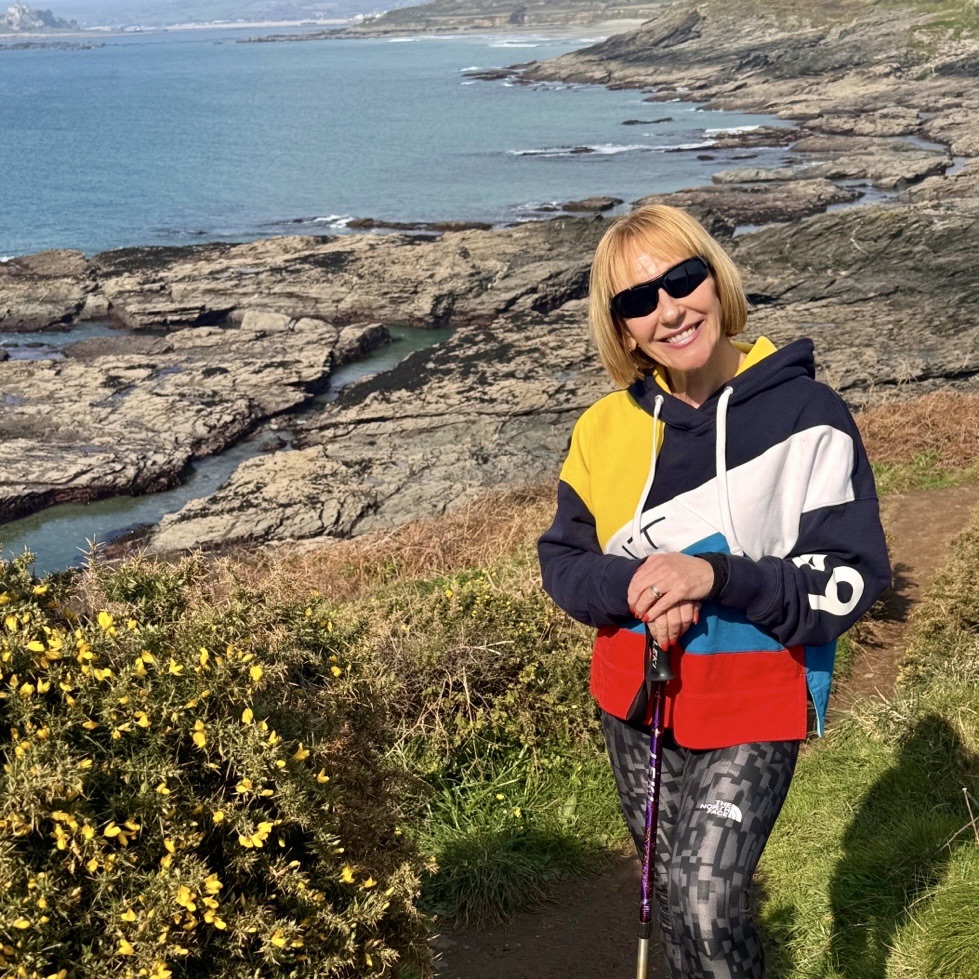
It was a lovely March day when we walked the 10.8 miles from Marazion to Porthleven. We’d often walked from Praa Sands to Porthleven but had never completed the full route. The sun shone, the birds chirped, and there was a cool breeze in the air — perfect for a day’s hike. With our rucksacks packed with sandwiches, coffee, and a sticky bun from St Agnes Bakery, we set out.
The initial stretch to Perranuthnoe is quite short and gently undulating, especially compared to the more rugged areas further west. It begins with open views across Mount’s Bay, with St Michael’s Mount standing out prominently. Many of Cornwall’s top photographers have captured stunning images of this iconic island. The path here is relaxed, mostly following low cliffs or the edge of wide sandy beaches.
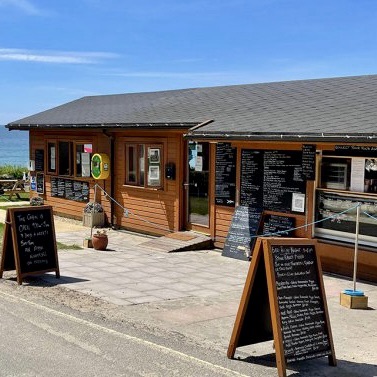
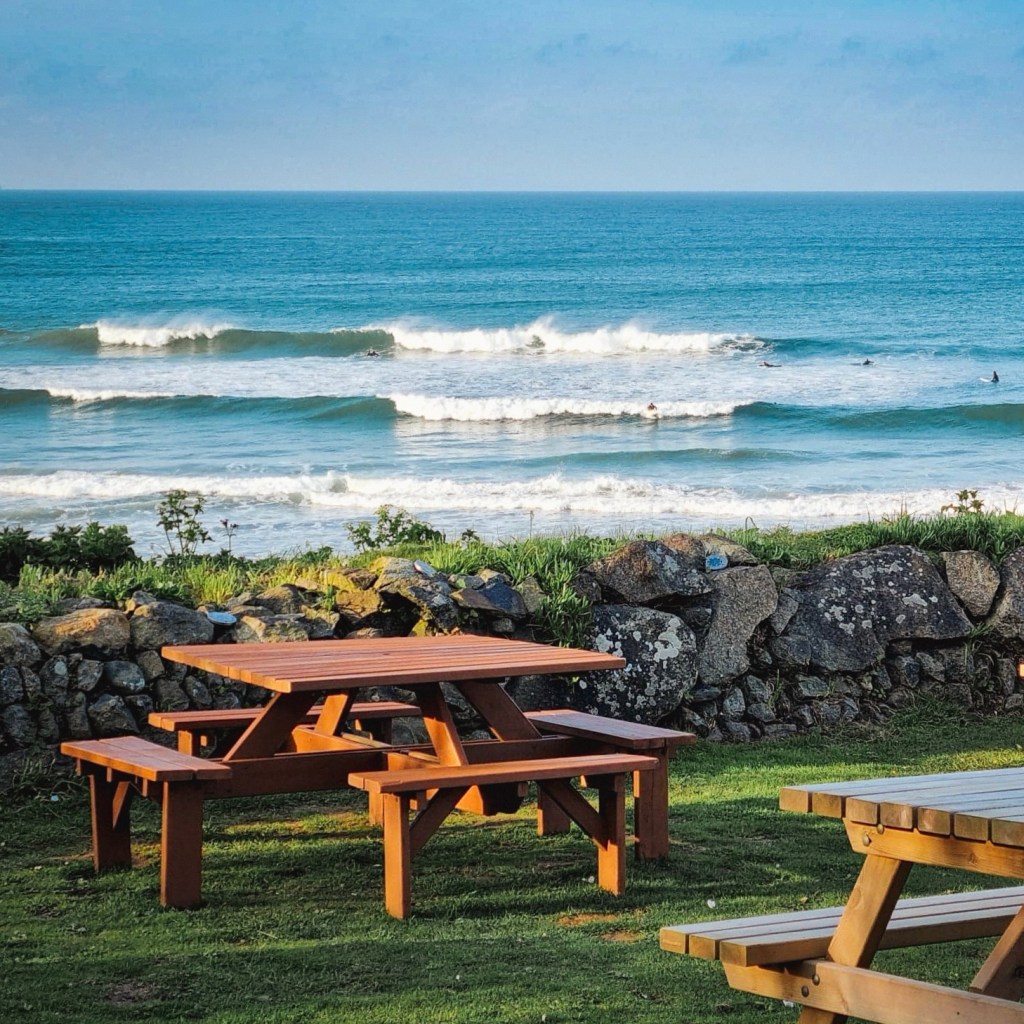
I was glad it was short because we’d planned to have breakfast at the Cabin, a well-known, beautifully located favourite spot for locals and tourists alike. It did not disappoint! I enjoyed a sausage and egg sandwich made with freshly baked wholemeal bread, along with a cup of coffee. Interestingly, the last time we visited, in 2020, I started writing my lifestyle blogs about living with Ankylosing Spondylitis. Now, six years later, I can hardly believe I still find so much to write about! 😊
We left the café behind, feeling fully refreshed. However, I began to feel a bit guilty about having a sandwich and a sticky bun in my backpack. The tide was high, so that we couldn’t see the beautiful, small sandy cove. Instead, we quickly climbed onto the cliffs, where we could again enjoy wide views across Mount’s Bay.
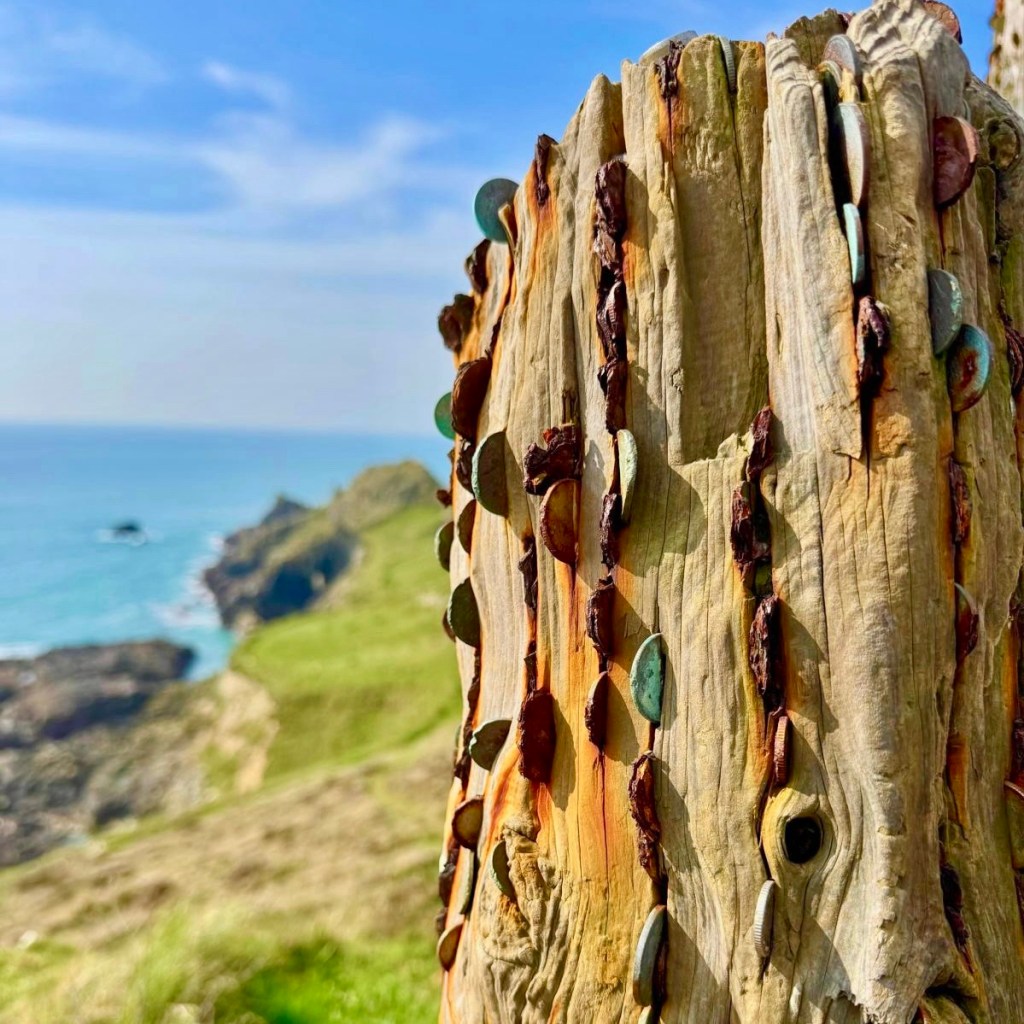
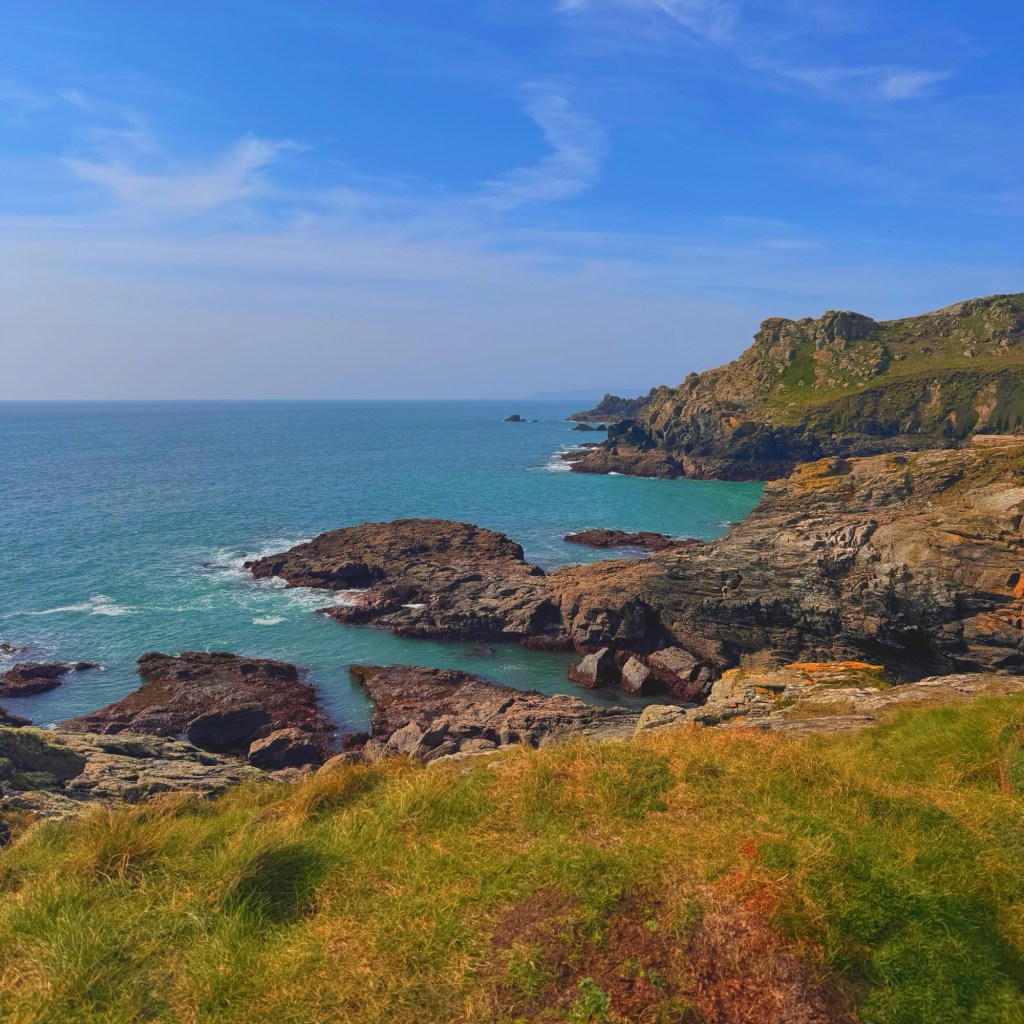
The path from this point gently rises and falls, rather than continuously climbing. It winds along grassy cliff tops and dips into several small coves. One interesting feature to look for at Cudden Point is the style adorned with coins embedded into the wood. Some of these coins have likely been there for a long time, as they are rusty.
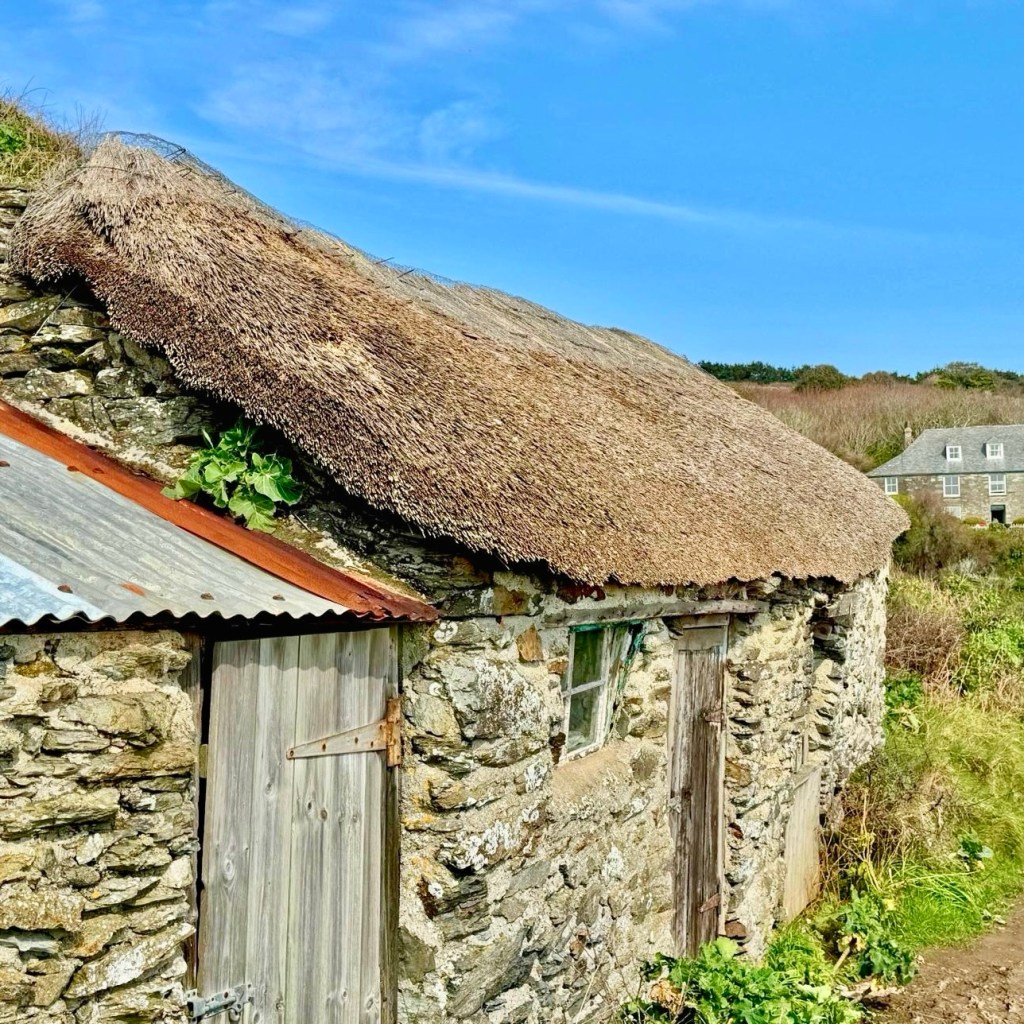
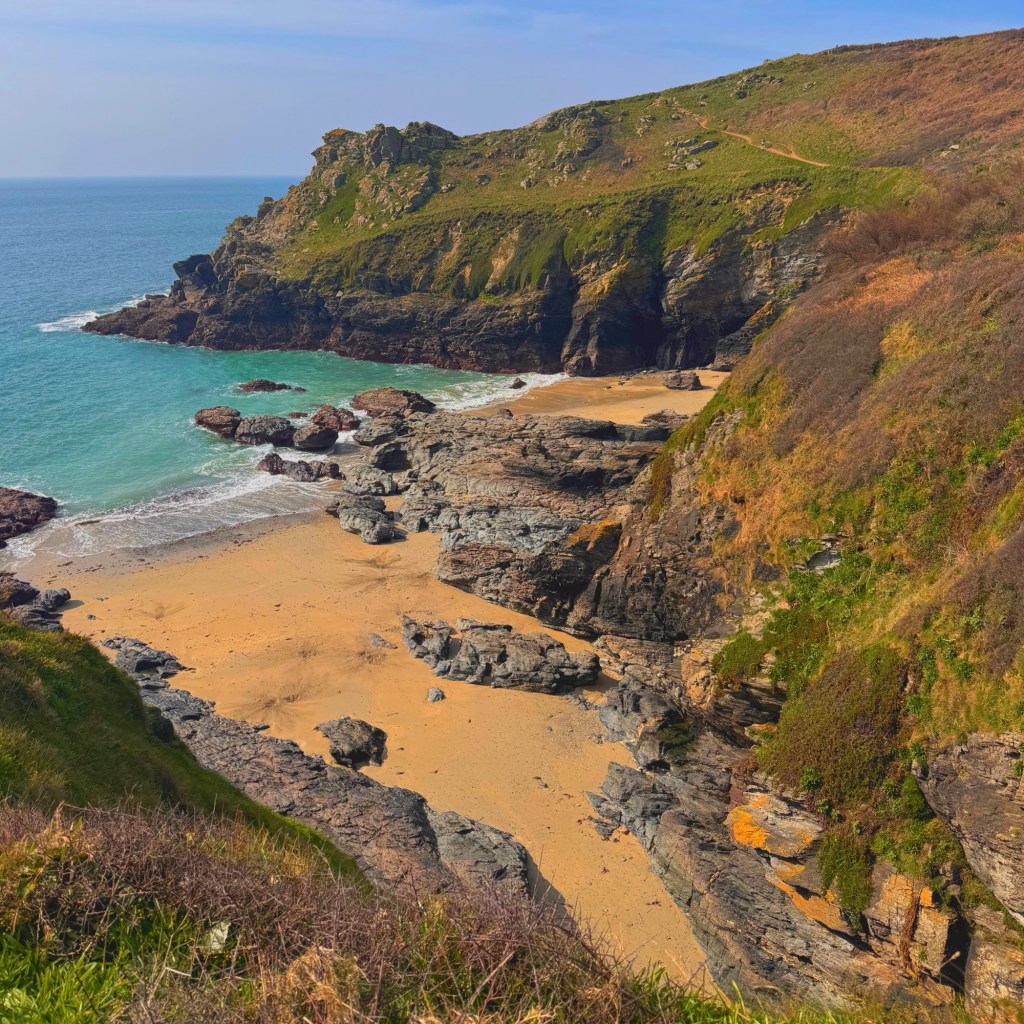
As you make your way towards Prussia Cove, you will see several buildings, primarily ruins from the late 18th and early 19th centuries. Among these are fish cellars. Some of the structures feature thatched roofs, while others have been converted into private cottages. There are three coves together at Prussia: Piskies, Bessy’s and King’s Cove.
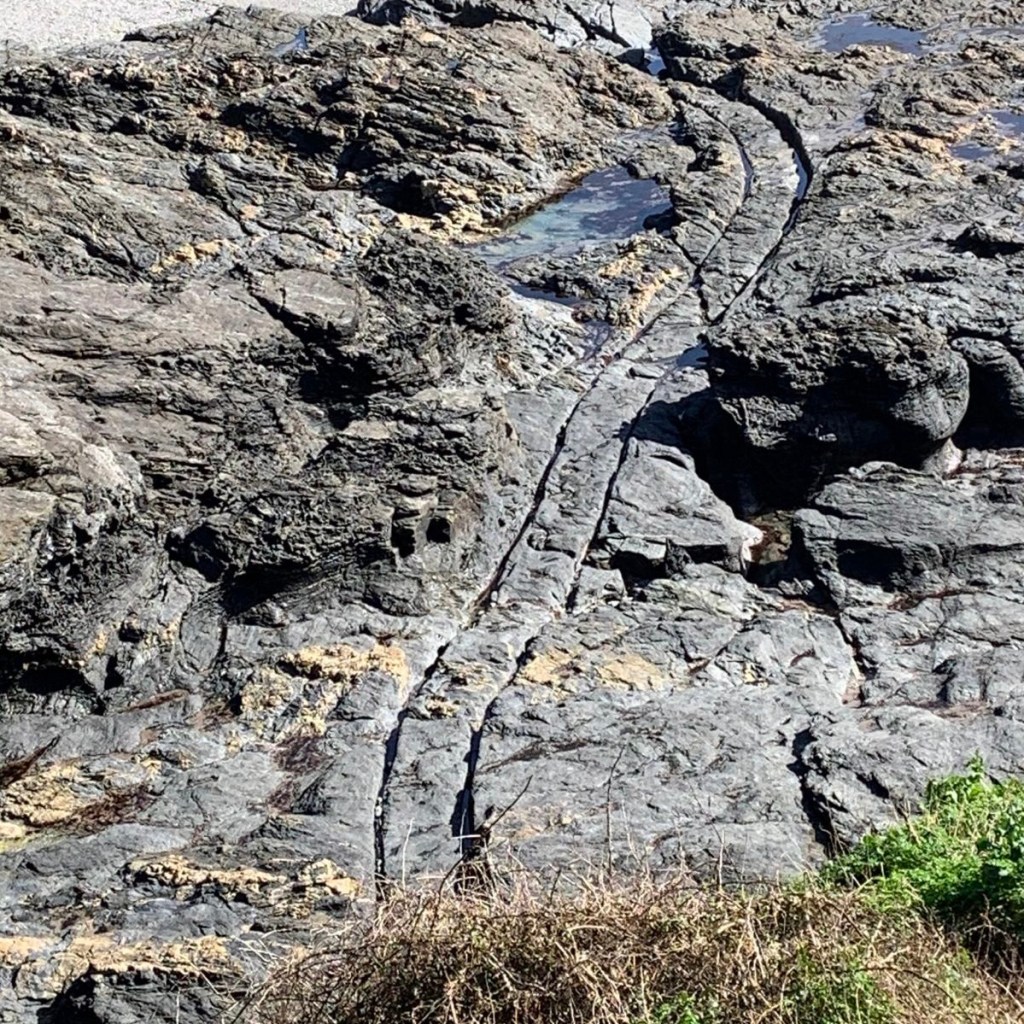
It’s a lovely spot for a swim on warm days and has an interesting past. The Carter family, particularly John Carter, who called himself the “King of Prussia,” operated here from the mid-1700s. They smuggled contraband (brandy, gin, rum, tea, etc.) from France and Guernsey into the hidden, sheltered coves, using caves for storage and building harbours, roads, and a gun battery on the headland for defence. Bessy’s Cove was named after Bessey Bussow, who ran an unlicensed alehouse there; a secret passage once connected it to the beach below, and you can still see cart-wheel grooves cut into the stone from hauling goods up the slipway. I remember reading Smuggler Ben to our older grandchildren when they were small, and we all loved the tales of smugglers, caves, secret passages, and danger.
Enid Blyton books were a big part of my own childhood, as were 3-digit telephone numbers, chopper bikes, clackers, flares, tank tops, Tiswas, and inappropriate jokes about the Magic Roundabout. I digress, but those of us fortunate enough to grow up in the ’70s experienced a strange mix of freedom, questionable safety standards, No 6 cigarettes sold in fives for when we couldn’t afford a pack of ten, and the freedom to go out during the day and solve mysteries before tea. Walking the Cornish Coast path also fills me with the most wonderful, exhilarating sense of freedom.
Moving on 45 years 😊… We headed towards Praa Sands; the path is relatively easy with gentle ups and downs, but well-trodden and straightforward. It’s very atmospheric, with its smuggling history, the appearance of spring wildflowers, and seabirds preparing for nesting season. Most of the mud had dried, so we made good progress reaching Praa Sands’ vast expanse of beach, popular in the summer with families.
Even though I was still full from breakfast, we found a lovely bench in the sun and decided on our coffee and sticky bun. Just the right amount of sugar to see us through the next, most challenging part of our hike.
We’ve often walked this next section by itself. It’s nearly 5 miles, and in the summer heat, it has taken us almost 3 hours. However, today, there was a cool breeze, and we hoped to cut the time to just over 2 hours.
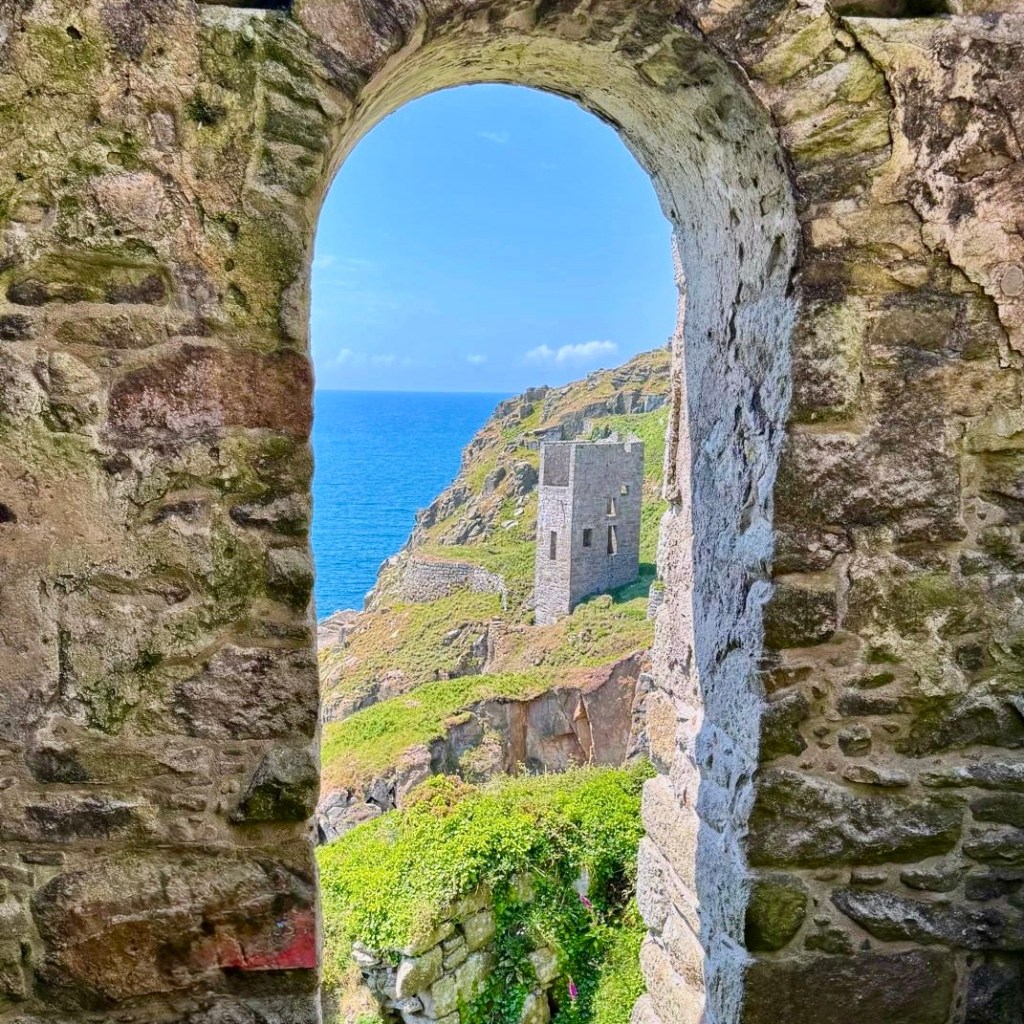
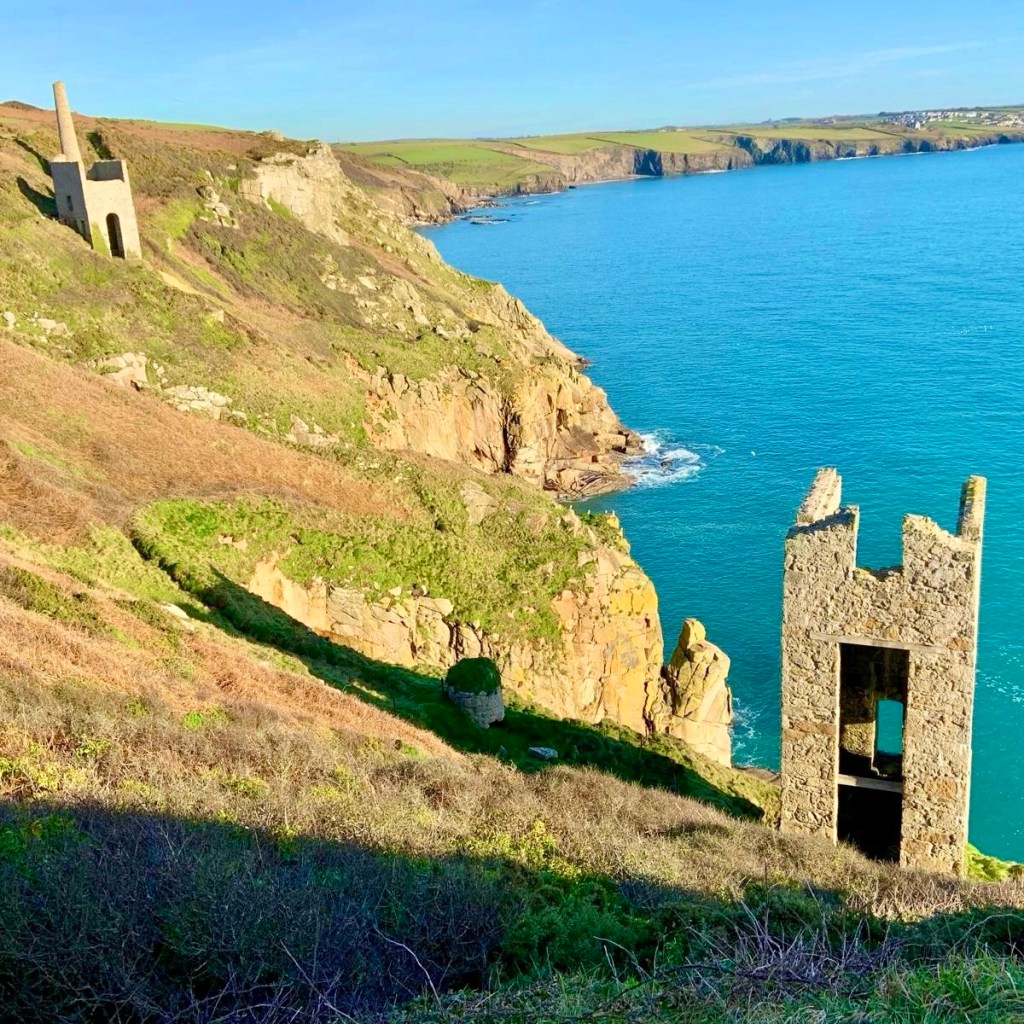
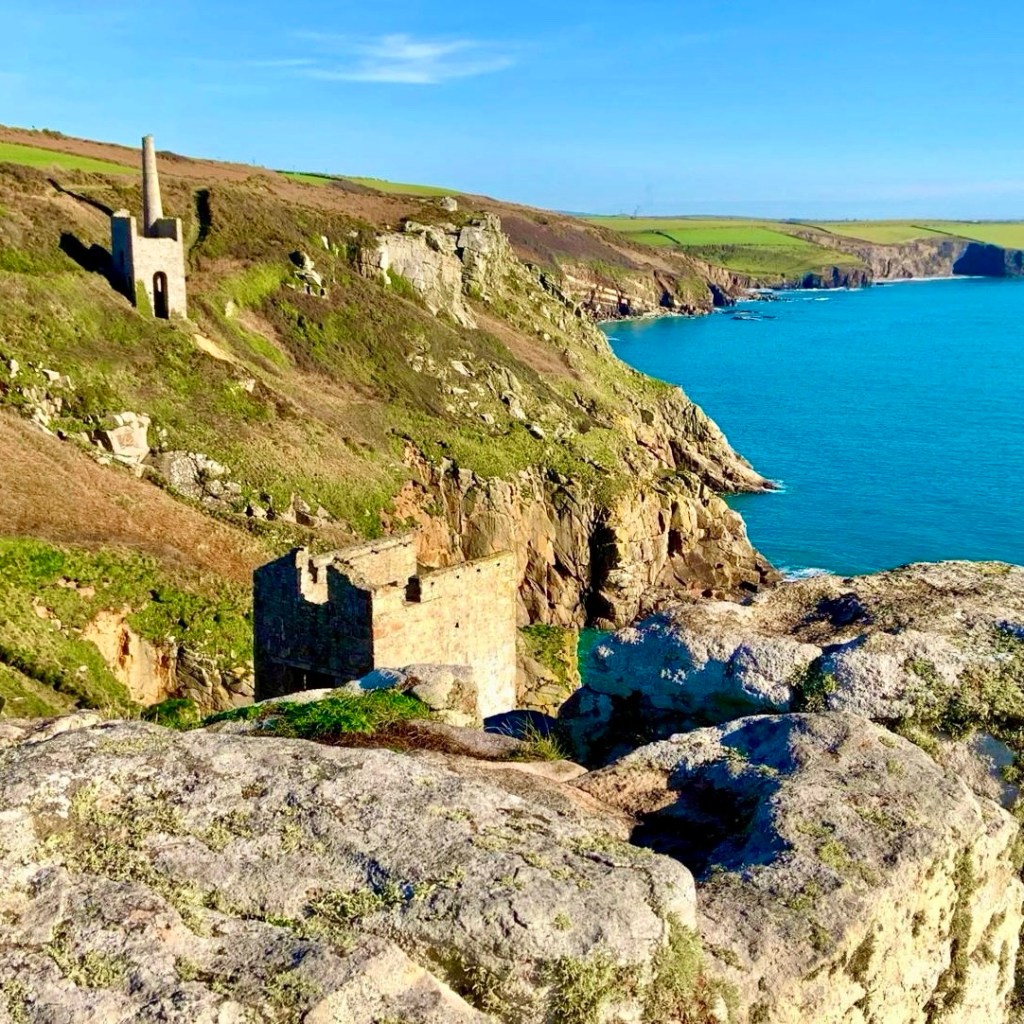
Once you’re away from the beach and past Rinsey Head, the old mining engine houses come into view (notably Wheal Prosper and Wheal Trewavas). They serve as a wonderful atmospheric reminder of Cornwall’s copper mining history. On the north coast, where we live, the Cornish mined tin, while here on the south coast, they mined copper. Nowadays, the north coast is famous for its magnificent surf beaches, whereas the south is more renowned for sailing.
By now, it was a beautiful, clear day, and the views were breathtaking—rugged cliffs, turquoise waters, and the iconic mines, which you can walk right up to. I’ve often taken photos through the mine’s window of the turquoise waters below. Further along towards Trewavas, there are several engine houses on the cliffs. It’s a rugged terrain, and some paths are close to the cliffs in places.
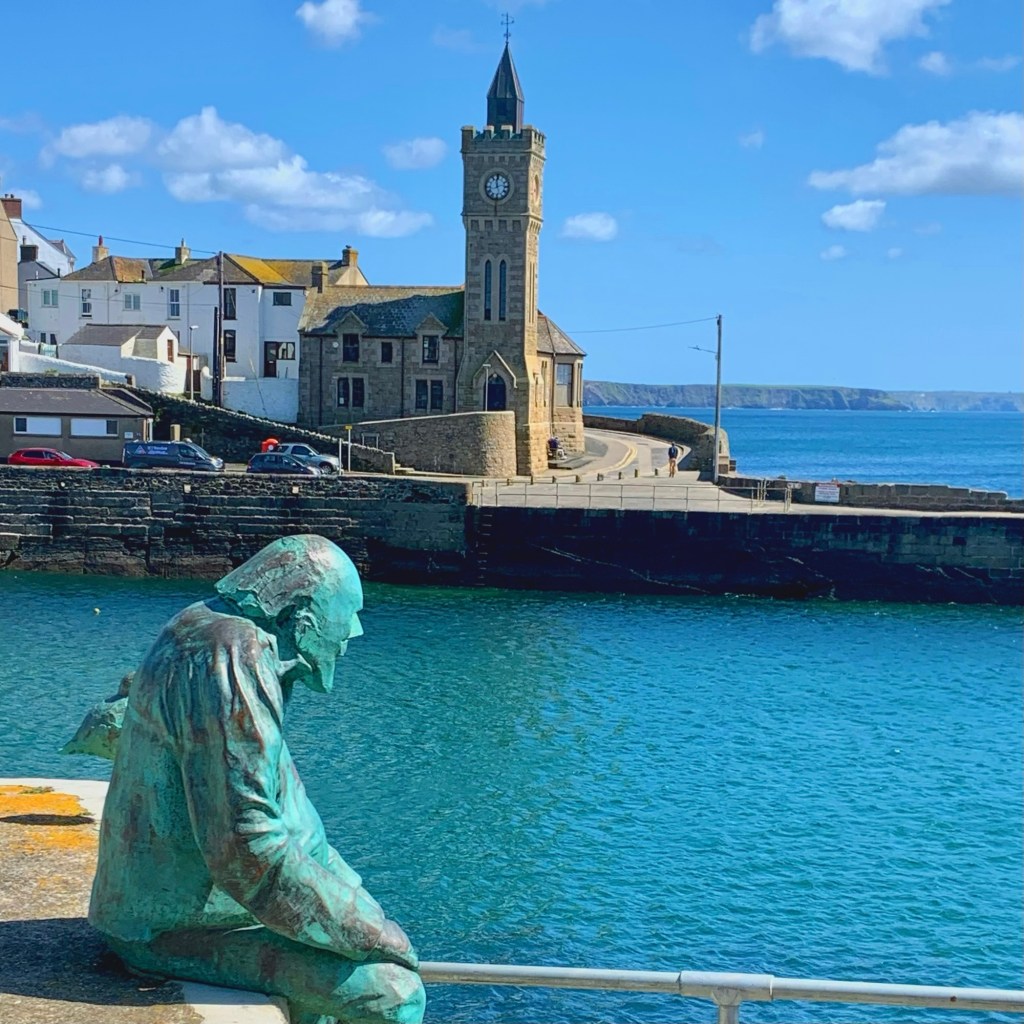
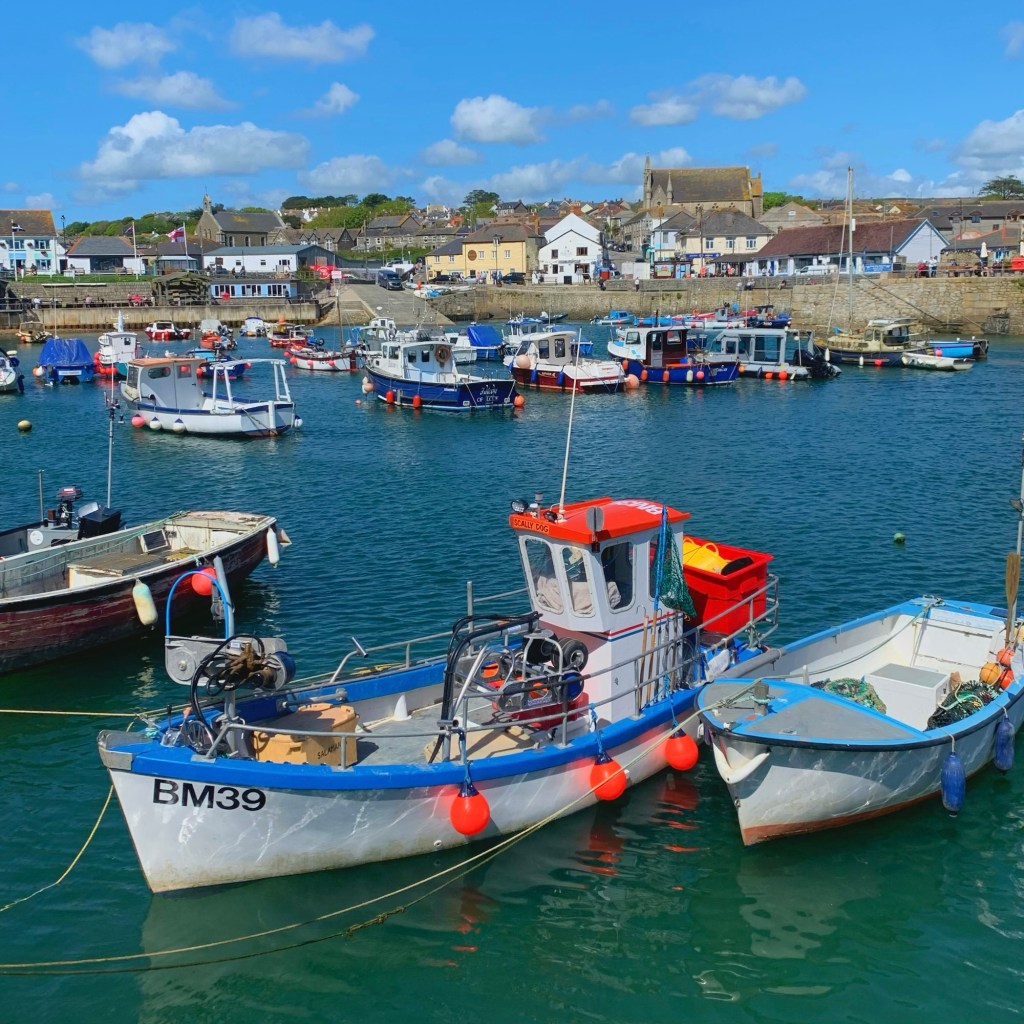
With just a few stops, we made steady progress, and it’s always a delight to reach the charming fishing village of Porthleven, known for its historic port, lively pubs, and restaurants. When we visit Porthleven, we’re typically dressed for hiking, and I can’t help but watch with envy as well-dressed visitors enjoy fresh fish and a glass of Sauvignon Blanc over a long, relaxed lunch😊. However, I’ve never attempted to hike after half a bottle of wine; I can only imagine the scenery might spin a bit, and I might be whispering sweet nothings to bewildered squirrels! Today, we enjoyed our cheese and tomato roll on a bench overlooking the harbour—simply unbeatable!
I recently experienced vulnerability. It was such a powerful emotion that it inspired me to write this blog.
Before we continue, I want to share a story with you. A few years ago, a friend called me after losing her job. Instead of the usual “I’m fine”, she said, “Andrea, I’m struggling, I feel like I’m not good enough anymore”. That single moment of raw honesty didn’t make her seem weak; it made her real, with a strength I could only admire, and I told her so. I left the conversation feeling closer to her and strangely more capable myself.
My own recent encounter reminded me of that conversation and encouraged me to explore this topic further. Being vulnerable is a daunting emotion. However, recognising your vulnerability and being able to express it is where your emotional intelligence comes into play. One depends on the other, and together they help you foster deeper connections, better self-regulation, and authentic resilience. If you’ve ever wondered why “strong, silent types” often struggle with relationships while openly human people seem to thrive emotionally, this post is for you.
Let’s explore each one separately.
Vulnerability is the willingness to openly express your true feelings, thoughts, or weaknesses, even at the risk of being hurt, rejected, or judged. It means allowing others to see you as you are, without hiding or shielding yourself emotionally.
Common examples of vulnerability include trying something new, especially in front of others. Falling in love, trusting someone, or having a difficult conversation all require you to relinquish control and embrace uncertainty. In the workplace, it involves admitting you made a mistake and explaining how you will rectify it, or perhaps sharing that you are overwhelmed by your workload and asking for support to prioritise it.
Emotional intelligence involves being wise with feelings, recognising when you’re feeling vulnerable, and maintaining control rather than reacting impulsively with the odd “dramatic door slam” thrown in. You will build better connections with others and notably improve your work and personal life.
Before I share my practical tips, here are two stories from real life that helped me to understand the power of vulnerability and emotional intelligence combined.
When Satya Nadella became CEO of Microsoft, he shifted the company’s culture from a “know-it-all” approach to a “learn-it-all” approach. He openly shared stories, including how he cared for his son with cerebral palsy, which taught him empathy and patience, and he admitted he didn’t have all the answers. This vulnerability helped demonstrate his emotional intelligence. Recognising his own emotions built trust throughout the company. The result? Greater innovation, employee engagement, and improved company performance.
Brené Brown’s research on vulnerability is widely acknowledged. However, confronting her own vulnerabilities was an essential step in her journey to success. In one of her case studies, she describes a therapist who helped her face her vulnerabilities by openly admitting her struggles with shame and fear. Her work demonstrates that people who embrace vulnerability—such as saying, “I’m struggling,” instead of pretending everything is fine—develop greater emotional intelligence.
I can recall several moments in my life when I felt incredibly vulnerable. In those times, I often chose to keep those feelings locked away, thinking it was the best approach. But looking back, I realise that opening up could have led to much more positive outcomes.
With that in mind, here are three ways to cultivate your emotional intelligence and embrace vulnerability over the coming week!
Each day, take a moment to identify and express one specific feeling you are experiencing.
Pause and ask yourself, “What am I really feeling right now, and why?” Identify it (e.g., “I’m anxious about this deadline because I fear disappointing my team” rather than just “I’m stressed”). Then, share that feeling with a colleague, partner, or friend, without sugarcoating or trying to fix it. Notice how this enhances self-awareness; most people will notice less inner tension by day three.
Request help or feedback from a boss, a colleague, a partner or friend
Choose a moment when you would typically try to resolve something on your own, like struggling with a task at work or at home, or feeling unsure about a decision. Say something vulnerable, such as: “I’m not sure how to handle this; can you help me think it through?” or “I’d love your feedback on how I handled that; I might have missed something.” This directly encourages vulnerability, practises empathy (by inviting the other person’s perspective), and ensures you’re open to whatever response comes up without shutting it down.
Practice active, non-judgmental listening in one conversation daily
This isn’t easy because you’re also bringing listening skills into the equation, which many of us lack! In a discussion (work, family, friends), focus fully: put your phone away, make eye contact, reflect on what you hear, and resist the urge to jump in with advice or share your own story. If emotions rise within you, notice them silently first (“I’m feeling defensive—why?”). This enhances empathy, while requiring vulnerability (you’re open to their full experience, even if it challenges you). Do this 3–5 times this week; it trains you to stay connected without armour.
Ultimately, for me, embracing my vulnerability isn’t about recklessly exposing myself (excuse the pun) or seeking discomfort for its own sake. It’s a conscious choice I make to show up as my true self—flawed, feeling, and completely human—in a world that often appears to reward the opposite. When we lean into those moments of openness, we build the skills that define emotional intelligence: increased self-awareness, genuine empathy for others, and the courage to form lasting connections.
I understand that this may not always be comfortable, but I’ve come to realise it leads to something far more valuable than any armour I could wear; it brings authentic strength and a life lived with greater clarity and purpose. I still have to remind myself to start small, remain consistent, and trust the process.
“Remember, there’s nothing more daring than showing up, putting ourselves out there and letting ourselves be seen” ……Dr Brené Brown
I didn’t understand how special New Zealand was until we started driving through it. Four weeks on the road, driving nearly 5,000km, this country surprised us every day, and somewhere between the early-morning starts, the scenic drives, and the amazing hikes, it completely stole our hearts.
Below you will find our 4-week road trip itinerary that let us hit the iconic spots without feeling rushed. We balanced geothermal wonders, beautiful beaches and Māori history on the North Island with epic fjords, glaciers, and hikes on the South—perfect for first-timers in a campervan or rental car. We chose late summer for the best weather and slightly fewer crowds than in January, although some places were busier than others.
Quick Facts / At-a-Glance Summary (for the Skimmers 😊)
North Island (11 days) → Ferry → South Island (15 days) Why this split? The South Island has more dramatic scenery per km, so we allowed extra time there.
Rental car and hotels or a campervan? We went with the rental car option combined with travel hotels, but this itinerary would also suit those who prefer a campervan. It is worth noting that if you choose to travel in a campervan, you cannot simply park and sleep anywhere, as freedom camping is heavily regulated. See freedom camping rules 2026
When to go? We chose late summer/early Autumn (February into March) for the BEST weather and fewer crowds than in January. If you want fewer crowds but unpredictable weather, opt for Spring (Sept – Nov).
How to get there? We flew with Singapore Airlines from London Heathrow, including a 5-day stopover in Perth, WA, on the outbound journey, and a 2-day stopover in Singapore on the return. You can purchase a “round the world” ticket or select different stopovers based on your airline choice.
Apps used: Wikiloc (for hiking), Grok and ChatGPT for driving stops on our transfer days, Get Your Guide (for booking “experiences”), and Polar Steps for recording our journey and adding photos and notes. Uber works especially well in NZ for evenings when you want a few drinks without driving.
Itinerary – We worked with friends who knew New Zealand well to make the most of our time. We arranged our trip through Flight Centre, who were excellent (see budget separately)
Best Tip: On drive days, we would ask Grok or ChatGPT for scenic routes and stopping points. Both apps suggested excellent stops not listed in the books.
Budget: You’ll have to read through the blog to the end 😊
Detailed Day-by-Day Itinerary
North Island (11-day Itinerary)
Days 1–2 – Auckland. We arrived early morning after an overnight flight from Perth, leaving our luggage at the hotel since we were too early for check-in. To wake ourselves up, we hiked up Mount Eden, the highest point in central Auckland, offering 360-degree views of the skyline and harbour. Other highlights included the Sky Tower and enjoying quality food and drinks by the harbour. We also took a 12-minute ferry to Devonport, a beautiful seaside town, where we hiked to North Head for excellent views back to the Auckland skyline.
Days 3–4 – Bay of Islands / Northland (Paihia base). It rained during our two days here, so we missed the Hole in the Rock trip. However, we visited the Waitangi Treaty Grounds, which were fantastic, and we learned a lot about Māori culture. We also found a great pub, The Tipsy Oyster, with superb food, good beer, and a lively atmosphere. The rain made the Haruru Falls and the Whangarei Falls superb. Its a long drive to Paihia so if you are looking to shorten your trip, missing it out would save at least 2 days.
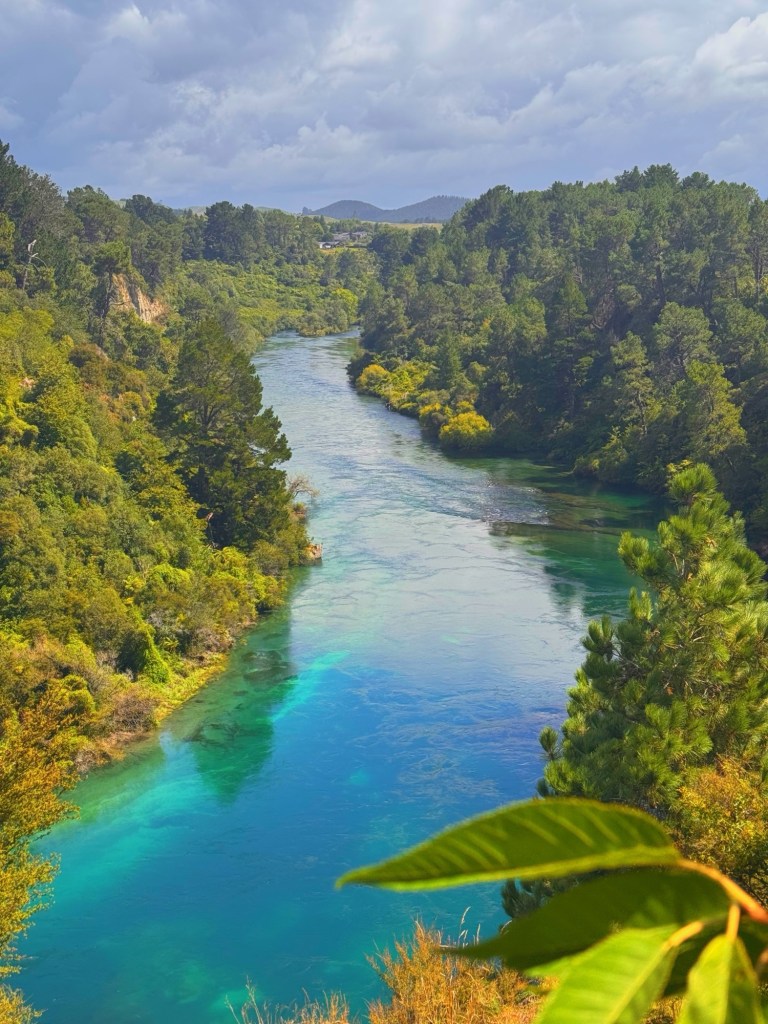
Days 5, 6, 7 & 8 – Rotorua, Mount Maunganuiand Tapau. We used Rotorua as our base for exploring the area. The geothermal features were excellent, bubbling mud pools, geysers, hot springs and volcanic landscapes. Waio Tapu is the most advertised, but I preferred some of the free ones because they were much less busy. The highlight of our North Island trip was the Māori cultural experience just outside of Rotarua. Mount Maunganui was a great day trip, and my favourite hike was to Huka Falls, north of Tapau, which also has a non-hiking viewpoint.
Day 9 – Napier. We spent one night in Napier, a beautiful coastal city in the Hawke’s Bay wine region and recognised as the Art Deco Capital due to its well-preserved 1930s architecture. After a devastating earthquake in 1931, the city was rebuilt quickly in the Art Deco style, featuring bold geometric patterns and vibrant colours. We enjoyed exploring iconic structures like the former Masonic Hotel and its distinctive domes.
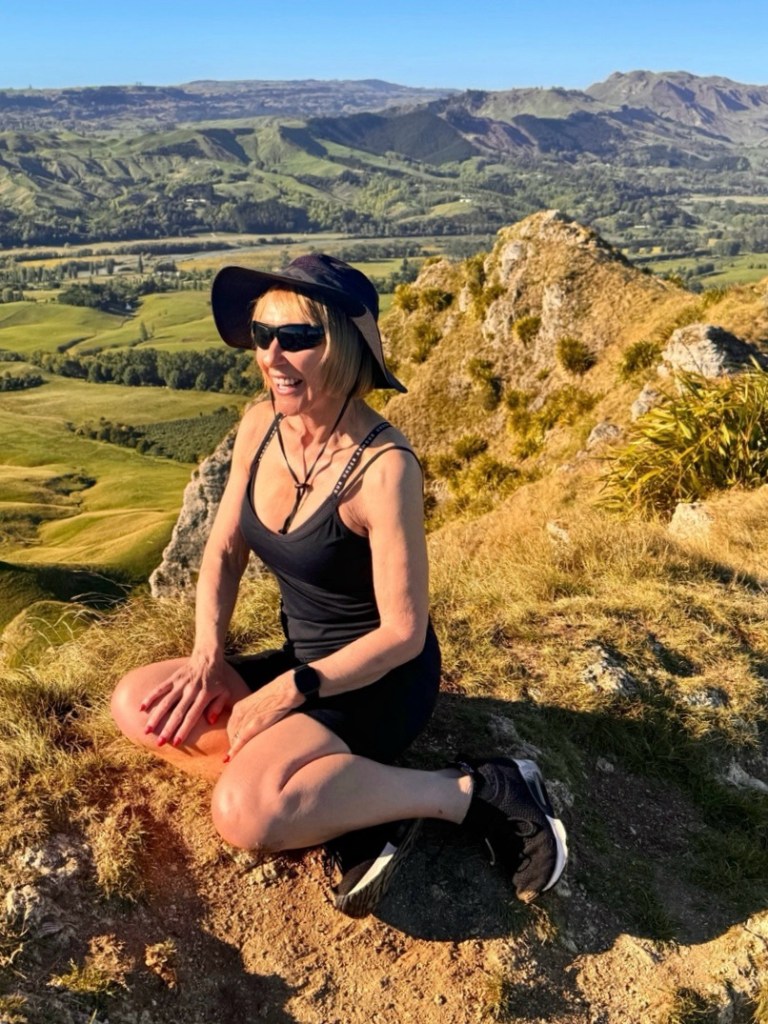
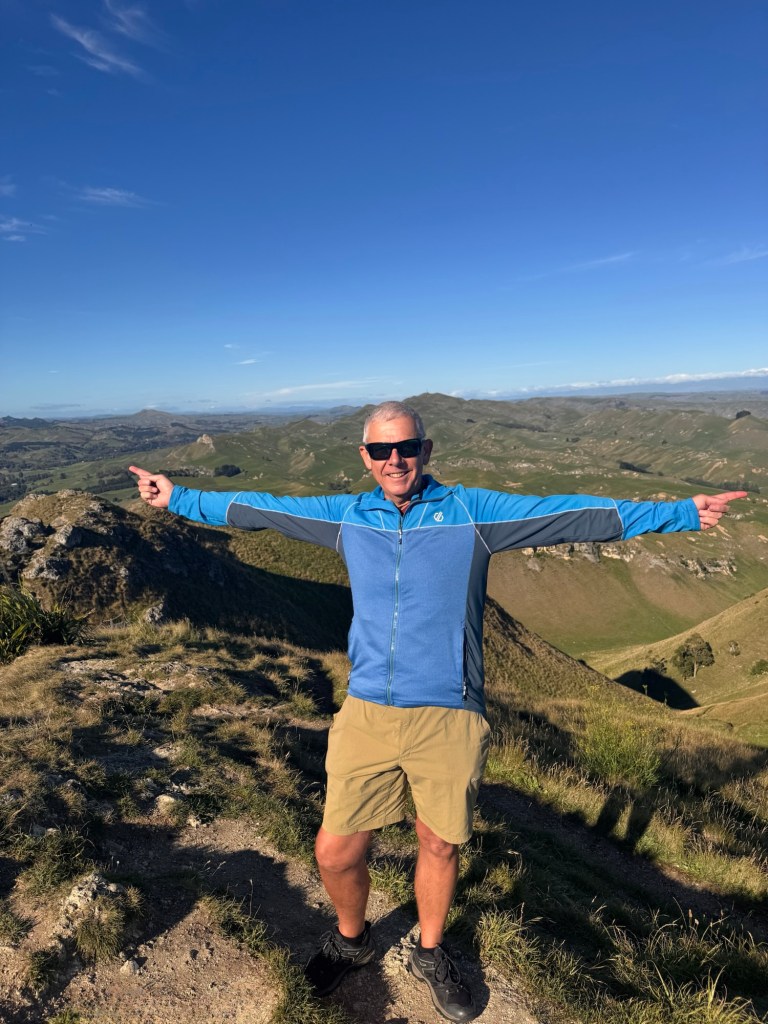
The next morning, we hiked Te Mata Peak for stunning views of the vineyards and coastline. The final leg of the drive to Wellington took us through the scenic Remutaka Ranges, offering breathtaking views.
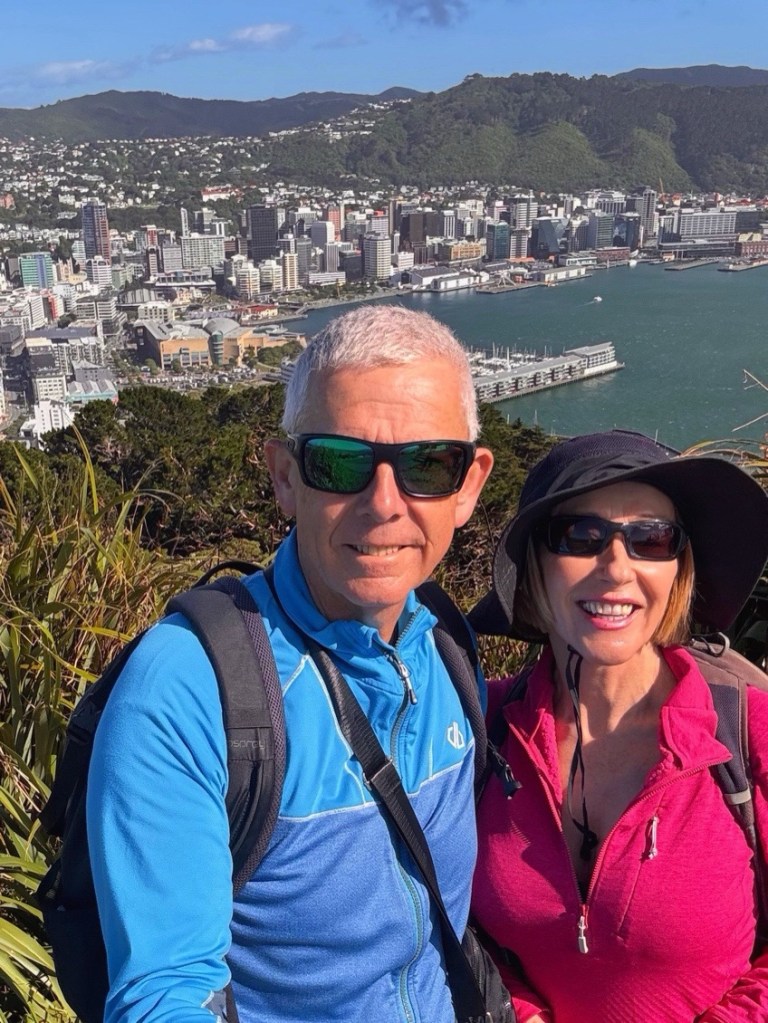
Day 10 & 11 – Wellington. Wellington was my favourite among New Zealand’s cities. Surrounded by beautiful waters and lush, green hills, we hiked up Mount Victoria for breathtaking views of the harbour and CBD. As a pub girl rather than someone who prefers fancy restaurants, we enjoyed The Old Bailey, a lively city pub with excellent beer and food, where we chatted to other travellers and shared stories of our trips so far.
Day 12 and 13 – Ferry Crossing to South Island and Nelson
This is a fantastic example of Grok coming through. When you leave the ferry, there are three routes to Nelson: one is the State Highway; the second is a longer scenic route via SH63; and the third is via Queen Charlotte Drive, which is the one we drove. It is twisty and narrow in places, but it offers breathtaking viewpoints to enjoy the landscape. Nelson is a wonderful place to stay and is recognised as one of the sunniest spots in the country. While it has a lively atmosphere, my main focus was that it serves as the gateway to Abel Tasman, an excellent area for walking. If you enjoy hiking, you won’t be disappointed. We relied on Wikiloc for all our routes, so be sure to check it out.
After hiking, we were hungry and discovered The Vic Pub (what a surprise) serving an excellent roast dinner. I love vegetables and miss them when we’re on the road. This roast didn’t disappoint, and we managed to order extra veg too! 😊.
Days 14 and 15 – Kaikoura. Take your time driving from Nelson to Kaikoura, as it takes you through New Zealand’s renowned Sauvignon Blanc region, Marlborough. Over the years, we’ve visited some excellent wineries in South Africa and Australia, so we didn’t plan for a long stop. However, I did want to visit the Cloudy Bay winery, a personal favourite of mine.
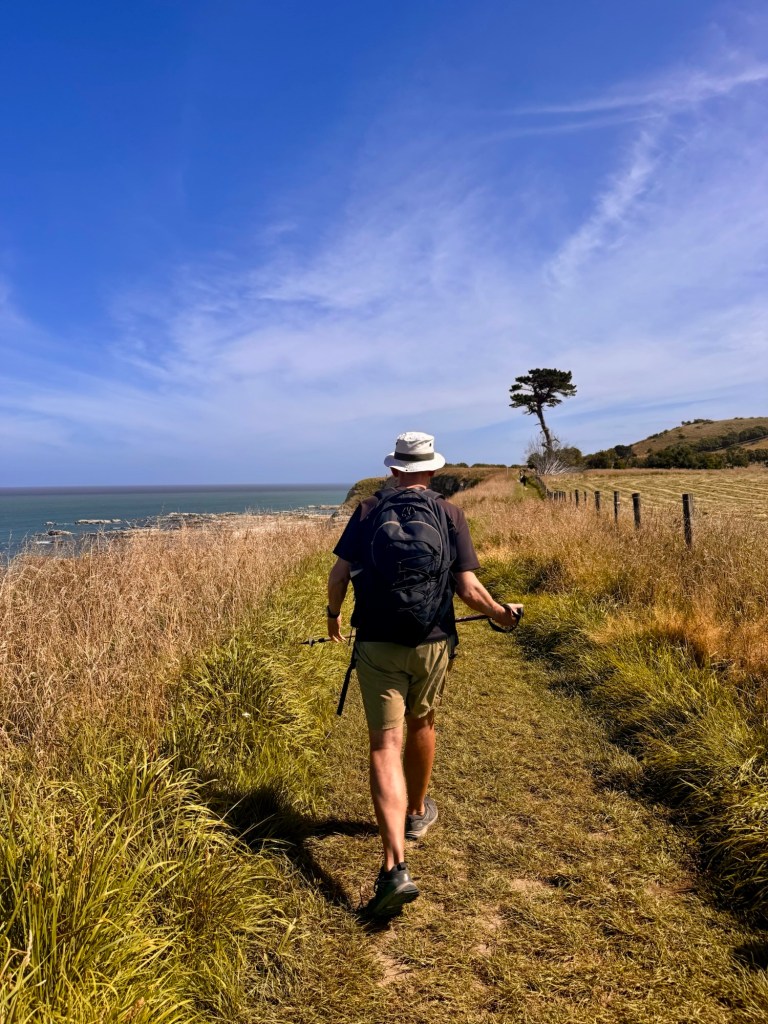
Kaikoura is famous for its stunning marine wildlife experiences, including year-round whale watching, dolphin swims, seal colonies, and fresh crayfish. Upon arrival, we did the 10k coastal walk, which reminded me of being back in Cornwall, it was beautiful. The next day, we had booked to go whale watching, but the sea was too rough, so neither the boat nor the plane was operating. We didn’t have time in our itinerary to stay an extra night, but I’m sure it would be worth it. They do offer a refund if you don’t see whales!
Day 16 – Christchurch. The AI apps performed exceptionally once again. ChatGPT uncovered three hidden spots between Kaikoura and Christchurch that most tourists overlook. I won’t share them, as then they wouldn’t remain secret 😊
We were only in Christchurch for one night, so after taking the Gondola up to Mount Cavendish Summit for panoramic views of the city, we enjoyed the tram tour on restored heritage trams, which stopped at many of the city’s key sites. We’d usually walk, but time didn’t permit. In the evening, we met with one of Jamie’s cricket friends and his wife. Stuart plays for England over 70s, and they won the over-70s World Cup, beating Australia in the final. It was lovely to share a few drinks with familiar faces.
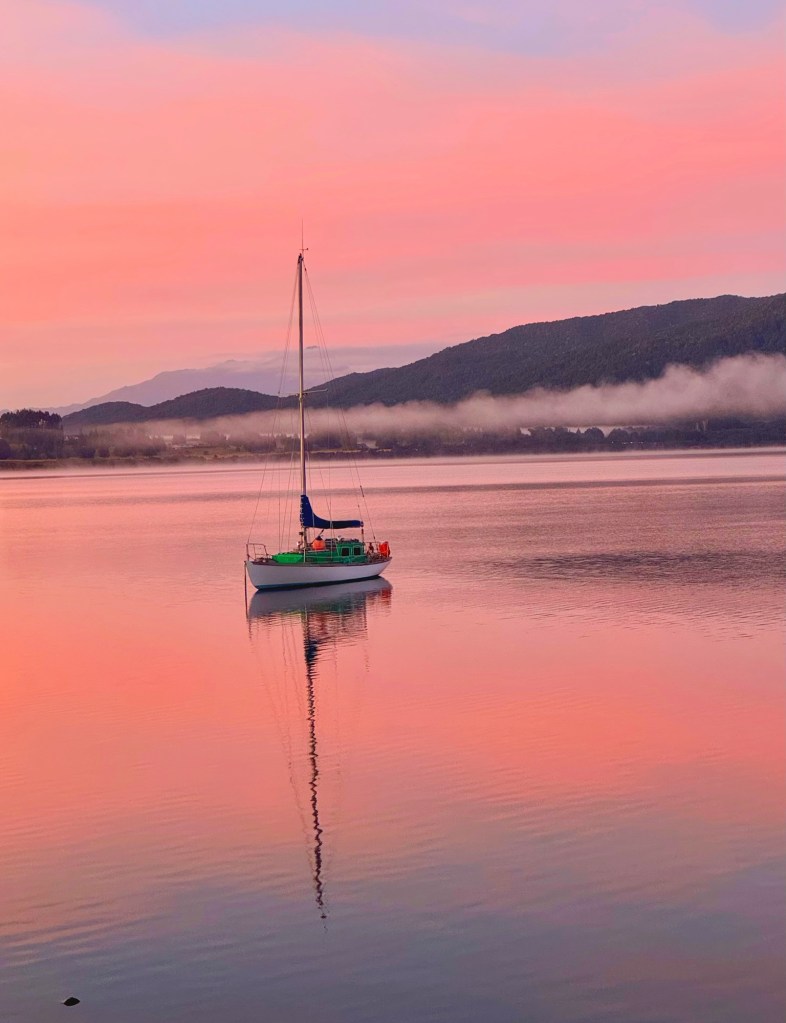
Days 18, 19 and 20 – Te Anau. This was my favourite place on tour. It’s a serene gem on the shores of New Zealand’s second-largest lake, Lake Te Anau — a vast, mirror-like expanse of deep blue that perfectly reflects snow-capped mountains and lush forests. Its beauty lies in the dramatic contrast: calm waters meeting rugged Fiordland peaks, ancient rainforests and a peaceful small-town vibe.
Sunrises and sunsets here are magical, painting the sky with vibrant pinks, oranges, and purples over glassy reflections. This is where we visited the glow-worm caves, which also allowed us to take in the beauty of Lake Te Anau as the glow-worm cave was accessed by boat only.
The hiking was world-class. Its proximity to the Kepler Track, lakeside walks, and steeper routes, with dramatic scenery, waterfalls, rainforests, and mountain ridges, made me think I could have stayed here much longer. The Abel Tasman (mentioned earlier) and Kepler tracks are part of the 10 official New Zealand Great Walks managed by the Department of Conservation. Both are located on the South Island and are recognised for their scenic beauty.
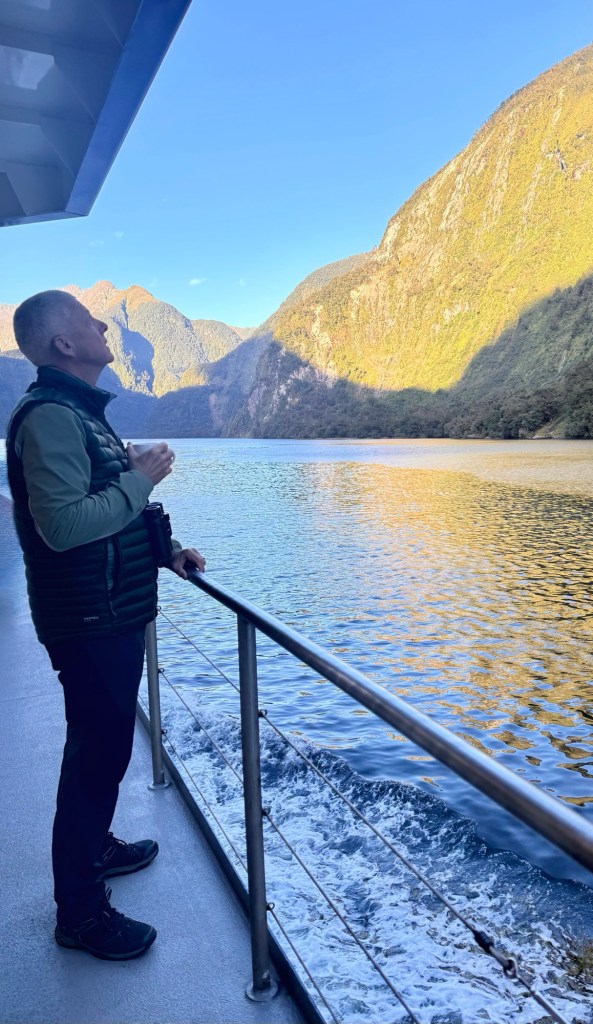
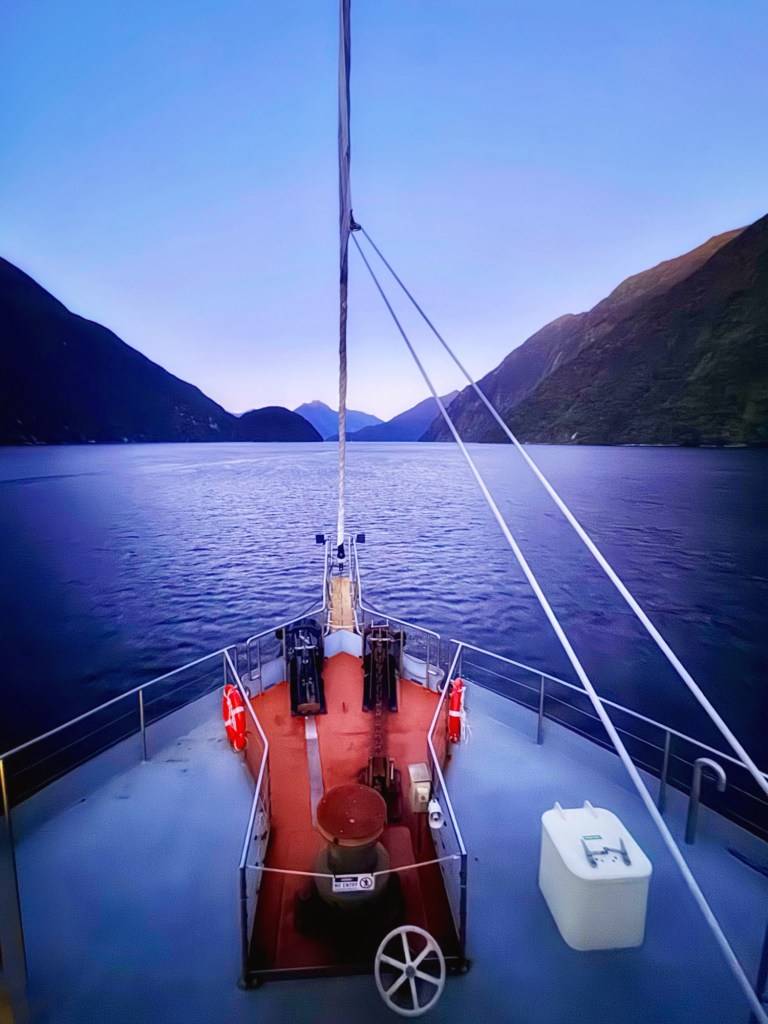
Day 21 – Doubtful Sound Overnight Cruise. Before I tell you why this was one of the most magical experiences ever, let me say this. Two fjords offer this experience: Milford Sound and Doubtful Sound. Milford Sound is easier to access and receives around 7,000 visitors a day. Doubtful Sound is more difficult to reach and has approximately 100–200 visitors daily. Since I don’t like crowds, this was a clear choice.
The beauty of an overnight on Doubtful Sound is profound and serene — a vast, remote fjord in Fiordland National Park that’s also more untouched than Milford Sound.
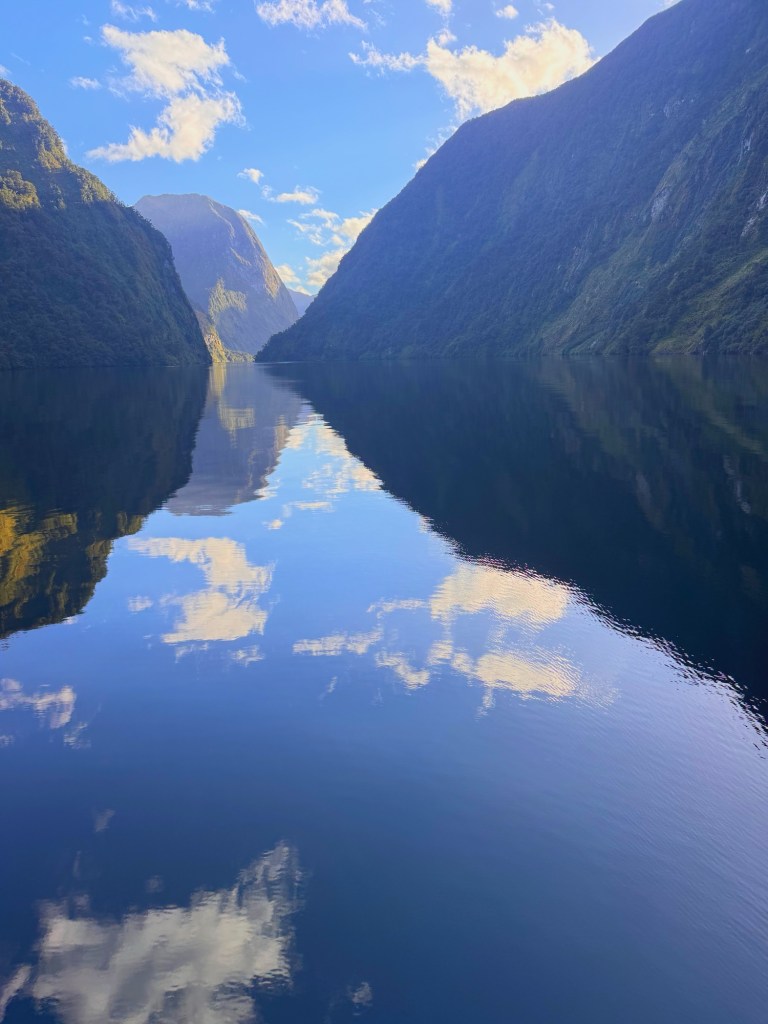
Cruising its deep emerald waters (up to 421m), you’re surrounded by towering, rainforest-covered cliffs rising dramatically from the sea, with countless cascading waterfalls (especially after rain) and misty skies. The scale feels vast yet intimate: glassy reflections create perfect mirror images of mountains and forests, while wildlife like dolphins, seals, and penguins may appear. The famous “Sound of Silence” descends at night — profound quiet broken only by nature and the stars were dancing through the turbulent air. We saw dolphins, a colony of seals, when our captain sailed into the Tasman Sea (not for the faint-hearted), and the giant albatross.
Sunrise and sunset are ethereal: soft light bathes the fjord in golden hues, clouds drift low over jagged ridges, and the water turns liquid silver or deep blue. It was raw, pristine, breathtaking and restorative. Phones don’t work!
Days 22 and 23 – Queenstown. Jamie and I held mixed opinions about Queenstown, often called New Zealand’s adventure capital. It definitely lived up to its reputation, and we enjoyed the hiking, using Wikiloc to search for the best options for the time available. The scenery was stunning, with turquoise waters mirroring the surrounding mountains, though it was very busy. Locals mentioned that it’s even more gorgeous in winter, when the mountains are covered in snow.
We discovered a fantastic “brewery” bar and superb restaurants, but by the time we arrived in Queenstown, we felt our appetite boating experiences was full. That said, there were plenty of excellent options if you were still up for it.
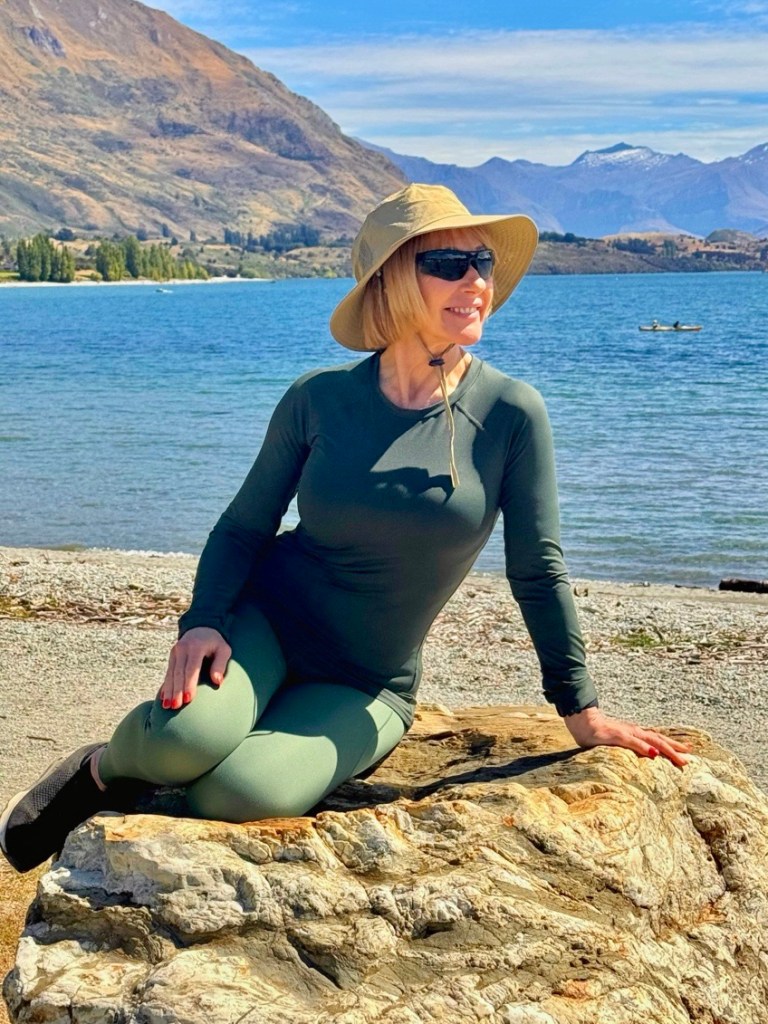
Day 25 – Wanaka. Another stunning lakeside town, more relaxed than Queenstown and surrounded by dramatic alpine scenery. We were only here for one night, and for us, that was sufficient to do some hiking and take in the scenery.
Day 26 and 27 – Franz Josef. Another huge highlight of our trip, and unlike Kaikoura, where we were unlucky with the weather, which cancelled our whale watching, the weather gods were very kind to us.
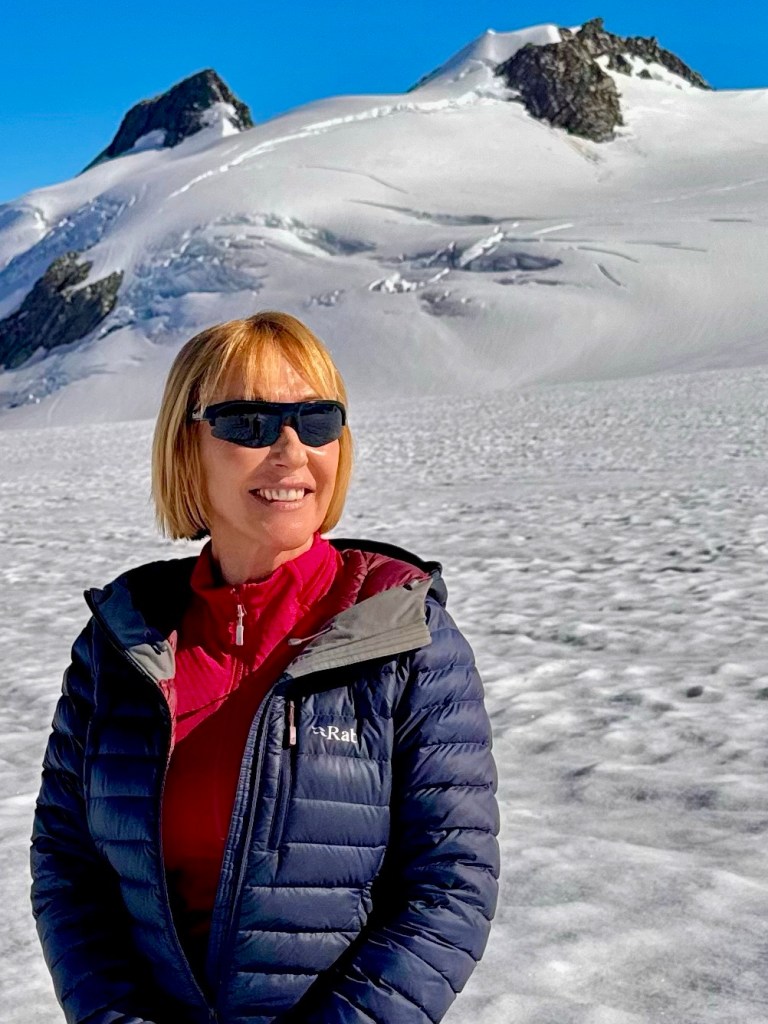
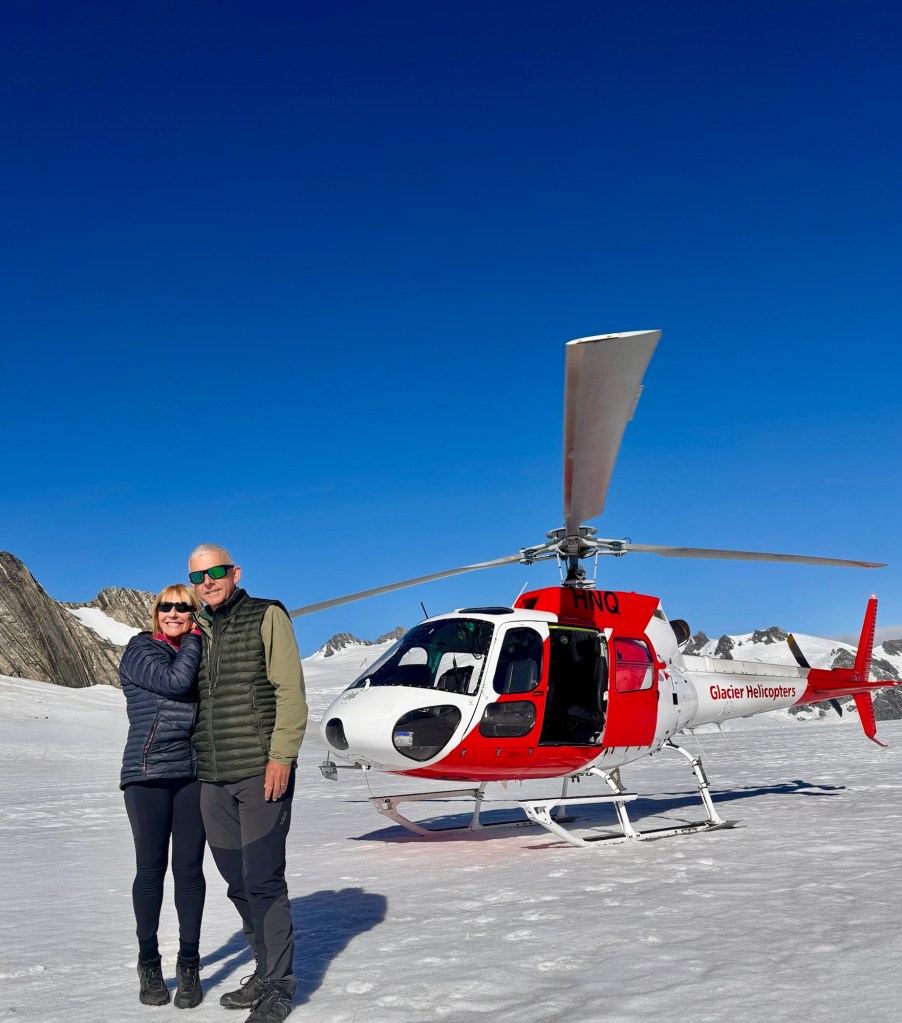
We took a helicopter from Franz Josef to both the Fox and Franz Josef glaciers, and it was the most exhilarating, once-in-a-lifetime experience.
Sitting in the front of the helicopter with the pilot, the flight was thrilling, climbing dramatically into the rugged Southern Alps. The views are jaw-dropping, endless ice fields, deep blue crevasses, towering seracs, and surrounding snow-capped peaks—creating a surreal, otherworldly sensation as the massive glacier unfolds below like a frozen river carving through mountains.
The landing is gentle but awe-inspiring: we touched down on a flat snow/ice field high up, and we stepped out into crisp, cold air amid vast silence broken only by wind and distant ice cracks. For me, it was humbling and dreamlike. The isolation hits hard: no crowds, the glacier’s eerie blue hues, and epic panoramas.
We booked early in the morning, so we had the rest of the day to hike around the surrounding area, again using Wikiloc to find suitable routes.
I loved the Franz Josef vibe, which I can only describe as a backpacker and hiker’s adventure hub.
Day 28 – TranzAlpine train to Christchurch and flight home (via Singapore). We were somewhat underwhelmed with this journey operated by Great Journeys New Zealand, and we felt we would have appreciated the scenery more if we had driven ourselves, stopping to admire the stunning views. Yes, the scenery was breathtaking – vast plains, braided rivers, deep gorges, alpine valleys, and mountain peaks, along with impressive engineering feats like the Otira Tunnel and viaducts in Arthur’s Pass National Park. However, the train was busy, and the scenic “open” carriage was crowded with people eager to take photographs. For me, being in the mountains is the greatest feeling in the world. But being on a packed train, just looking out at them through the window, was not for me.
Budget
The Flight Centre invoice for car hire, accommodation, Premium Economy flights, the overnight Doubtful Sound experience, and the TransAlpine train was £15,375. If you travelled in economy, you could reduce the cost by about £3,000. Using a campervan instead of hotels would lower it further. Remember, you still need your spending money. The standard of our travel accommodation was very good. Mostly, we had a kitchenette, a king-size bed, and great showers. This significantly cut our dining expenses and allowed us to wash clothes on the go, reducing packing.
We covered thousands of kilometres, crossed the Cook Strait, and experienced both the vibrant geothermal centre of the North Island and the rugged, majestic wilderness of the South—showing that four weeks is the perfect amount of time to truly fall in love with this country without rushing. New Zealand doesn’t just reveal stunning scenery; it leaves you with a deep sense of awe, freedom, and connection to nature. It has been the ultimate road trip, providing us with stories, photos, and a greater appreciation for one of the world’s most magical destinations.
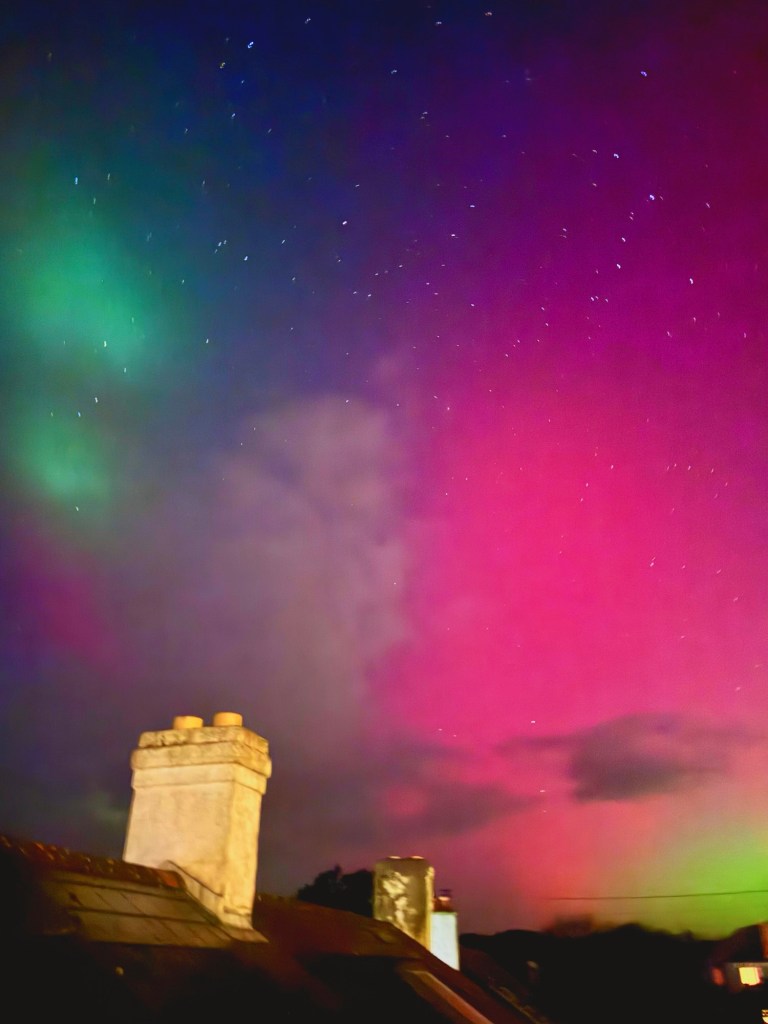
Welcome to my first blog of 2026 and I must start with last night’s Northern Lights display in Cornwall. As of today, it is widely regarded as one of the best—if not the best—sightings ever recorded that far south in the UK.
A powerful geomagnetic storm, caused by a significant coronal mass ejection (CME) from the Sun, pushed the aurora unusually far south. Outside our house, the sky was illuminated with vibrant hues of pink, red, green, and purple, all visible to the naked eye. Since we live in a “dark sky” area with no light pollution, it was truly a magnificent spectacle.
Let’s move on to a topic that isn’t quite as uplifting: the January blues and the emotional slump that often accompanies this time of year. I don’t know about you, but I always disliked going back to work on January 2nd, even though I loved my job! The dark mornings, foggy London streets, rain-soaked pavements, and people bundled up, looking appropriately miserable—all contribute to that distinct January vibe. It often feels like the universe has a personal vendetta against us during this month.
January’s reputation as the “most depressing month” stems from a mix of “some” real factors: shorter days, cold, wet weather, unmet New Year’s resolutions, holiday credit card bills, and the return to daily routines. Additionally, cultural narratives, such as Blue Monday, contribute to this perception. While I don’t suggest that your problems will vanish—they won’t—this portrayal of January can make it more challenging to confront those issues effectively.
Although there is some science behind why we feel rubbish in January, much of the hype is essentially a lie. Let me explain. Take Blue Monday, the third Monday in January, for example, which is labelled the “most depressing day of the year.”
The concept was invented in 2005 by psychologist Cliff Arnall as part of a PR campaign for the UK travel company Sky Travel. He created a fake “formula” that takes into account post-holiday debt, bad weather, low motivation from failed New Year’s resolutions, and the time since Christmas to supposedly calculate the saddest day, all to encourage people to book holidays. Arnall later admitted it was nonsense and even started campaigning to “stop Blue Monday.”
The January blues story is reinforced each year through the media and social media, which can, ironically, worsen feelings by leading people to anticipate sadness. Experts and current research highlight that, although January can be challenging—mainly due to financial issues—it is not significantly worse than other winter months. Additionally, there is no confirmed increase in depression rates specifically linked to the start of January.
That said, Seasonal Affective Disorder (SAD) is real for many people, especially in places like the UK, where winter sunlight is limited. The key difference is that it’s tied to reduced light exposure, which disrupts circadian rhythms, serotonin, and melatonin, not some magical January curse. Importantly, it’s manageable and treatable.
So how do we dismiss the hype and feel better? Here are four behaviours that have worked for me and hopefully will help you too…
Reframe the narrative: Instead of buying into “January = doom,” view it as a normal seasonal shift. Many people feel a bit slower or more introspective in winter — it’s not failure, it’s biology. Lean into cosy, restorative vibes (think warm blankets, hot drinks, sweaty gym workouts) rather than fighting it.
Boost light and routine: Get outside during daylight hours (even on cloudy UK days). I used to ensure I walked out every lunch time as my commute to work and the return journey were both in the dark. Use a light therapy box if needed, maintain consistent sleep/exercise, and eat a balanced diet. I also take vitamin D supplements during the Winter months.
Stay connected and active: Social plans, short walks and small achievable goals counter isolation and low motivation. Mindfulness (more on that shortly) or CBT techniques can help reframe negative thoughts. My “go to” is Yoga, even if I can only squeeze in 10 minutes of breathing exercises.
Mindfulness: In this context, it means closing your eyes, even at your desk, and not only visualising your special place but fully arriving there.
My mindfulness takes me to St. Agnes Head, just a 20-minute walk from my house. It’s a stunning granite rocky outcrop, with cliffs that plunge dramatically into the Atlantic Ocean. The area already has a sense of magic, but when a double rainbow arcs across the sea, it becomes something truly transcendent. In the spirit of mindfulness, I don’t chase after the rainbow or analyse why it appears; I relax and appreciate the wonderful feeling of letting my mind wander. Where would you go?
Ultimately, ignore the sensationalised claims about the “most depressing day/month” — they’re meant to sell holidays or generate clicks, not depict the truth. Adopting a positive, action-oriented mindset- focusing on what you can control, like light, movement, and connection- can make a significant difference, just as it does with market hype. Winter ends, light comes back, and you can handle this. If you’re struggling today or any day, remember you’re not alone.
Moral of the story? January doesn’t break us; it just reminds us we’re human. And sometimes the funniest part of our new year resolution is how quickly we return to our gloriously imperfect selves.
Wishing you a rest-of-January filled with zero guilt, extra blankets, and winter walks with your loved ones. You’ve earned it.
Hello everyone, and welcome to another blog in my series “Adventures on the Cornish Coast Path.” This time, you’re in for a real treat as we embark on a scenic walk from Sennen to Lamorna. It’s one of the most breathtaking walks I’ve ever experienced, even though it does present some challenges.
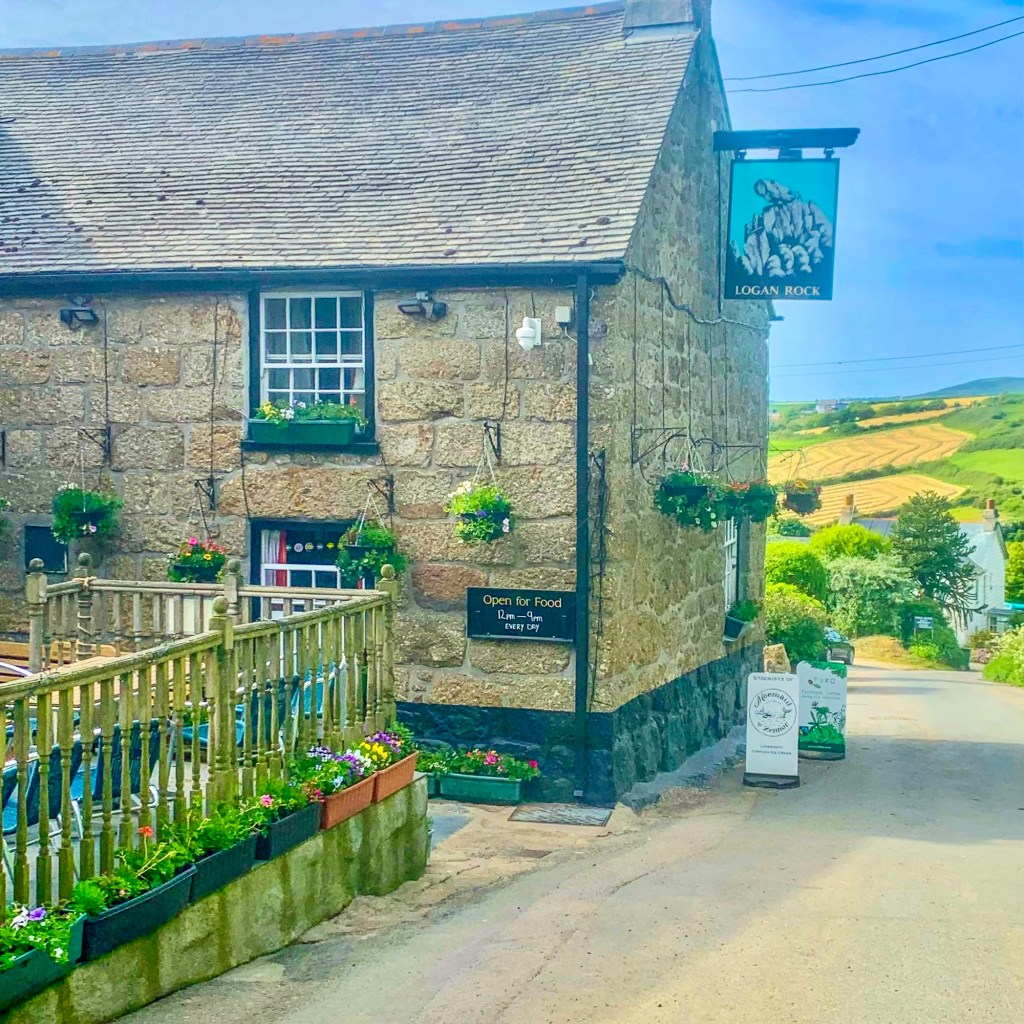
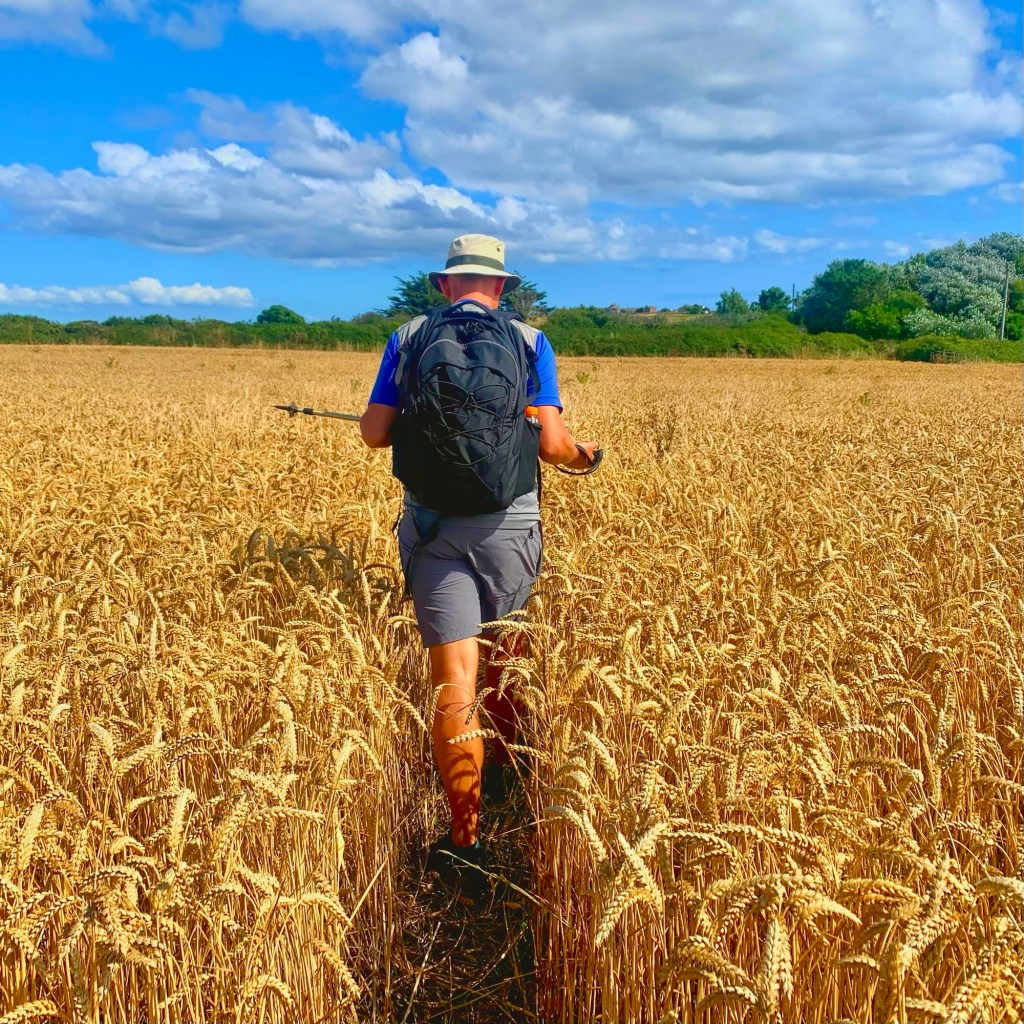
You’ll see from my photos that we completed this section during the height of summer. It was incredibly hot, and the 12 miles (19 km) definitely tested my endurance. If you don’t want to commit to the full walk but still want to experience the best parts, you can park at Treen, walk to Sennen, and then cut back through the fields, finishing off with a pint at the Logan Rock Inn! For reference, that route is about 30,000 steps on a Fitbit. However, today, we’re tackling the full trail.
Jamie and I set off early with our backpacks filled with supplies. The atmosphere in Sennen felt quiet, with some curtains still drawn. The only sound was the distant bark of a dog and the gulls calling above the empty sands. A pale light spread over the granite cliffs, and the Atlantic Ocean was calm and still, silvery in the early morning light.
We quickly climbed and headed along the cliff tops to Land’s End. Being early, we avoided the crowds that flock to this most westerly point of mainland England. As we walked, I noticed additional safety ropes, likely installed recently to prevent dangerous selfies. In Cornwall, it’s common to see tourists risk falling by getting too close to unstable edges for selfies – apparently nothing says “holiday memories” like flirting with a 200-foot drop in the background.
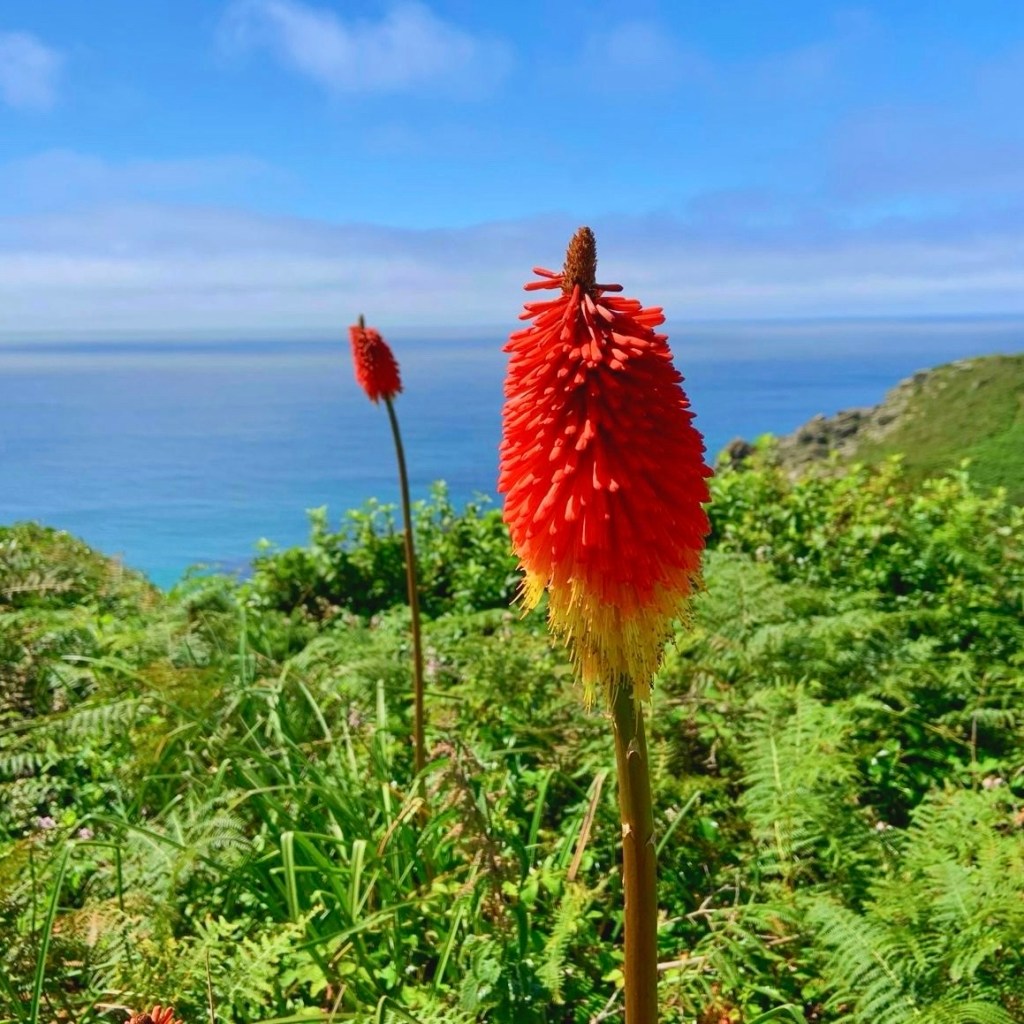
Leaving Lands End, we rounded the headland and headed towards Porthcurno, immediately seeing a beautiful array of wildflowers. It’s challenging to convey the magnificence of this section, which features some of the most secluded and rugged coastlines in Cornwall. But I’ll do my best to describe it, so here goes…
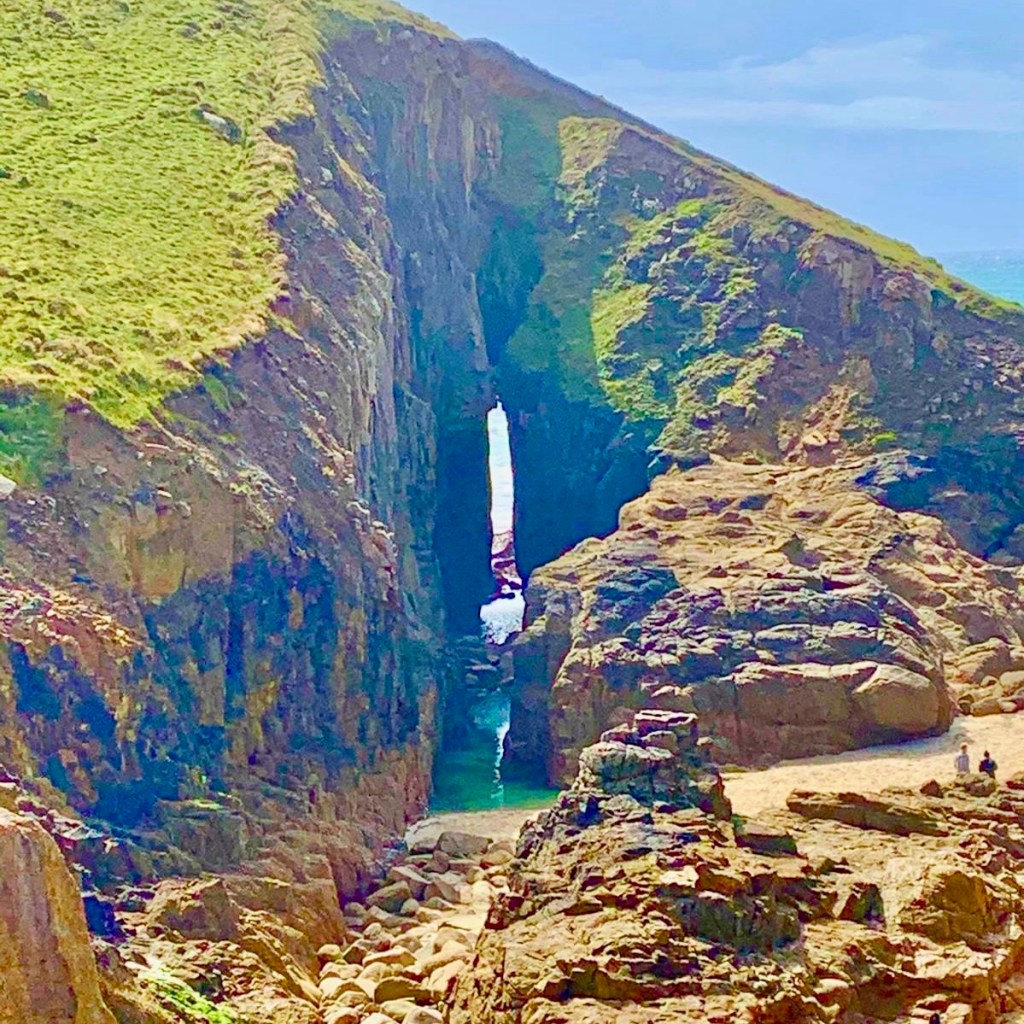
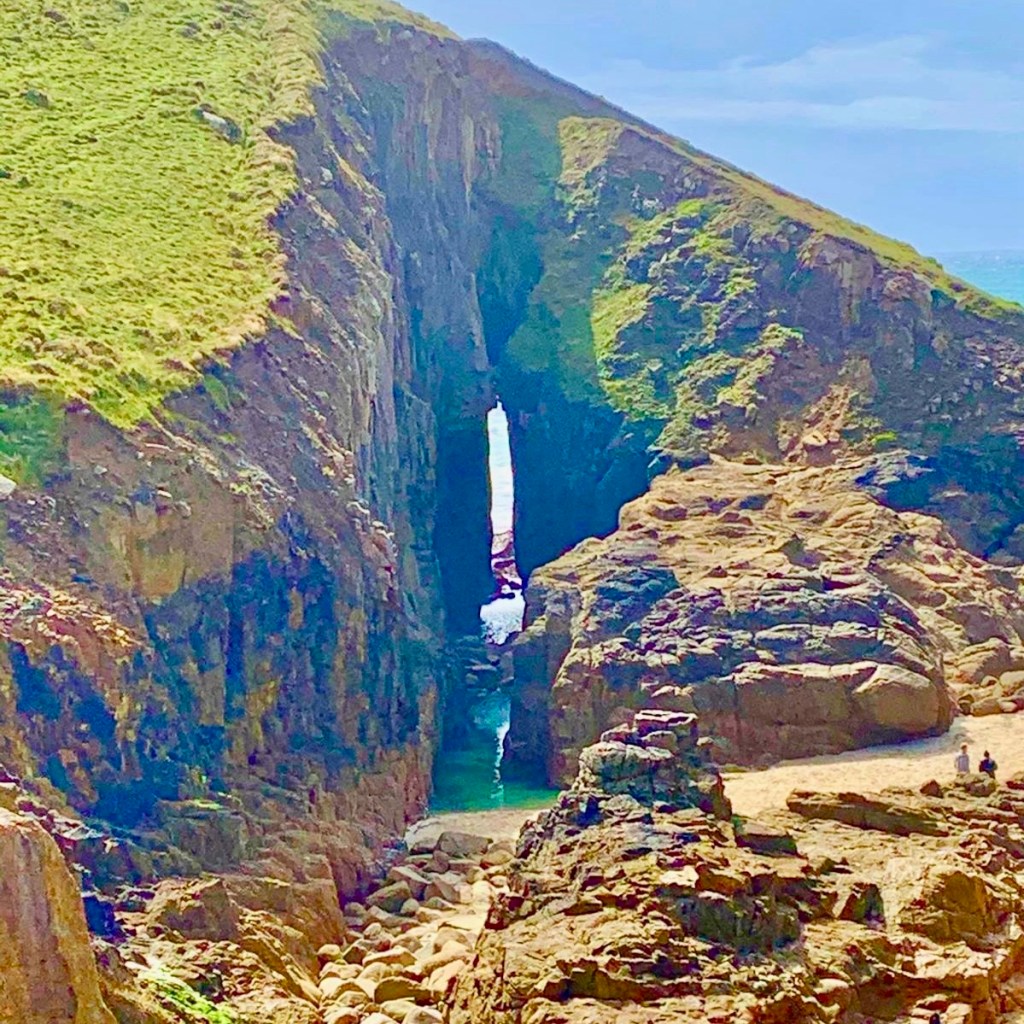
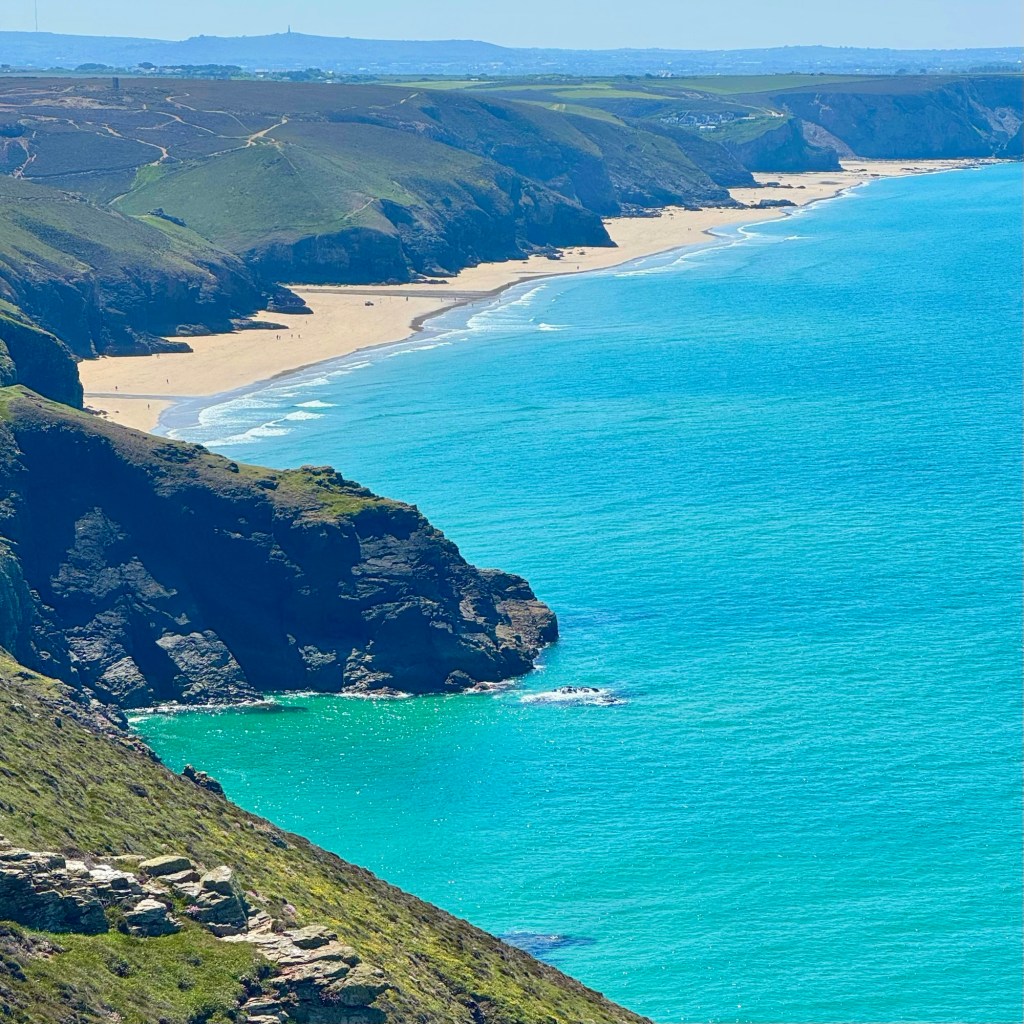
The path winds along high cliffs and rocky coves, passing some of the most breathtaking beaches and fishing hamlets I’ve ever seen. Our first stop was Nanjizal, still peaceful, patiently waiting for the day’s visitors. This secluded and dramatic cove featured turquoise waters and golden sand, interspersed with boulders. The photo below captures the enchanting “Song of the Sea” rock arch, making it a hidden gem for explorers and wildlife watchers.
It was the perfect place for our first stop. A quick dip in the ice-cold sea reminded me why the Mediterranean gets all the good press. However, it was worth the effort, especially for the view of the towering granite cliffs from the water. The hot coffee from our flask was very welcome before we moved on.
The path was clearly marked, guiding us through a landscape of rolling hills and rugged beauty, and we were well-prepared for the exhilarating ascents, steep descents, and the uneven terrain beneath our boots. I wouldn’t recommend embarking on this walk in anything other than sturdy hiking boots, even in the warmth of summer.
We passed Pordenack Point and, after navigating around a dramatic headland, arrived at Gwennap Head. The Coastguard lookout there is now managed by NCI volunteers who keep an eye out for seafarers and walkers. The views were incredible; we could see the Longships Lighthouse, and, fortunately, because the weather was clear, we could also spot the Isles of Scilly (note: not “The Scilly Isles”). 😊
About 30 minutes further along, we arrived at Porthgwarra, a charming fishing hamlet that felt like a serene paradise. The narrow, secluded sandy beach glimmered in the sunlight, while small fishing boats on the slipway added a touch of maritime charm. A few fishermen’s cottages dotted the landscape, creating an enchanting atmosphere that made this little cove seem almost magical.
Believe it or not, the best was still ahead as we made our way toward Pedn Vounder and Porthcurno. It took us longer to reach this point than we’d anticipated, mainly because we kept stopping to admire the views and snap photos. Our arrival at the Minack Theatre was no exception. This beautiful, dramatic open-air amphitheatre is carved into the cliffs and offers spectacular views of the sea. It’s on our “bucket list,” but I always feel a bit nervous about buying tickets in case our show comes with a complimentary shower or two!
The walk down to Porthcurno was a bit challenging, and the beach was busy. If you close your eyes and imagine stepping into a Caribbean paradise, this is what Porthcurno looks like: powdery white sand and the clearest, most vivid emerald waters you’ve ever seen. The beach is also sheltered and generally safe for families. However, today I was happy to continue towards Lamorna, our final destination, with another six miles still to go.
After climbing up, we stopped for our packed lunch near Logan Rock, a massive balancing granite boulder with fantastic views back to Pedn Vounder and Porthcurno. It was boiling now, and the cold waters of Nanjizal were just a distant memory. You do need to pack food and water for this walk, as even experienced walkers find it challenging.
The final stretch was equally beautiful, though my inner voice, usually a polite narrator, had slipped into “toddler mode” as the heat rose. I also noticed Jamie had increased his pace, probably to put a bit of distance between us and drown out my chatter 😊.
The coast path passes above Porthguarnon Cove, which looked very tempting for another swim, but it involved a short, steep descent to the sea, which was less appealing, as it also meant a steep “up” afterwards. My least favourite part of this walk was when we got to St Loy’s cove, which had us scrambling over numerous boulders on the beach; it wasn’t easy, and my inner voice had notched up a tad!
As we climbed Rosemodress cliff, we could see Tater Du Lighthouse. A few more rocky sections later, we found ourselves heading down into Lamorna, my inner voice quieting with every step closer. I like Lamora, we’ve visited before. It’s popular with walkers, divers and photographers for its natural beauty and quieter atmosphere compared with busier Cornish beaches, BUT!!! BEWARE. The main car park sits right by the beach and quay. It’s privately owned (not managed by the council) and uses ANPR (automated number plate recognition) cameras to time your stay. So many people get caught out with extortionate parking fees, so make sure it’s not you.
I hope you’ve enjoyed this fabulous walk as much as I have—whether you joined me in person or virtually (and if it was virtual, congratulations —we’ve just clocked up seven solid hours together!). I can confirm the guidebooks weren’t exaggerating when they politely described the path as “undulating.” My inner voice had plenty to say throughout the day, but its finest moment came halfway up yet another relentless climb: “Oh, brilliant—another ascent. Because the last seventeen clearly weren’t enough!” It made me laugh out loud mid-stride, and suddenly the hill didn’t feel quite so steep.
Hi everyone, and welcome to my new blog! Let’s get straight to the point and tackle the big question: Is having a purpose in life truly as important as people say, or is it just another one of those “well-being magic solutions” that don’t really work? Below are three questions. If you answer “Yes” to any of them, you should keep reading. But first, I want to acknowledge this!
In our 20s, 30s, and 40s, ‘life purpose’ is essentially just survival with added complications. We’re juggling children, dogs, cats, gerbils, demanding full-time jobs, mortgages, rising household bills, and the sacred routine of deciding what’s for dinner—twice a day, because evidently one dinner crisis isn’t enough. Somewhere between wiping noses, managing emotional baggage, and trying to find the TV remote that somehow ended up in the fridge, we occasionally squeeze in a gym session or a rare four hours of sleep, all while contemplating life’s purpose 😊
That said, why not test yourself anyway? You never know; it might make a difference, and if any of these resonate, it’s time to act.
Do you feel “stuck”? Life seems like a routine or obligation rather than an exciting journey.
Do you lack motivation? You struggle to start or complete tasks, even those you used to enjoy.
Do you find yourself living for the future? You’re always waiting for “when I retire/get rich/finish studying,” instead of finding joy in the present.
Do achievements feel hollow or meaningless because they don’t reflect your true self?
Do you feel a strong urge to change something, even if you’re unsure what, or feel frustrated by global problems?
Since you’re still here, I assume you’ve started to see how having a purpose can turn life’s random events into a meaningful story. Many studies show that a sense of purpose gives you resilience amid chaos, direction in uncertainty, and a steady belief that your life matters.
But firstly, let’s clarify exactly what we’re talking about here and not mix identity with purpose. For example, I’m a travel writer and lifestyle blogger, a mum, a wife, and a nana. That’s my identity. Before I retired, I was a sales leader, helping technology companies to grow.
A purpose is what gives life meaning. For example, I write my blog to help people live their best lives, despite their individual challenges, which include my own struggle with an autoimmune disease. I also strive to support my family as much as possible, without interfering, and to help guide my grandchildren through the challenges of growing up.
Although I may seem organised to you, I honestly didn’t know who I was or what my purpose was for most of my life; this is a challenge many of us face. Some people know instinctively that they want a career in medicine, human rights, or medical research, where their identity and purpose come together. For most of us, this isn’t the case, so to help you on your way, here are some examples to guide you in discovering your own purpose. It’s important to point out that a purpose in life doesn’t have to be linked to helping others; it can be entirely personal and self-focused.
Pursuing personal excellence — Dedicate your life to becoming exceptionally skilled at something that matters to you, such as mastering a craft (e.g., playing a musical instrument, woodworking, art, photography or athletic training). The purpose comes from the ongoing challenge, improvement, and sense of competence it provides.
Maximising personal pleasure and happiness: Seek out experiences that bring joy, like travelling or engaging in hobbies purely for enjoyment (inspired by Epicurean philosophy, which emphasises a tranquil life of moderate pleasures without excess).
Achieving self-defined success and ambition: Build wealth, advance in a career, or accomplish ambitious personal goals (e.g., starting a business, reaching financial independence, or gaining recognition in a field).
Embracing a life of autonomy and freedom: Prioritise independence, making your own rules, and avoiding constraints to live on your terms—whether through minimalism, adventure, or rejecting societal expectations.
Finding your purpose doesn’t need to come from a mountaintop epiphany; it often starts with curiosity and the willingness to try things until something clicks. Go out, experiment, and aim to live a better life. Follow what feels right and let go of what doesn’t. For many of us, it’s the small, quiet moments that matter most. So, step away from this blog and decide on one action you’ll take today.
Thank you so much for reading and reflecting with me. I’ll be back with you shortly, but in the meantime, go and chase what lights you up.
As all my readers know, I live in Cornwall, the furthest southwest county in England. For any new readers, you’re in for a virtual journey through the magnificence of this wonderful region. Living here allows me to experience the unique beauty of each season. Spring, with its abundance of wildflowers; the splendour of summer, with our world-class beaches; and the serene beauty of autumn, with its dramatic golden light, fewer crowds than in summer, and a wide variety of wildlife sightings.
But you might be wondering, “What about winter”? So brace yourself. This blog explores the true experience of walking the Cornish coast path in this ferocious season and explains why it can be utterly addictive. Winter is when Cornwall’s coast is reserved for the brave, and here are my 4 top reasons why it’s worth experiencing.
Mirrors of the Flood
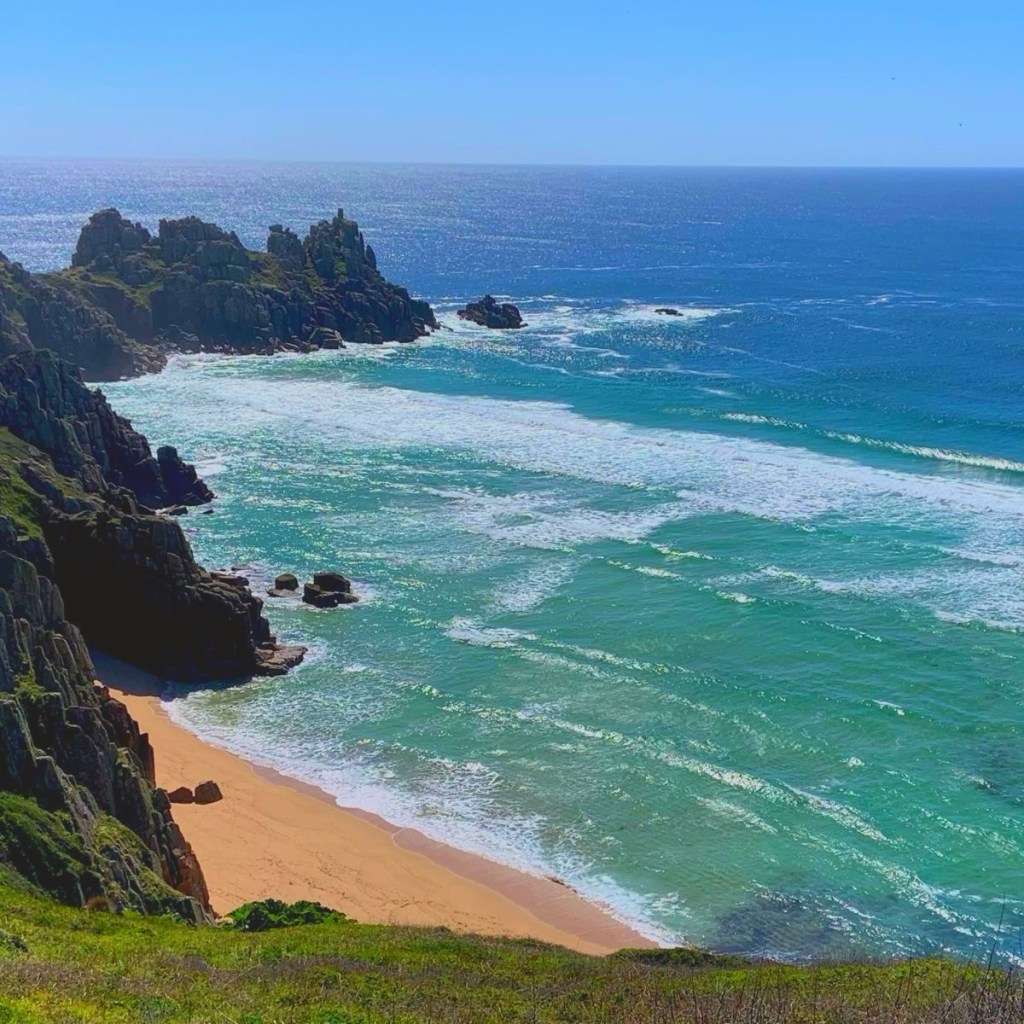
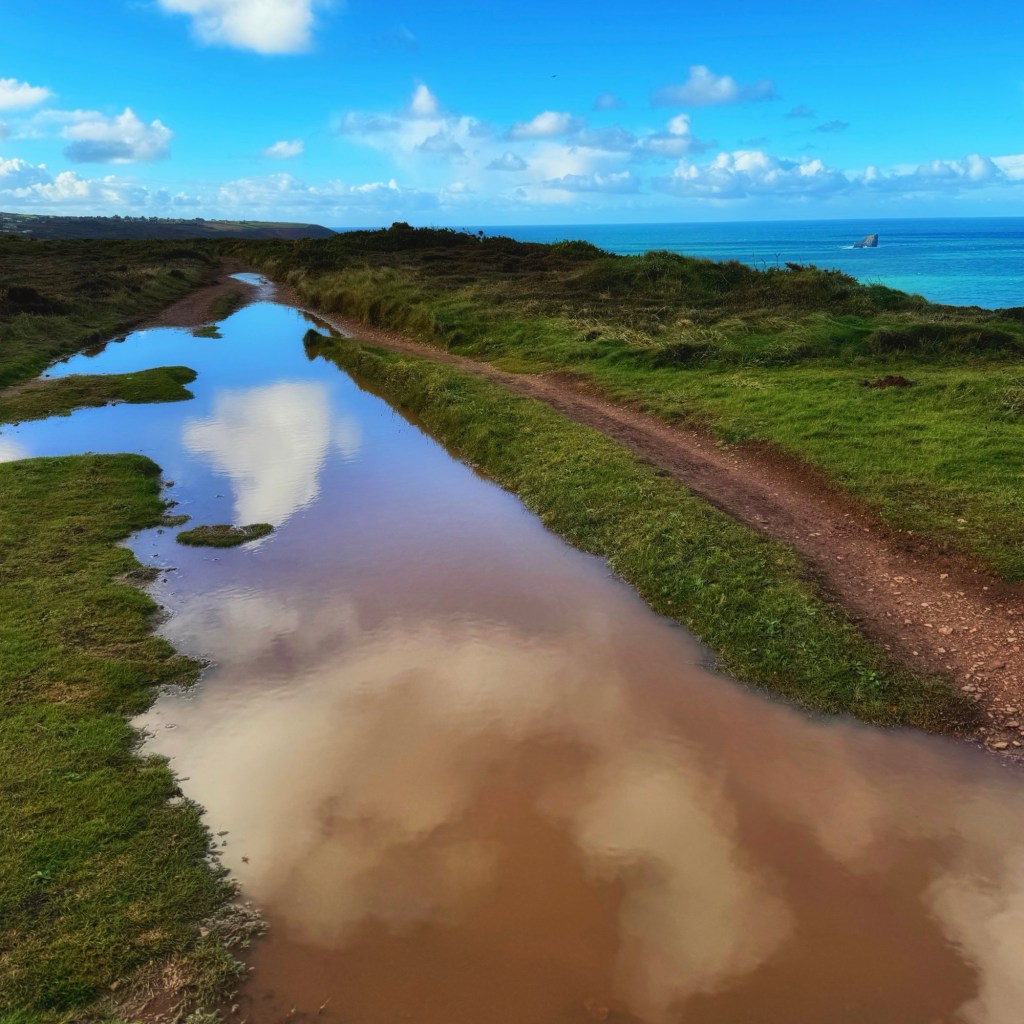
Winter light is ideal for reflections because it comes low, clear, and almost at a right angle. The rainwater reflections are stunning, transforming an ordinary scene into a masterpiece. For me, it’s my favourite season for photography, and I experiment every time I go out.
Every puddle becomes a dark mirror that captures the sky and inverts it, pressing clouds and fleeting shards of winter light into a trembling, liquid frame. Its beauty is born of imperfection, and each of my photos is unique and cannot be repeated.
Halos of Winter
Winter rainbows over the Cornish sea are breathtaking. They often appear suddenly after a squall has passed. The bow is broader and flatter than any summer rainbow, featuring fiercely vivid colours, prompting you to recite the little rhyme that helps remember their order. Frequently, there’s a double rainbow, with the fainter secondary arch glowing outside the first one, resembling upside-down smiles. I don’t know why this phenomenon affects me so deeply, but rainbows make me happy. It feels as if the ocean and the sky are saying, “Look, I can be beautiful too,” and you believe it—at least until the rain returns. 😊
The Oceans Cry
Out on the path, wrapped in salt mist and standing on a headland, the ocean outshouts the chatter in your head until only the vast boom, drag, and hush remains, making you feel alive.
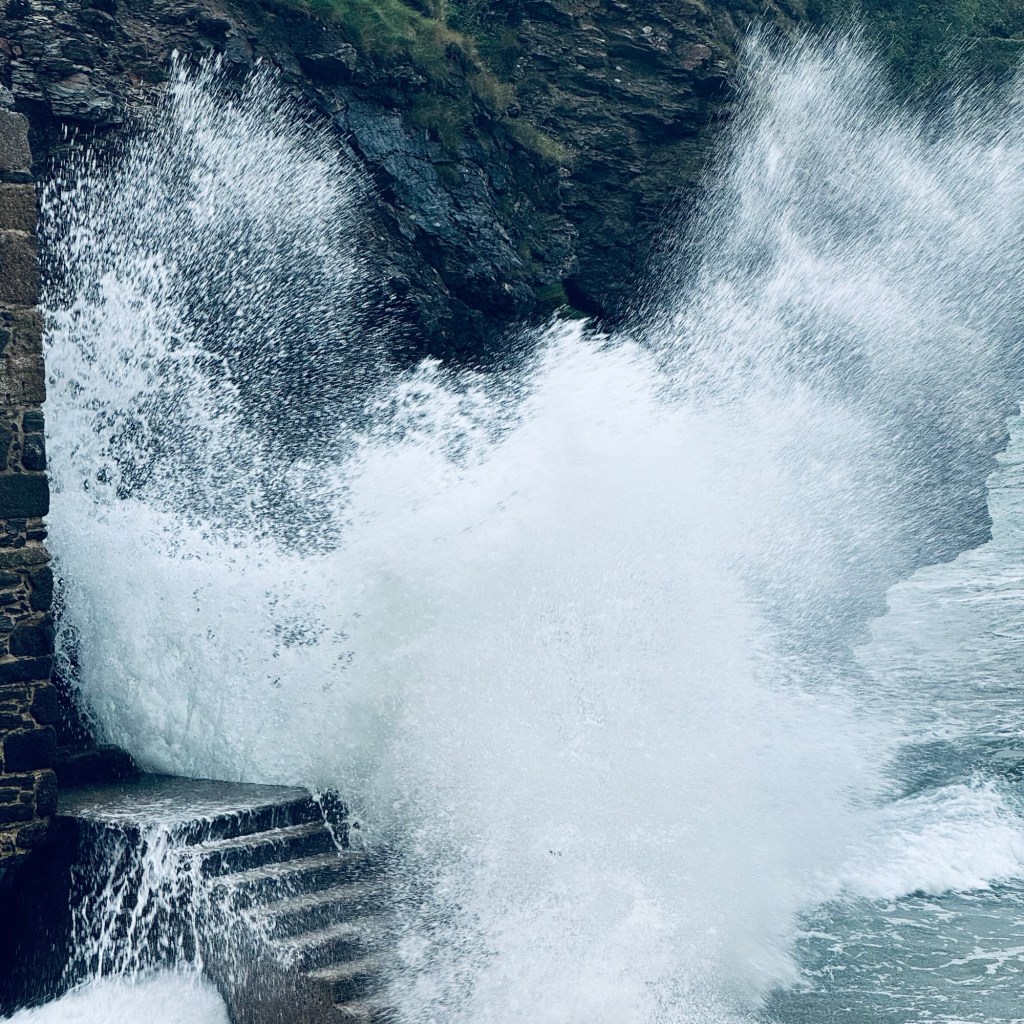
I love to stand and watch each wave gather itself miles out, a rolling hill of cold blue glass, which then hurls its full force against the cliffs, a deep BOOM that reverberates through the rock. It’s never the same twice; sometimes a quick, vicious slap, sometimes a slow, deliberate avalanche of sound that continues to build long after you thought it had peaked.
I will let the evidence speak for itself regarding the benefits, but let me share this one thing. The irregular rhythm prevents your pulse from settling into the familiar pattern of anxiety. Instead, you’re breathing gradually aligns with the 7- to 14-second gaps between impacts. Scientists refer to this phenomenon as “pink noise,” which has a soothing frequency profile similar to that of steady rainfall or a heartbeat. Research has shown that pink noise can enhance sleep quality and reduce stress hormones. Since moving to Cornwall, my sleep has improved significantly!
The Howling Gale
The winter wind along the coast path electrifies you. It rips the hood off your head, fills your coat like a sail, and tries to shove you backwards into the gorse. Thankfully, our winds are mostly onshore, blowing us into the gorse rather than the sea! It often makes my eyes stream, and conversation becomes impossible; the wind steals the words and flings them out over the drop. You’re not thinking about tomorrow’s emails or yesterday’s regrets; you are simply a creature negotiating with a much larger creature, and for once, the negotiation feels fair. When you finally turn a corner, and the wind eases for a moment, you feel like you’ve emerged into a stunned, breathless hush.
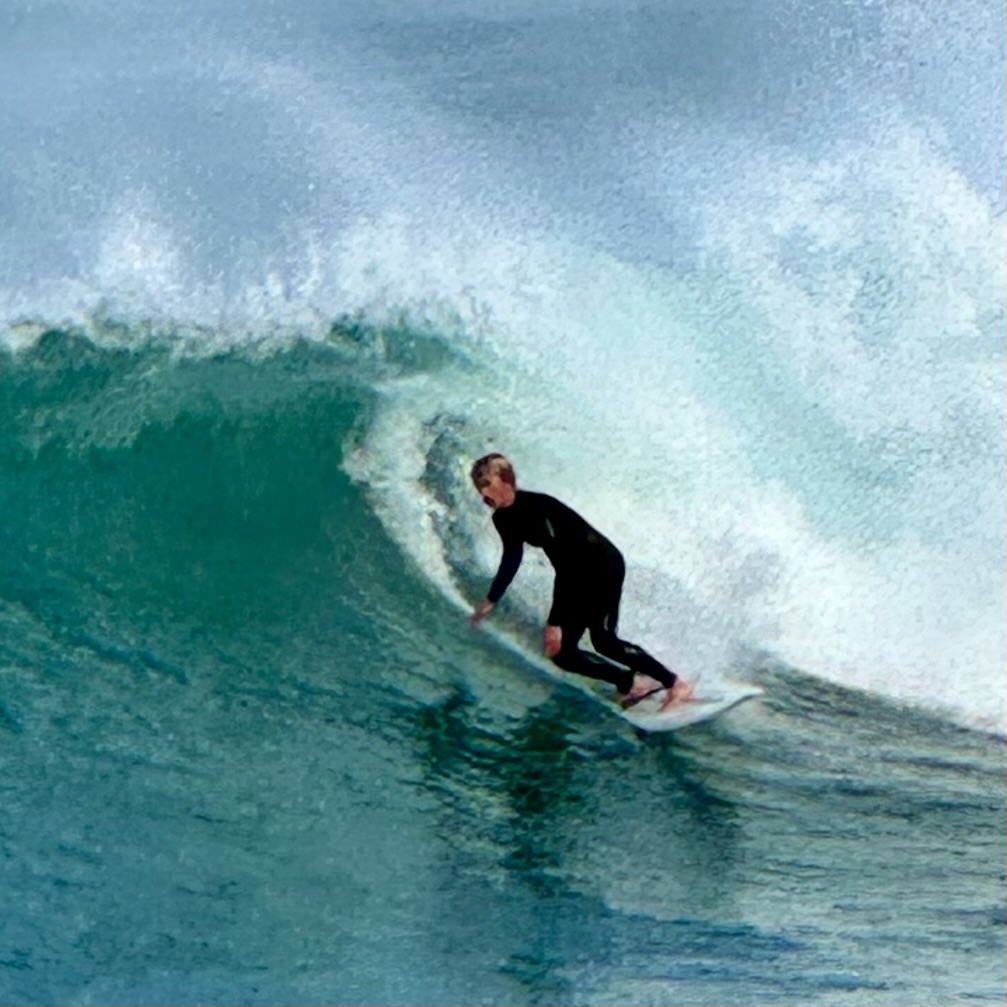
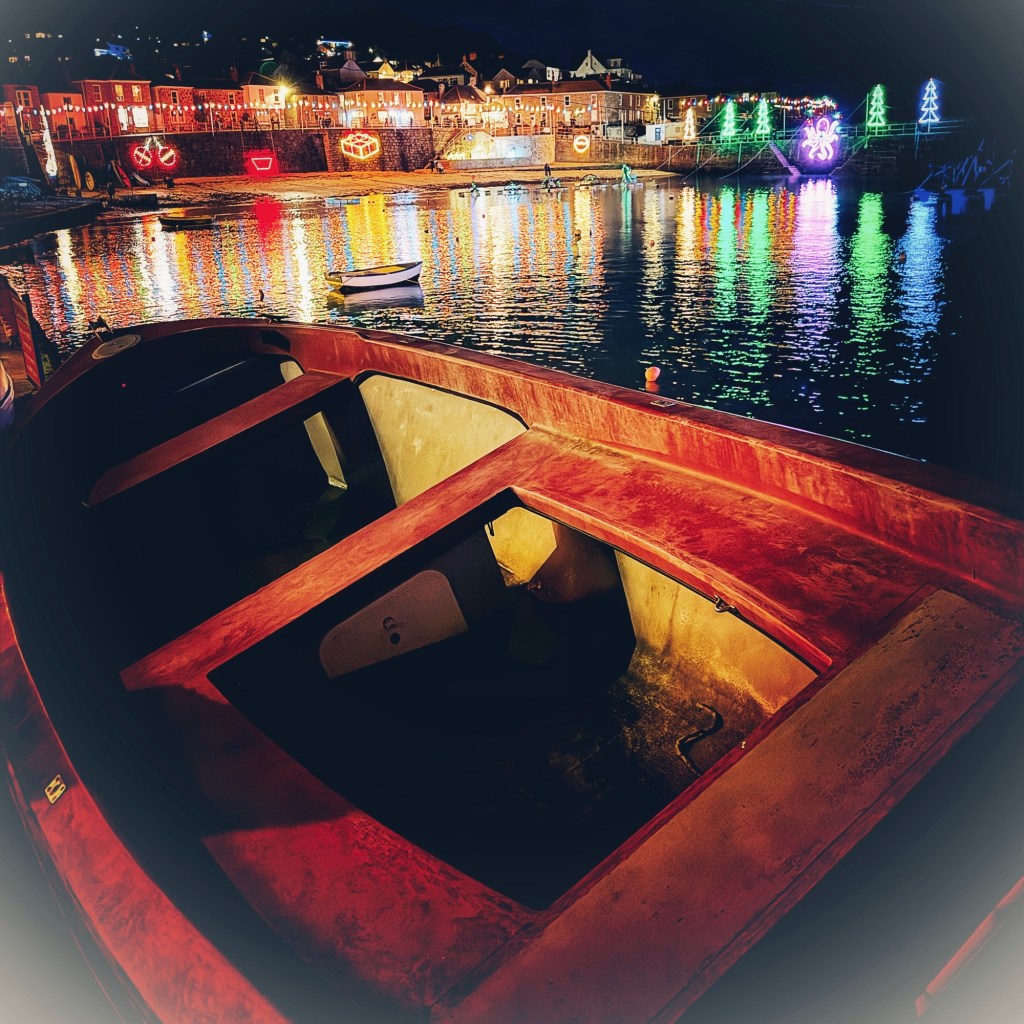
There’s also the charming Cornish villages with their slate roofs covered in frost and smoke gently curling from their chimneys. The surfers are wonderful to watch as they ride the Atlantic swells, which arrive big, clean, and uncrowded. The harbours lie quiet, with smaller fishing boats resting peacefully, many adorned with beautiful Christmas light displays.
Walking the Cornish coast in winter truly makes you feel vibrantly alive. Within just ten minutes, the refreshing weather clears your mind, filling it with salt, cold light, and the steady beat of your own heart, in sync with the rhythm of the Atlantic. You return windburned, soaked, and almost deaf from the strong gales, yet exhilarated by the fresh air. You have nothing with you but the assurance that you have been rejuvenated by something far older and more powerful than yourself.
If you’d like to hear about rare Cornish choughs, a cuckoo, stunning wildflowers, breathtaking cliffs, daredevil cows, and the UK’s most photographed beach, join me for a walk from Mullion Cove to Lizard Point on a warm late June day.
As part of our adventures hiking the entire Cornish coastal path, my husband Jamie and I walked this stunning 11km stretch on the south coast. Typically, since the north coast faces the Atlantic, it’s better for surfing, while the south coast, facing the calmer waters of the English Channel, offers sheltered coves and harbours ideal for sailing. Our starting point at Mullion Cove exemplified this.
The lovely morning air greeted us with a gentle, refreshing coolness on our faces. Beyond the cheerful birdsong, a peaceful silence enveloped us; the sea was calm and welcoming, and we set out on our walk while others were still enjoying their breakfast. We stood on the concrete quay in front of the old pilchard cellars, which are now a café, and breathed in the salty sea air.
We knew this section wasn’t as difficult as some of the others we’d walked, and the climb out of Mullion was probably the hardest part of the day. It’s a wide stone-and-earth staircase, and we paused halfway up the cliff to look back and enjoy the classic postcard view of the harbour and Mullion Island with its natural rock arch.
We reached the open heathland at Predannack Cliff, where we spotted an adder. Jamie had previously been bitten on the heel by an adder, so we always stay alert for them. Fortunately, he was fine that day, but we discovered some interesting facts. Most adder bites in the UK are “dry” bites, causing minimal or no venom injection. It seems they are reserving their venom for hunting prey, which is a smart strategy. I’m also learning to recognise different wildflowers, and this walk didn’t disappoint. We quickly saw my favourite, the scarlet pimpernel, and Jamie’s favourite, wild orchids.
I can’t fully describe the scenery with words, so I hope you enjoy my photos. The sky was mostly clear, and the light was bright but not harsh because the sun was still rising. Below us, the sea reflected the sky almost perfectly, with deep sapphire waters near the shore that gradually lightened into aquamarine as the sand beneath became visible. It was paradise, and we’d only just begun.
After an extended photo stop that was longer than planned, we continued towards Kynance Cove. The trail crosses into National Trust land and the Lizard National Nature Reserve, where we spotted our first Cornish choughs. These birds always bring a smile as they forage through cow dung. They are also an iconic symbol of Cornwall, appearing on our coat of arms and in local legends. Once very rare, their numbers have risen significantly in recent years. We also saw cows, undoubtedly responsible for the dung, living quite literally on the edge – admiring the cliff-top views. This made me feel slightly nervous, but they seemed to know what they were doing.
Cornish Chough
We found this to be a fairly gentle section, with only one descent that was a bit tricky. We stopped halfway down to listen to a cuckoo. I hadn’t heard a real cuckoo before, and it sounded exactly like hearing a cuckoo clock, just with less predictability. It did make me laugh when I realised that the mechanical, hourly chime you associate with quaint German craftsmanship is a direct, albeit rigid, imitation of a wild bird with no regard for your schedule.
After the cuckoo excitement, the ascent was relatively easy, and once at the top, we followed the coast path along the cliffs to find a nice rock to sit on to enjoy the coffee and biscuits we’d brought with us. It’s tempting to cut straight across the heathland here, but doing so means missing out on the most spectacular views and perfect spots to pause.
We heard a drone overhead; luckily, it wasn’t someone spying on our peace. We were close to Predannack airfield, where the Royal Naval Air Squadron tests its drones to explore their future potential. If you’re fortunate, you might also glimpse an F-35 flying overhead after taking off from nearby Helston.
The day was warming up, and I had remembered my hat. If you’ve read my other blogs, you’ll know that’s not always the case! We headed towards Kynance and couldn’t believe what we saw. The car park was so crowded that even seagulls were circling in frustration, and the beach looked as if it had been sprinkled with people instead of sand.
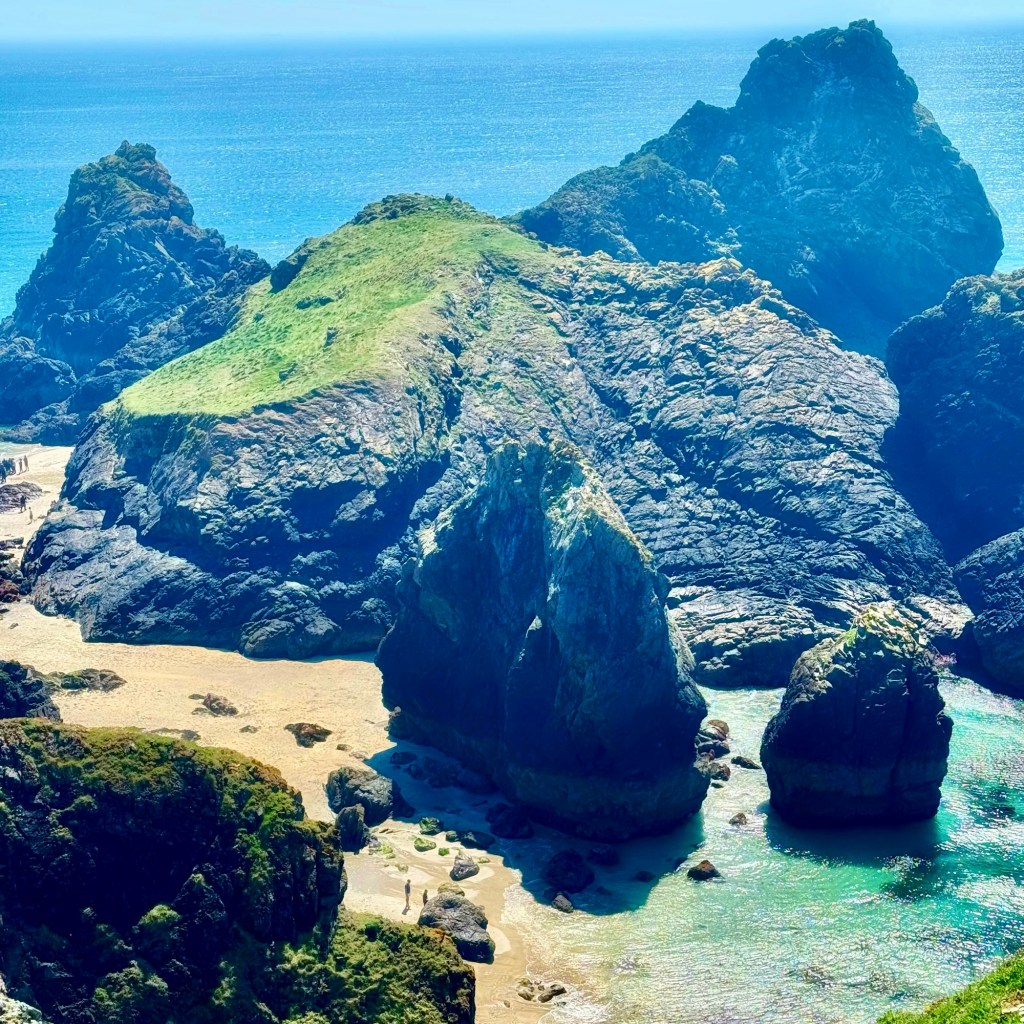
Kynance Cove is one of the most photographed (Instagrammed) beaches in the UK. It looks almost perfect, like a film set. Towering serpentine rock stacks and islands rise straight out of the sand like natural sculptures. At low tide, they form arches and small turquoise lagoons. The sand is nearly white, reminiscent of the Caribbean, and today, in the sunshine, the vivid contrast made it appear oversaturated even in real life. It’s regularly voted one of the world’s most beautiful beaches, and because the cove faces west, it’s a photographer’s favourite at sunset.
Anyway, I diverge, we descended and ascended in record time until we were back up high, looking down on the chaos below.
The path remained high on the cliffs, offering stunning views of Asparagus Island and the stacks below, and we had now decided it was time for our packed lunch. There is a café at Kynance, but as you’ve probably guessed, we decided to give it a miss 😊
After our cheese and tomato sandwiches, we set off and observed the coast path becoming more rugged, with jagged, serpentine rock cliffs showing shades of red, green, and purple. About 20 minutes later, we arrived at a wooden viewing platform overlooking the Devil’s Frying Pan—a collapsed sea cave with a natural rock arch, making it a worthwhile short detour from the main trail. The path gradually descends until we reach the ruins of the old Polpeor lifeboat station, which sits dramatically above a steep slipway leading into the sea. We had visited here once before in winter when the sea was rougher, giving the scene an eerie atmosphere. From this point, we faced a short, steep climb back to the clifftop, where the White Lizard Lighthouse suddenly appeared above us.
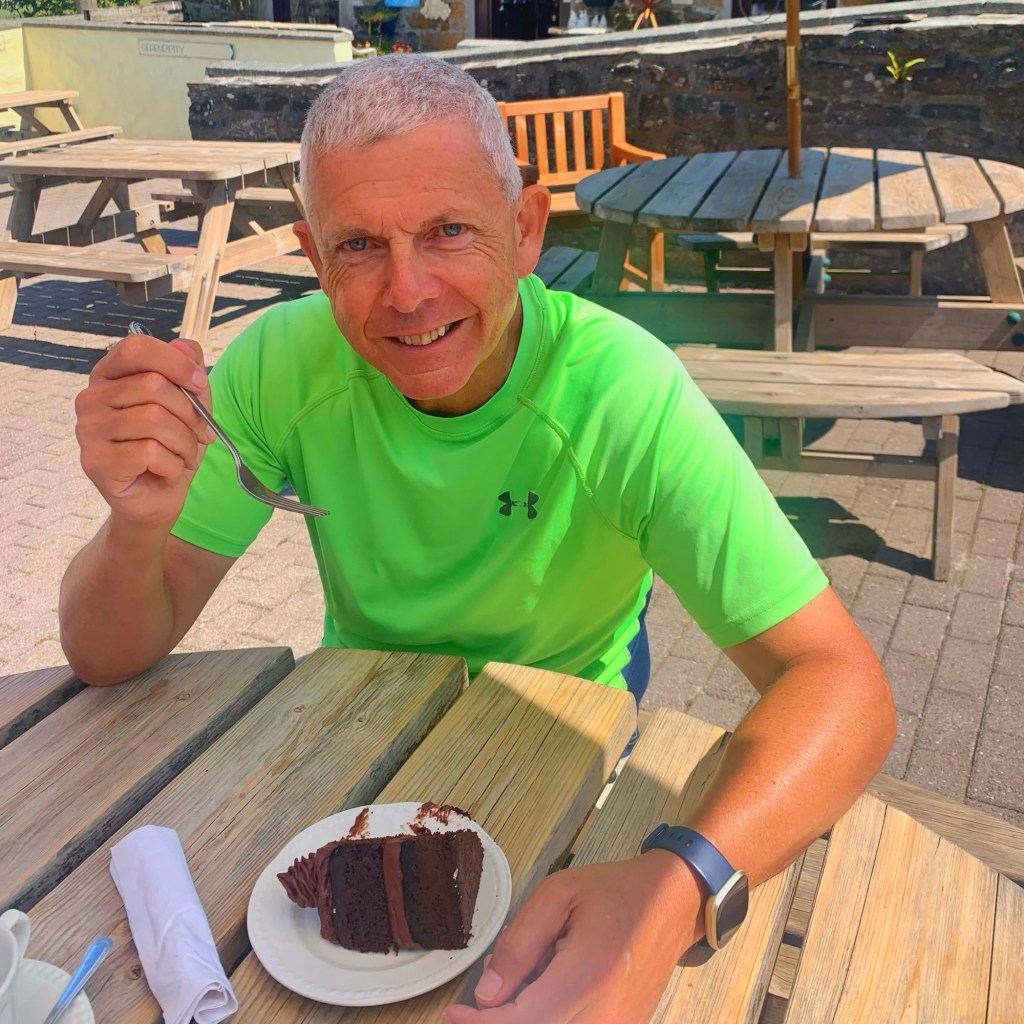
The trail then carried us past the lighthouse, and this is where I conclude my blog, at the southernmost point in Britain, where you can stand without getting wet. The hike is over, the views were unforgettable, and the final life-changing moment was finding a bus back to our car! Oh, and when we finally reached our car, we couldn’t resist stopping at the chocolate factory just outside Mullion for tea and cake!
Hello everyone! I’m excited to introduce my new blog. I’ll discuss the boots in more detail a bit later, so stay tuned—it’s worth the wait 😊.
I’m writing this on the day I should have been flying to Jamaica. Jamie and I have been lucky to visit this beautiful country many times; it was our favourite island for complete relaxation amid our busy, full-on work lives. For me, Jamaica has an unrivalled vibe — sunlit beaches, warm waters, reggae rhythms, and friendly Jamaicans with big smiles that make every moment feel like paradise. Tourism is crucial for their economy, but Hurricane Melissa has caused devastating damage, tragically affecting many livelihoods. Recovery will take time, and there are various ways to help. Be cautious of fraudulent websites; if you want to contribute, research your sources carefully, and the people of Jamaica will be forever grateful.
Now, let’s discuss the topic of my blog: those uncomfortable truths we uncover as we get older. I’ve kept it short, concise and straightforward. Personally, I don’t like reading long, complex sentences when fewer words can convey the point. Let’s go….
No one is riding in on a white horse; fix your own life. We all need to take ownership of every broken area to rebuild something stable, purposeful and satisfying.
Excuses don’t settle debts; only relentless effort does. “I’m too tired, the economy is bad, my boss doesn’t like me”. Every excuse is a permission to stay broke.
Comfort zones feel like shelters, but they kill every ounce of your potential. Growth and development require facing challenges and embracing discomfort, which is precisely what the comfort zone helps you avoid.
Happiness requires effort; it doesn’t come automatically. It’s not a default setting; it’s a skill you build through deliberate effort.
If you can’t control your emotions, you’ll always be controlled. Emotional self-regulation is crucial for maintaining personal autonomy and not being overly influenced by external circumstances or other people’s actions
Not everyone who smiles at you is your friend. Their smile can mask insincere or negative intentions, such as jealousy or a desire to take advantage of you. Never take criticism from someone you wouldn’t take advice from.
Failure is an integral part of success, not its opposite. Every achievement involves setbacks, mistakes or failures along the way. You don’t succeed despite failure; you grow because of it.
Money can buy comfort, not peace. Peace comes from strong relationships, a sense of life purpose and meaning, self-acceptance, and emotional resilience. All of which are not for sale.
I know these are harsh truths, but they’re also true. If your day isn’t going well, review these eight facts to remind yourself that you hold the power to improve the situation.
Finally, I apologise for making you scroll through all of that if you only wanted to hear about my boots. They were an impulsive purchase made ten years ago, and I’ve only worn them once. Can you imagine me stumbling down the street to the pub in St Agnes or arriving at a dinner party on a fancy wooden floor, each step leaving a tiny mark? I wonder what I was thinking when I bought them. Maybe I pictured a red-carpet event or a premiere I’d attend. It’s possible I had a cocktail dress code in mind, a fashion shoot, or a fancy restaurant with valet parking. Now that I realise I’m more the pub type —enjoying a good pint rather than a £25 cocktail —it feels a bit sad that I’ll never wear them, but you never know —watch this space!
Hi everyone, I’m back with another enjoyable walk as part of my series “Adventures on the Cornish Coast Path”. This time, I’ll lead you from Perranporth to Portreath, stopping at my favourite places along the way. I’ve walked this route many times, particularly the stretch from St Agnes to Chapel Porth, since St Agnes is my home. If you’re hiking the whole South West Coastal Path, I recommend following the suggested coastal path sections, but if you’re not on a fixed schedule, spending a night in St Agnes is definitely worth it. Why? Read my previous post.
This 12.2-mile route offers breathtaking cliff-top views, charming remnants of the historic tin mining industry, intriguing geology, and opportunities to spot wildlife, including seabirds—razorbills, guillemots, and kittiwakes—as well as rare bats in old mine shafts. The hike is moderately challenging, with an elevation gain of about 2,093 feet, and usually takes 6 to 6.5 hours at a steady pace. It’s a good idea to leave some extra time for rests and memorable photos. In my opinion, the last section is the most difficult, so you need to take on fuel at my recommended stops 😊.
Let’s start at Perranporth Beach, a stunning, wide, sandy stretch ideal for surfing. You’ll notice the Watering Hole pub, a lovely spot to enjoy the sunset in the evening. During the summer, Jamie and I have taken the bus from St Agnes and relaxed on the fantastic decking, listening to lively Cornish music. It’s also where Tunes in the Dunes takes place, one of Cornwall’s many vibrant music festivals.
I love dividing walks into sections, and this route naturally breaks into five main parts based on key landmarks. Let’s go.
Follow the acorn signs up a steep staircase and grassy paths that veer away from Perranporth’s dunes, passing by the airfield. The terrain gradually rises along rugged cliffs, offering our first glimpses of the Atlantic and remnants of the historic 19th-century Wheal Leisure mine. The industrial history here is quite striking, with old chimneys dotting the landscape. The path remains fairly flat along the clifftop until we reach Cligga Head, a fascinating promontory with dramatic drops and unique pillow lava formations from ancient volcanic activity. While geology enthusiasts might find this intriguing, for me, it’s not particularly photogenic, so I prefer to move on.
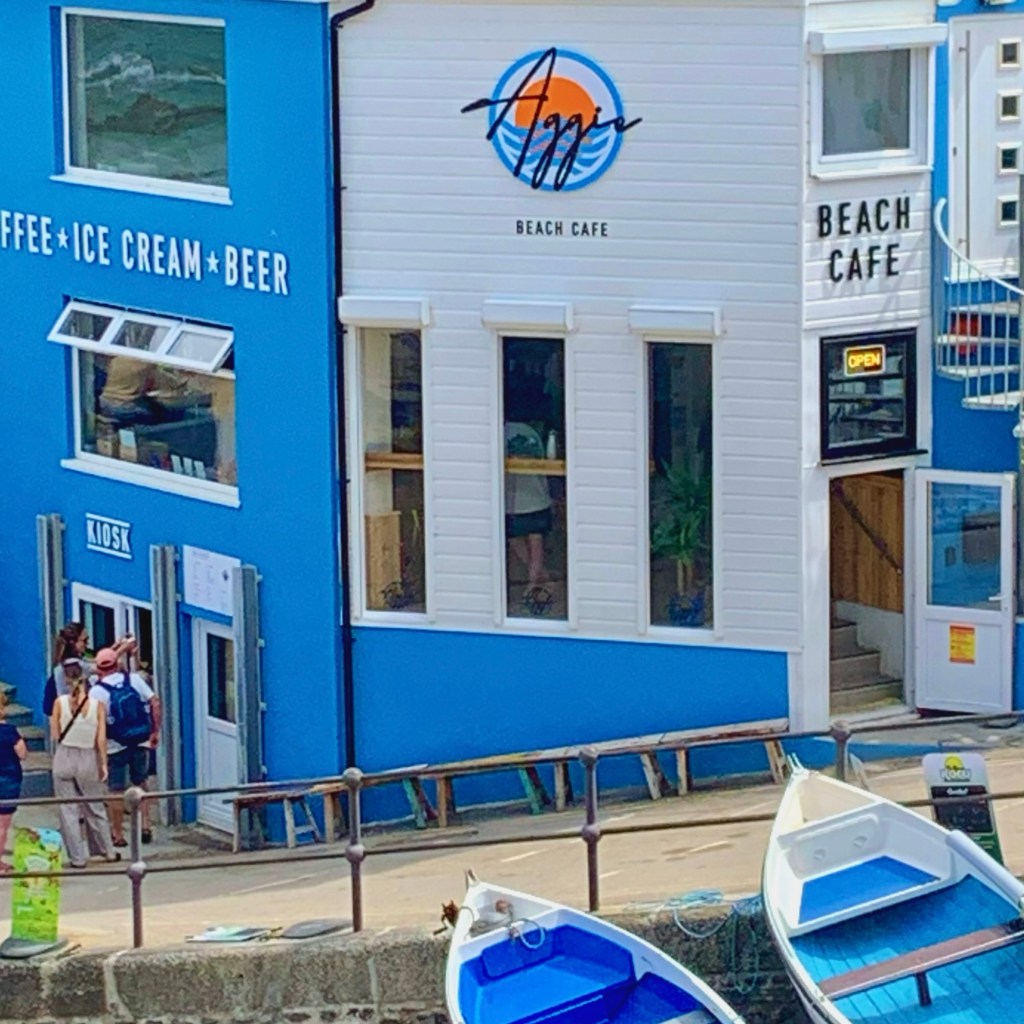
From Cligga Head, we make our way to Trevaunane Cove, St Agnes’s finest beach. The trail winds through fascinating mining relics, including the mysterious “bat castles” (sealed shafts that serve as roosting spots for rare horseshoe bats). The path hugs a narrow, sometimes exhilarating cliff edge with breathtaking drops, but don’t worry—it’s carefully maintained. If you prefer to stay a bit safer, there’s a higher path that’s not so close to the edge. As you arrive at Trevaunance Cove, you’ll find a lovely café (the one in my photo), perfect for a relaxing late breakfast, early lunch, or a quick energy-boosting coffee. It’s a wonderful spot to unwind and soak in the stunning coastal views.
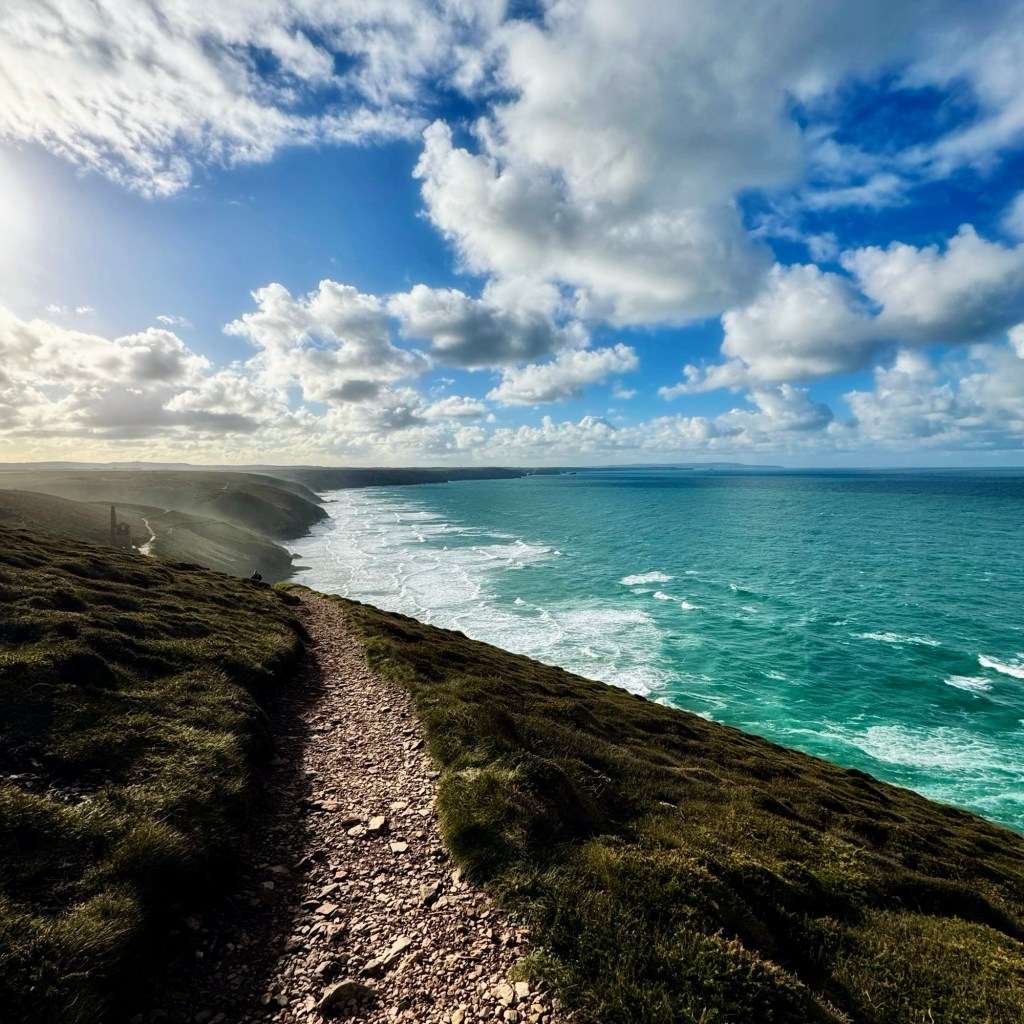
Feeling refreshed and energised, we’re now on our way to Chapel Porth, where we’ll face a lovely but fairly steep climb from the cove up to the’ rock ‘ at the top. I’ve captured more photos here on my phone than anywhere else! You can see all the way across to the golden sands of Perranporth- even on a cloudy day, it appears sunny because of the bright sand. The path gently winds along the cliffs towards St Agnes Head and offers spectacular views of the coast, with sea, green fields, and purple and yellow heathland in spring and summer. For fans of Demelza and Ross, as you continue your walk, you’ll recognise parts of Poldark filmed here, including the famous Wheal Coates engine house.
The walk down into Chapel Porth offers breathtaking views. At low tide, you’ll see a vast stretch of sand with rock pools and caves, popular with surfers and families. However, at high tide, the beach can almost vanish completely, with waves crashing against the shore near the slipway. I absolutely love the National Trust café — perfect for a “croque monsieur” or their renowned hedgehog ice cream.
Next, enjoy a lovely short hike to Porthtowan. After ascending from Chapel Porth, the trail stays high along the cliffs, providing stunning ocean views and chances to see seals basking offshore, and you’ll continue to notice remnants of the mining history. The path gently rolls with a few quick dips into small, steep gullies called coombs. When the surf’s up, the beach at Porthtowan becomes lively and inviting, with golden sands surrounded by towering cliffs. If you picked up some food and drinks at Trevaunance and Chapel Porth earlier—great choices—you’ll be well set. But don’t forget to check out the Blue Bar too; its outdoor seating setup makes it the perfect spot to relax at any time of day, whether morning, noon, or early evening.
If I do the whole hike, I’ll be feeling it by now, especially after spending more time than I should, people-watching outside the Blue Bar. This last part isn’t easy either; it usually takes me about 1.5 to 2 hours on a good day! I’m sure most people do it quicker. I’ve even tackled it in the pouring rain, ending up muddy and on my bum, but I guess that’s all part of the adventure!
Once again, after the ascent, you head west along the clifftops, crossing charming valleys. The terrain gradually becomes more rugged, with uneven steps and open areas where the wind can pick up, so hold onto your hat if it’s a breezy day. Personally, I find some parts of this walk a bit dull, especially when the path runs close to the old Ministry of Defence site. It’s certainly a contrast to the more dramatic, picturesque coves and wide beaches you’ll find elsewhere along the stunning Cornish coast.
When you reach Droskyn Point, you can see Portreath’s harbour, a 19th-century centre for exporting ore that is now a yacht basin with crashing waves. The path descends through a series of steps and lanes into Portreath. If you’re staying here, Portreath has a great stretch of sand and some good pubs.
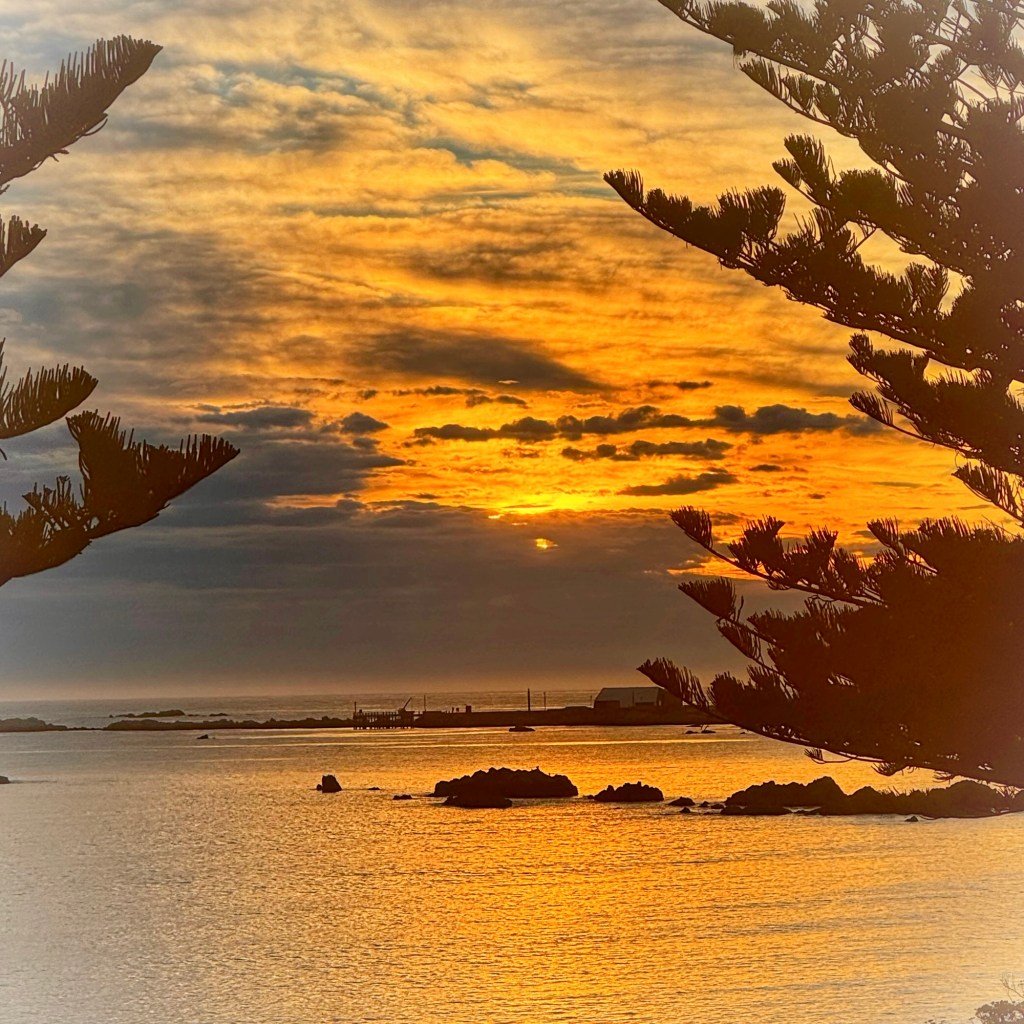
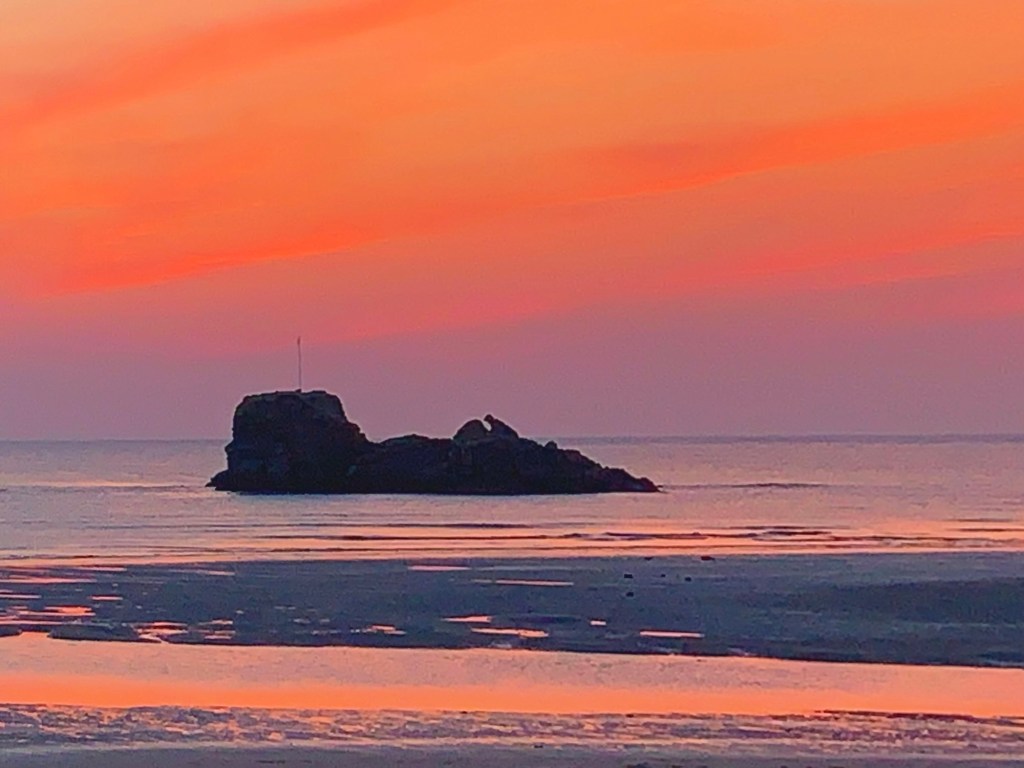
You might also celebrate with one of my favourite pastimes. Imagine this! A lovely evening as the sun sets over the sea, casting orange and pink hues across the sky, while you hold a steaming parcel of fish and chips wrapped in crisp paper, warming your hands. The fish flakes easily under a golden, crispy coating, with a delicate taste that blends with the salt and vinegar’s tang. The chips, golden and soft inside, have just the right amount of crunch, offering comforting starchy goodness. The watchful seagulls overhead, their cries blending with the sound of the surf, as you enjoy this simple, soul-warming meal. Your legs may ache from the day’s walking, but each bite feels like a reward, grounding you in this fleeting moment where the wild Cornish coast and hearty food come together.
















 Living-your-best-life