FFS

FFS!

Three things bug me and make me mutter the famous three words, FFS, under my breath –  the courier company Hermes, the Waze Sat Nav we use and the way Rheumatologists measure and monitor disease activity in people with AS.

Let’s start with Hermes.  I mostly shop online.  In fact, I can’t remember the last time I bought an item of clothing or anything else from a shop other than Sainsbury’s.  I’m fortunate to be a bog-standard size, so most clothes I order fit.  I’ve no problem with DPD; Yodel has improved somewhat. I know the Amazon man by name, but Hermes, OMG, they are terrible.

During the COVID months, Hermes came up with the idea that they would photograph your parcel in your doorway as proof it had been delivered, so no signing was needed.  This is all good if it’s your bloody doorway; it mostly isn’t.  You then spend the rest of the day checking all your neighbours’ front doors to find the red one in your photo and locate your parcel.

Yes, their automated text service works.

“Your parcel will be delivered today between 2.17pm and 3.17pm.”

You plan your day around this useful information to ensure you’re home, but your parcel doesn’t arrive within its time slot.   It’s useless trying to call them as you get a “bot” giving you the same information as is on the parcel tracking app.  At about 6pm, you receive another message to say, “We tried to deliver your parcel, but you weren’t home”.  YES, I BLOODY WELL WAS, WE’RE IN LOCKDOWN, and then you go through the whole rigmarole again the next day. 

I’m also amazed at how dishevelled the parcel is when it arrives. What the hell do they do with them?  I ordered a pair of shoes from Next. After 3 failed delivery attempts on 3 consecutive days, all of which I was home, Hermes informed me they had lost my package!  The Next store reimbursed me, and the following day, it turned up, photographed on MY doorstep in the most bashed-up box I’d ever seen.  Remarkably, the shoes had survived and ended up being free!!

Moving on, why the Sat Nav, I hear you ask.  Waze works. It’s a great app, and as we split our time between Hampshire and Cornwall, we use it a lot!  It’s brilliant around London and the Home Counties, but in Cornwall, it’s debatable.  Jamie and I travel around Cornwall a good deal as we’re trying to complete the Cornish section of the southwest coastal path, as it plays a part in the book I’m writing.  Most of the 8 or 9 sections we have left are the furthest away from our cottage in St Agnes, and you’d be amazed at how innovative the Sat Nav gets at finding “the best route”.  Best for who, a car or a tractor?”.

I don’t like “little” roads, but our Sat Nav absolutely loves them.  Jamie does, too, so I’m outnumbered.  The A30 is the main road through Cornwall, but in the Summer, it’s a nightmare, so alternative routes need to be found, and our Sat Nav thinks it’s a genius at this.

Many roads are barely a car width wide even though they’re two-way.  You have to be able to reverse, sometimes for long distances, to find somewhere where you can squeeze past the Horse Box or Camper van coming the other way!  In the Summer, you often have something behind you, too, so the reversing gets more complex.  This is after the stand-off of who’s going to reverse first.  As I regularly explain to Jamie and our Sat Nav, how is this quicker than negotiating the traffic on the A30! The Cornish (and Jamie) also know the width of their cars, but you’d be surprised at how many people (including me) don’t, which makes the whole experience even more traumatic.  To make matters worse, our car has sensors which beep if something gets within a foot of bodywork, including the hedge, so you have that to contend with, too!  Beep, beep, beep, bloody beep, FFS, there’s a tractor approaching.

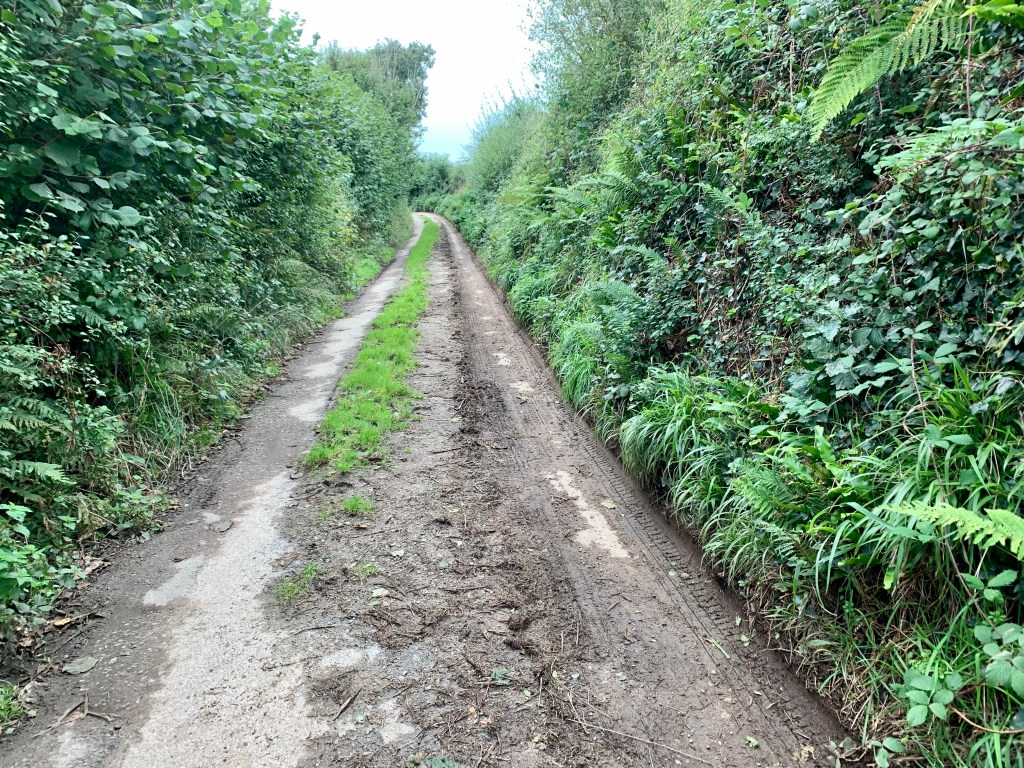
Sometimes, my heart sinks even further.  “Turn right” instructs the Sat Nav, and once you’ve committed, there’s no turning back.  The road is actually green; yes, grass is growing in the middle. There are no passing places, and 2 miles on, you meet Hermes coming the other way!

Finally, my last FFS.  Like many people, I haven’t seen my consultant face to face since before Covid.  We have chats on the phone, but it’s not the same.  I’m not alone; most people in my situation are in the same boat.  I’ve several ongoing issues which are being investigated, but I do feel like I’ve been left to my own devices; hopefully, that will improve over time.

With Ankylosing Spondylitis, a scale is used to measure the pain and disease activity called the Bath Indices.  It’s quite complex, but basically, it consists of several questions, and, as the patient, you provide a number between 1 and 10 (1 being no pain or restriction in movement and 10 being the maximum pain and discomfort).  I’ve never understood how this can help.  Surely, everyone copes with and feels pain differently.  Me giving a score of 5 might be a 7 for someone else or a 3.  Anyway, during our last telephone consultation, the time came.

Mrs Mead, can you tell me on a scale of 1-10 and then the questions start.  I was obviously feeling flippant, and the FFS words came to mind.

Me: “1, 2, 1, 3, 2, 1, 1,1,1, 2”

Perhaps I inadvertently gave the impression that I was in no pain, as I haven’t heard from my Rheumatologist since.  That’ll teach me 😊

Until next time xx

Mind Games

It’s been 2 months since my last blog, and I have lots to share.  I love to travel, and both Jamie and I have been very fortunate as our work has taken us to many beautiful places over the years.  I was mostly focused on Europe, and Jamie was more transatlantic, spending much time in the US.  We’ve always planned to travel more, and there are so many countries we want to see before we’re too old to enjoy them 😊 but, as everyone knows, Covid has put pay to most of our plans in the short term.  However, we decided we wouldn’t let it beat us this year, and we would venture out of the UK to France.  EasyJet had cancelled our flights (carried over from last year), so we decided to drive. 

As you all know, I write my blog to raise awareness of autoimmune disease, and this was a big decision for me as sitting down for long periods really aggravates AS.  It can also cause significant nerve pain, so we planned our trip to make it as comfortable for me as possible.

Leaving the UK on the Eurotunnel was the easy bit, and the journey through France was beautiful.  The scenery was amazing, and as most of the roads we used were toll roads, they were quiet and easy to drive; Paris was a bit hairy.  Door to door, we’d calculated the journey at around 850 miles, so we’d booked an overnight stay at the halfway mark.  I was stiff and sore when we arrived, even though we’d stopped several times.  I’d also increased my medication in anticipation of the journey and made sure I did my stretches.  The next morning, I felt OK.

The second leg of our journey to the South of France was stunning.  We drove through the Massif Central region, peaking at over 1000 metres through mountains and plateaus.  It was definitely one of the highlights.  The holiday was superb, meeting friends we hadn’t seen for two years, spending days at the beach club and nights in lively bars and restaurants.

Now for the hitch!  As anyone who has braved a trip out of the UK this year knows, you have to take a negative Covid test before you return home.  I knew this when we booked the holiday and we’d also taken out insurance to cover the costs if we needed to stay longer.  But when my holiday is finished, I want to go home.  I want to get back into the gym, back to yoga, and back to my routine. I want to mend my body from the inactivity and reduce my medication.  I want to do all these things for my mind as well as for the pain in my body.  I didn’t want to stay in France!

I was so nervous when we went to take the test that Jamie had to fill in my online form as my hands were shaking so much.  I was conscious we’d been out every night and was only mildly comforted by the vaccine passport used in France to get into all venues.  We also had friends who’d been double vaccinated and caught Covid whilst away, so I’d completely underestimated the chances that this test could be positive.

The result came through 30 minutes later as negative, which was a big relief.  You then have the hassle of filling out the passenger locator form and attaching all the stuff for UK customs.  I’m not sure you could go away without a smartphone, and the hassle continues when you get home, as you have to do a PCR test on or before Day 2.  We’re waiting for the results as I write.  If it’s positive, we’ll have to isolate.

Over the years, especially when I’m away and out of my daily routine, I completely understand the benefits of exercise for improving mental health.  I’m so proud of my daughter, who volunteers for a charity called Sport in Mind.  They are the UK’s leading mental health sports charity and deliver physical activity (sport, walking, dance and movement, gardening and exercise sessions) projects in partnership with our amazing NHS.  They work tirelessly to aid recovery, promote mental wellbeing, improve physical health, combat social isolation and empower people to move their lives forward positively.

If you do struggle with your mind due to constant pain like I do, I can’t emphasise enough the benefits of physical exercise.  I appreciate a lot of people with AS are less mobile than me, and there are so many other horrible autoimmune diseases that make exercise difficult.  But please persevere, as it will help, especially if you can get to the stage where it’s a part of your everyday life.

Finally, I want to say a big thank you to everyone who reads my blog.  I know it’s a bit intermittent these days. Still, it always reaches “top reads” on the blogging site, so you’re helping raise awareness of these awful autoimmune diseases that many people tolerate daily.

Until next time, lots of love xx

Sink or Swim?

Sorry, I’ve been missing for a while. Life’s been busy.  This month’s blog is a tale of two halves, and I’ve called it sink or swim for reasons that will become obvious. Writing it has brought back memories that have been hidden away for decades.

When I was 7 years old, I nearly drowned.  I can’t remember much about the event itself other than I was pulled out of the local river by a friend’s older brother, having been underwater for too long.  I was unresponsive for a while, received some form of CPR, brought back most of the river water I’d swallowed and went to the hospital to be checked over.  The tiny piece of memory I have of my drowning episode is stepping off a stone on which I was standing, thereby taking me out of my depth.  The rest is what I learnt afterwards.

It wasn’t just this trauma that contributed to my fear of water, but the aftermath.  Somewhat understandably, growing up, I was never ever allowed near water again without the presence of an adult, so I just didn’t go.  I had some swimming lessons in the local pool, but my fear of open water increased the older I got.  I’ve swum in the sea when abroad on holiday, but I never go out of my depth, and to be honest, I just prat around rather than swim.  I do swim in pools, but it’s not something I enjoy.  I don’t go on boats, and I haven’t swum in the sea in England since that fateful day; that is until this week.

As everyone knows, I write my blog to raise awareness of autoimmune diseases. Over the last 18 months, some very kind readers have sent me lots of information about the benefits of cold-water swimming for sufferers of autoimmune diseases.  Research suggests that if I can adapt to cold water through repeated immersions, it may reduce my body’s inflammatory response.  This makes complete sense to me, but trying it out was a different matter.

In general, sea temperatures in Cornwall range from around 7°C during a cold winter up to 18°C in the warmer summers.  For those reading my blog outside of the UK, Cornwall is South-West England and does tend to be 1 or 2 degrees warmer than other coastal areas further North.  To put this into perspective, yesterday’s sea temperature, where we are in Cornwall, was nearing 17 degrees (16.7). Compare this to the Mediterranean, Malaga, for instance, where it is currently 22 – 24 degrees or Naples in Italy, where it is around 26 degrees. 

So, 4 days ago, my sea swimming adventure started.  I had no wet suit, just a bloody holiday bikini as I don’t own a swimsuit and, boy, was it cold! I immersed my feet until they were so numb I couldn’t feel them. Then I managed to cover my legs until I couldn’t feel them either.  I’d listened to all the RNLI advice about the dangers of cold-water swimming if you’re not used to it.  I knew I had to enter the water slowly to get over the peak cold shock response and to be able to control my breathing before starting to swim.  I didn’t want to bail out.  It was really hot outside, and this was my best chance, so, mind over matter, off I went swimming and swimming and swimming until I was exhausted, and it was absolutely amazing.  I read afterwards that cold-water swimming activates endorphins, the chemicals the brain produces to make us feel good, and it certainly made me feel good.  I was so pleased with myself, too, for putting my fear aside and just getting on with it.  Jamie and I have swum every day since, and we’re now considering investing in wetsuits to continue sea swimming when the air temperature is not so warm.

Has it improved my AS?  My honest answer is I don’t really know.  It’s probably too early to assess, and it must be a regular activity to make any real difference.   I think this is completely unrelated, but last night, I did have one of my “nerve-stabbing headaches”.  I’m lucky enough not to suffer these regularly, but when I do, they’re terrible.  It’s called occipital neuralgia, when the occipital nerves, the nerves that run through the scalp, are inflamed. This causes headaches that feel like severe piercing or shock-like pain in the upper neck, back of the head or behind the ears.  I can’t even brush my hair as it’s so bad.  I also get this down the side of my face.  I have an ongoing prescription for my neuralgia, so I’m able to sort it relatively quickly, but the medication makes me really drowsy and muzzy, which I hate, so I don’t use it much.  I succumbed last night and can still feel the effects of the tablets today, but whoever was stabbing at my head has thankfully stopped.

Moving on, work has picked up, and we’ve closed some business for the first time since the pandemic began.  I’ve written 6 chapters of my book, and I’m thankful I’ve given myself a year to complete.  Jamie and I still have about 20% of the coastal path to walk, which we need to do quickly so it doesn’t delay my writing, but later, it’s been too hot.  Yoga is progressing well, and my flexibility has improved massively.  Our grandchildren stayed, and I now seem to be following every footballer on the planet on Instagram! And Jamie and I enjoy ordering a pint at the bar since Covid restrictions have been removed.   

Finally, I couldn’t write a blog without talking about COVID!  What a nightmare; whenever I get optimistic about normal life returning, COVID-19 packs another punch.  We cancelled our French holiday last year, and the owners of our apartment were kind enough to carry over our deposit this year.  Two weeks ago, we rebooked for the previous two weeks in August.  I was very excited until the announcement that quarantine will still apply to all passengers arriving from France, the only country on the amber list where we must self-isolate for 10 days.  EasyJet has already cancelled the flights we booked 10 days ago, so if we go, we’ll drive.  Jamie and I driving to the South of France will create many memories, I’m sure!

Thank you for taking the time to read my blog; this month’s takeaway is that whilst my swimming technique was pretty terrible, I felt relief. Overcoming fear feels so good. Perhaps I can try speed boats next.

Take care and bye for now xxxx.

Define Normal Please

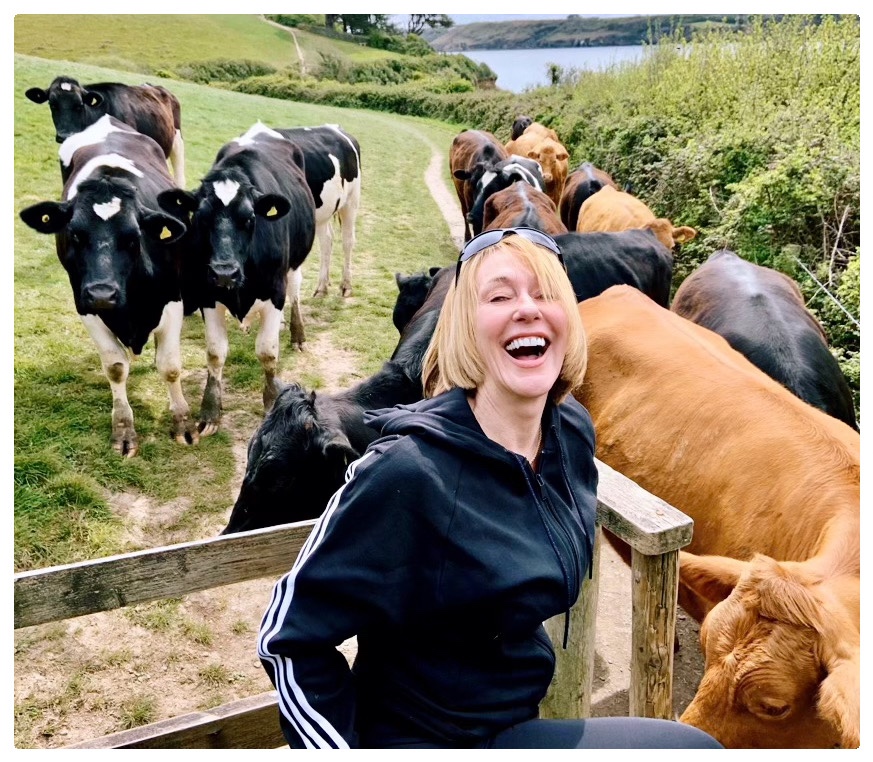
Just call me The Cow Whisperer

Firstly, this month, I’d like to say a big thank you to everyone who reads and shares my blog.  For the last two months, I’ve found myself in the UK’s top 5% of “viewed blogs”, so a great achievement, especially as I’m continuing to raise awareness of autoimmune diseases.

Since last month’s blog, I feel like some normality is returning.  I’ve received my 2nd jab, complete with the complementary headache and aching arm.  I’ve been to the dentist, spent time with our grandchildren, watched Jamie play 2 games of cricket, spent time with friends, had my hair cut, been to the pub, had a rheumatology appointment, and watched all episodes of Line of Duty with the other 12 million Brits.  I won’t ruin it if you haven’t watched it, but I was a tad disappointed with the big reveal of “H”, and, whilst I’m moaning, what is going on with this arctic weather?  I love the British people, though; we’re all outside in the freezing cold or pouring rain, drinking beer, eating cold food and thoroughly enjoying ourselves.  In fact, on the morning the pubs opened their gardens, it was snowing!  Anyway, we might have to get used to it as it seems pretty clear to me it will be bloody difficult to go to the Med 😊. 

This month, I’ve decided to go on about a subject that has helped me enormously in my career and personal life: emotional intelligence.  Personally, I often think that having a high EQ is just as important as a high IQ, which, in my case, is just as well. 

As my career involved selling technology solutions into the Financial services sector, the type of organisations I worked for often used psychometric analysis as a way of finding their required profile.  I’ve done many tests over the years, and whilst they’ve shown up some of my weirdest and most wonderful traits, I’ve generally produced results showing that I’m the lucky owner of a high EQ.

So, what is emotional intelligence?  Simply put, Emotional Intelligence is the ability to understand, use, and manage your own emotions in positive ways to communicate effectively, empathise with others, overcome challenges and defuse conflict. 

According to Daniel Goleman, an American psychologist who helped to popularise emotional intelligence, there are five key elements to it.  Jamie and I also use these five key elements as a way of identifying really good sales and sales management candidates in our executive search business. I’ve also written several white papers on this subject, which I’m happy to share. The five elements are:-

  • Self-awareness.
  • Self-regulation.
  • Motivation.
  • Empathy.
  • Social skills.

But what do they mean?

Self-awareness is the ability to recognise your emotions and understand the potential impact of your behaviour on others.   Self-regulation is not only identifying emotions but managing them as well. It’s like a social insurance policy that can prevent you from getting yourself into difficult situations rather than necessitating damage control after you explode and attempt to pick up the pieces!  I’m not saying I’ve never exploded, but I am aware I’m exploding (if you get my meaning 😊)

Motivation is easier to spot. Motivated people thrive when pushing themselves to do something they didn’t think they could do, like running a marathon. Think of entrepreneurs launching a business. A founder will dedicate all of their free time to pursuing a dream that may never materialise, yet they are propelled in their endeavour by a sense of passion and belief in what they are doing.  I’ve had the pleasure to work with several serial entrepreneurs, and they’re such inspirational people.

In my opinion, the 4th trait, Empathy, is the most important. It is about having the ability to identify and understand how another person is feeling and imagine yourself in that person’s situation. Empathetic people make an effort to make someone feel better. They are open to viewpoints beyond their own and avoid making judgments. 

Last but not least is Social Skills, probably my weakest trait in the EQ assessment criteria.  Sometimes, I don’t feel like being sociable, enjoy quiet time, and I’m OK with my company, too.  However, it’s always been an important part of my job.  People with great social skills make others feel valued and understand the importance of sincere connections in business and personal interactions.  I’ve had some great nights out with clients, and hopefully, they still remember me 😊. 

There are many different opinions about whether EQ can be learned or whether it’s a natural part of your personality.  The jury is out for me, but if you want more info, don’t hesitate to drop me a note, as I’ve spent much time studying EQ behaviour.

Finally, this month, and in my quest to raise awareness of autoimmune disease, I want to talk about Raynaud’s disease.  When you suffer from Raynaud’s, you get used to looking like you are part Zombie. It affects your blood circulation. When you’re cold, anxious, or stressed, your fingers and toes change colour and look “dead”.  My nose is affected, too.  Without getting all medical, there are two types of Raynaud’s; one’s an autoimmune disease, and the other isn’t.  Mine is secondary Raynaud’s, the autoimmune version.  It’s certainly become more of a disability with touchscreen technology, and being outside the pub drinking cold beer doesn’t help!

Until next time, here’s to 17th May, when more “normal” stuff happens.

Lots of love xxx

Glass Half Empty?

Warrior III

This Warrior III pose is about balance and stability. I’m working my standing leg quite hard as I’m balancing all my weight on it.  Specifically, the pose also accesses all the muscles along my spine, holding the upper body long and straight and digging into my hamstrings in the extended leg.  It’s not perfect, but I’m getting there….

Uh-oh, I’m going to be a bit controversial this month!  I love people with opinions, even if they differ from mine; respectful debate is great.  What really bugs me is people who “sit on the fence”!  So here we go; I’m not sitting on the fence with this one 😊.

When I set off on my journey to share my story of living with an autoimmune disease, I set up an Instagram account separate from my own.  My plan was to post my blogs and reveal lots of information about my life with Ankylosing Spondylitis and the coping mechanisms I’ve learned over the years.  This new account was called “living_with_autoimmune”, and loads of people with autoimmune diseases connected to me and me to them.  However, after a few months, I hated it; it was the most depressing account ever!  Every day, I would trawl through everyone’s woes and self-pity, and after a while, I stopped even going to the account.  I would post my monthly blog and quickly revert back to my own cheerful account with all the lovely people I follow – family, photographers, foodies, health and fitness tips, yoga and fashion, all of which make me smile.

I don’t like self-pity, and the term generally applied to people with this trait is “Victim Mentality”. I think I’m sufficiently qualified to hold this opinion as I’ve lived with pain most of my adult life.  Some mornings, my AS is so bad I struggle to walk.  During one really bad flare, I had to take the most terrible concoction of drugs known to mankind; I was on a different planet from everyone else that week.  Only my immediate family knew the extent of my pain, and this led to my gripe with the “victim mentality”?

First of all, what is it?  “Victim Mentality” is someone who sees themselves as a victim to accrue sympathy and empathy. These people have a perpetual need to have their suffering acknowledged.  Other people or circumstances are always to blame.  Any effort to help them will fail, so there’s no point trying.  When bad things happen, they rarely take responsibility for them and blame the world?  It’s an acquired personality trait in which a person tends to recognise or consider themselves as a victim of the negative actions of others.

It’s not a formal medical term. In fact, most health professionals avoid it due to the stigma surrounding it, but it’s real, and it’s all over my autoimmune Instagram account.  In my opinion, if people don’t put any effort into helping themselves, living with an autoimmune disease will be a million times worse. 

There’s loads of research to suggest Victim Mentality is a problem in the workplace, too. It’s challenging for a manager, as often, their team member will react negatively to any attempts to change this behaviour or mindset.  They usually get defensive or act in a passive-aggressive way toward anyone who is just trying to help.   There’s lots of advice about how to deal with this kind of person, but I’m not great with the sympathy card; I tend to ignore this personality trait and move on.  So, now you get the picture as to why I’m closing down my autoimmune Instagram account.

Moving on, I thought I would continue on my controversial path and get everything on the table in one blog so I can return to my lovely self next month 😊.

Who else gets irritated by some “celebrities” and their predictable politics, the ones who sit within gated communities preaching to the rest of the working world about topics that will never truly affect them.  Social issues are like fashion trends to many people, worn in front of a camera lens to garner heaps of attention and praise. As to the social issues they adopt, sometimes they prove surprisingly ill-informed. But who cares about that when the real goal is publicity?

One of the social issues that doesn’t get enough attention is homelessness. I mentioned in my last blog I’d talk briefly about my time working for Crisis (the homeless charity).  Look, I’m no saint, but this experience did provide me with a real insight into the challenges faced by many people who find themselves living on the streets.  I haven’t done as much charity work as I would like. Hopefully, retirement will provide more opportunities, but the 3 years I worked for Crisis were eye-opening. 

I had no useful skills; for example, I couldn’t cut hair, treat someone’s feet, or assess them medically, so I was mostly in the kitchen serving food or going out on the minibus with hot soup to feed those who didn’t want to come to the shelter, or frisking guests at the door to make sure no drugs, alcohol or weapons were brought it.  I got quite good at helping them hide their treasure ready for when they left.

Crisis has released many stats over the years on why people find themselves homeless, and a high number suffer from ill mental health or drug/alcohol dependency.  However, many of the people I met were driven to dependency through the rubbish things that had happened in their lives.   None of the guests I had the pleasure to meet in the Shelter had a “victim mentality”; they took responsibility for their situation, and I never once heard anyone cast blame for their predicament; they were incredibly grateful for the help and advice they received.

The point of my story is that we all walk a very fine line in life; we all fall off that line now and again but manage to pick ourselves up and carry on.  Sometimes, though, the things that happen to us are too big to cope with, and when we fall off, try as we might, we can’t get back up.  You never know what’s going on in someone’s life, which is why it’s so important to be kind. 

Finally (thank goodness, I hear you say), our freedom feels much closer than it did at Christmas.  We’ve seen our families (outside in the cold), and Jamie and I are waiting patiently for 12th April so we can go to the pub for a pint.  I look like Alice Cooper with my mop of multi-coloured hair, so 20th April (haircut day) cannot come soon enough.

Take care, folks, thank you for reading and sharing my story xxx

Faking It

Supta Virasana

Here we are in our 3rd national lockdown, and I think it may be a while before it ends.  During the 1st lockdown (a very long time ago), I started online classes to teach myself to dance.  I’m still learning, and pleased to report that I’m looking forward to showing off my new skills.  I’ve recently progressed to rock and roll while blasting Elvis Presley’s Jailhouse Rock!  As well as working, I’m still doing my daily workouts, walking around 15,000 steps a day, and continuing to practice yoga.  I have to say that out of everything I do to help my Ankylosing Spondylitis, Yoga is by far the most enjoyable.

I write my blog to raise awareness of autoimmune diseases, and it’s a well-known fact that exercise can help with the challenges we encounter in everyday life.  If you’ve been struggling to get your exercise regime kick-started, I thought I’d share a really good piece of advice I picked up during my sales training that will help if you can’t get motivated.  It only takes 30 days of perseverance to create a new habit and, more importantly, 66 days for a new behaviour to become automatic.  There’s lots of research on this subject, but a good study published in 2009 by the European Journal of Social Psychology provides information to support this.

So, when I decided to practice Yoga, I started with a 30-day programme to learn the basics.  Wow, I’ve progressed so quickly and surprised myself at how much I’ve come to enjoy this daily ritual.  I do some relatively advanced sessions now, usually for about 40 minutes a day, and whilst I can’t do all the yoga poses yet, I see improvement every time I take to the mat.  I appreciate I’ve good reason for trying everything I can to keep well, but there are many benefits associated with Yoga. If you take anything from my blogs, I ask you to look at an online beginner’s yoga video on YouTube; it will change your life in only 30 days! 

Moving on, the main subject of this blog is “Faking It”.  You’re probably thinking, “OMG, what’s she going to say now?”!

During my early career, I often felt like a “fake”, and I’ve since learned it’s a common feeling.  Many skilled, accomplished executives fear that they’re not good enough—impostors who are bound to be found out. In many walks of life, some high achievers believe they are complete fakes. To the outside observer, they appear to be remarkably accomplished; often, they’re extremely successful leaders. Despite their achievements, however, these people sense that they are frauds. This neurotic imposture, as psychologists call it, is not a false humility. It is the flip side of giftedness and causes many talented, hardworking, and capable leaders—men and women who have achieved great things—to believe that they don’t deserve their success.

In my situation, not having a University degree probably contributed to feeling like a fake as I worked with some incredibly clever, talented people.  I often thought I only scraped by because of luck or by fooling others into believing in me.  I felt deeply insecure about my work and accomplishments, constantly anxious that I’d be exposed as a fraud.

This did get better, by the way 😊.  I started to keep a spreadsheet of the deals I’d closed to remind myself I was doing OK.   In the later stages of my career, just before Jamie and I founded our successful business, my confidence improved.  I remember driving across London in a chauffeur-driven car with the CEO of a very large, well-known American technology organisation.  They were buying the company I worked for and, as Head of Sales, I was taking him out to meet some of our clients (complete with his bodyguard!).  It only took one compliment from him on my relationship with one of our largest clients for me to think I wasn’t too bad after all!  So, if you’re a senior executive reading my blog, always take time to praise people for good work, as I can assure you it really makes a difference.

This “fake” feeling isn’t just the case in business as we all play roles on the stage of life, presenting a public image that sometimes differs from the private person we actually are.   The studies of the famous Canadian sociologist Erving Groffman are interesting as he provides a detailed account of this in his book “The Presentation of Self in Everyday Life.”   

Groffman argues that as humans come in contact with each other, they adopt and play roles to fulfill their goals, establishing the relationship between the actor and the audience. Using this metaphor, he explains that we strive to convince those around us of what we are trying to portray. Just like a good actor in a movie, the degree to which people believe we all play a role in our ultimate success. He explains that the “front stage” is where we perform or conform to what people expect, and the “backstage” is where we forget the script and behave without fearing disapproval.  An interesting concept and a good read for lockdown boredom 😊..

Finally, I want to finish on the current situation we find ourselves in here in the UK.  Like many of you, Jamie and I have such a full life, and I’m really missing normality; my attitude to lockdown is better on some days than on others!  I do appreciate we’re not “stuck” at home. We’re “safe” at home and, more importantly, helping to keep others safe.  I think it’s fair to say we must try to make the most of this time rather than just play a waiting game until things get easier and better.  Life will always be complicated.  We must learn to be happy right now. Otherwise, we’ll run out of time.  Easier said than done, but perhaps worth a try.

Until next time, keep safe and try Yoga xxxx.

When fairytales go wrong!

After a three-month break, I’m back writing my blog to help raise awareness of autoimmune disease, and I’ve an update on my Ankylosing Spondylitis, which I’ll talk about shortly.  I also want to thank you for all the wonderful messages; you’ve inspired me to continue to write.

Since July, I’ve taken up yoga, which I’ve meant to do for ages, and I’m loving it.  I can’t do classes due to the lockdown, but my daughter sent me a link to an online class, and it’s amazing.  I didn’t think online would work for me, but I’ve really surprised myself, and I’m hoping it will help with my AS, too. In addition to my normal working week, I’ve started to write my book and still do a daily workout, so I’m reducing my blog to one a month to ensure I keep up with everything and don’t bore the pants off everyone.

So, here we go; let’s start with a rant about this bonkers world we find ourselves in.  Not only are we intent on eliminating history, but my favourite Christmas song, Fairytale of New York, will no longer be played in its original form.  The wonderful lyrics have been the focus of much debate in recent years, as they include so-called “derogatory” terms for gender and sexuality.

For goodness sake, it’s a dark song about two poor, probably doomed Irish immigrants in New York; they are drunkenly arguing, and the lyrics reflect that. It’s a masterpiece!  It’s not about snow or sleigh rides or mistletoe or miracles, but lost youth and ruined dreams. A song in which Christmas is the problem.  It’s also a great reminder of the lovely Kirsty McColl, who sadly died in December 2000 in a tragic accident in Mexico.  I always find myself singing along loudly, especially to the bit below, where I inevitability jumble up all the words in a very loud, tuneless rendition 😊….

You were handsome
You were pretty
Queen of New York City
When the band finished playing
They howled out for more
Sinatra was swinging
All the drunks they were singing
We kissed on a corner
Then danced through the night

The boys of the NYPD choir
Were singing Galway Bay
And the bells were ringing out
For Christmas day

You’re a bum
You’re a punk
You’re an old slut on junk
Lying there, almost dead, on a drip in that bed
You scumbag, you maggot
You cheap lousy faggot
Happy Christmas, your arse
I pray to God it’s our last

Leading into the subject of Christmas, we’re so hoping to have our family together.  There are 11 of us now, and it will be our new grandson’s first Christmas, where he will meet his cousins.  I’m certainly hopeful life will start to return to some sort of normality in 2021, given the good news about the progress of the vaccinations.  We’ve already booked our trip to the South of France in July, and I can’t wait to board that EasyJet flight 😊…  I never thought I would miss an airline so much!

Another subject making the headlines this week is one I feel very strongly about – bullying.  Bullying in the workplace has come to our attention as the Home Secretary, Priti Patel, had to issue an apology as a recent report found that her behaviour towards staff did break the ministerial code.  I dislike politics (especially at the moment), so I don’t want to make this a political blog, but I do think bullying needs to be addressed as it comes in lots of different forms. 

Even now, in 2020, it still remains taboo for women to speak out about woman-on-woman bullying at work. The Workplace Bullying Institute found women bully other women up to 80% of the time, which I think is totally unacceptable.   Women have fought and continue to fight for a seat at the table and to be seen as equal to their male counterparts; we should be supporting each other big time, not bringing our female colleagues down. 

During my career, I’ve mostly worked in male-dominated environments, and I’ve certainly had some spats 😊.  Most of the women I’ve had the pleasure of working with have been kind, inspirational and, like me, often lacking in confidence.  However, on the flip side, I’ve also felt more intimated by other women. For me, it often came as a snide remark after a success.  Perhaps I’d won a deal or been asked to take on more responsibility, and, of course, it always had the desired effect – me losing my confidence!  Personally, I think it’s so important that we make a conscious effort to be kind and thoughtful, but I do appreciate it’s not always easy.

Finally, this week, I wanted to share an update on my AS.  Working with my Rheumatologist, we’re investigating some new symptoms that have materialised over the last few months.  I’ve developed a tremor in both my hands along with some really odd muscle spasms in my fingers and nerve pains in my arms (and no, I haven’t started drinking copious amounts of spirits 😊).  I had an MRI scan of the Cervical spine, and whilst the Ankylosing Spondylitis is continuing to cause damage, there was no impingement to explain the nerve pain. There are many simple explanations for these new visitors, and I’m resisting the temptation to visit my good friend Dr Google for a self-diagnosis.  I suspect it may take a while to get the answers as we go through a process of elimination, and I just need to be patient and go with the flow.  I’ll keep everyone updated throughout my journey.

My finale this week is a suggested change for the lyrics for Fairytale of New York.  Not only is it funny, but it also removes offence and maintains an 80s vibe!

You scumbag, you maggot, you’ve taped over Taggert!

Bye for now, and thank you for reading and sharing my story. xx.

Goodbye for Now

We’ve had the most incredible Summer in Cornwall, and now that the meteorological Autumn has arrived, we will be very busy.  It is noticeably quieter in Cornwall this week, so we’re off down to Poldhu Beach tonight for a sing-along with a very popular Cornish band who describe themselves as “proper Cornish singers”.  We’ve pre-ordered pizza and beer from the beach café, so it should be a good evening. Jamie has three games of cricket left for St Agnes, and I have to say it’s been a real hoot! We’ve met so many local people through the cricket, and they all seem to love the same things as we do – drinking and having a laugh!

As you will have guessed from the title of this week’s blog, Part 1 of my story is ending.  I’ve loved writing it, and it’s far exceeded my expectations regarding the number of readers, making the top 10% of visitors to a WordPress blog, which is amazing. 

I started to write my story as I wanted to raise awareness of autoimmune disease, and it’s been extremely rewarding reading the messages from people who have enjoyed my tales.  I’ve talked openly and honestly about my diagnosis and the effect it had on my life.  I’ve covered the challenges I had taking the medication, my allergic reaction to a new biological drug and my visits to A&E.  I’ve also shared some of the tips that help me manage all the nasty visitors that accompany autoimmune conditions.

My career has also been very important, and I’ve enjoyed every minute.  Through my blog, I’ve shared some of the lessons I’ve learned.  The most comments received in any week were when I talked about the difference between positive and negative motivation, and the second was when I criticised full-time home working 😊. Throughout lockdown, writing my blog was a real saviour for me as our work had dried up, and we could not see family and friends.

One of the reasons I’m taking a break is that September is an incredibly busy month for us.  We’ve seen an increase in our work, our Hampshire project is underway, and our beautiful cottage in St Agnes is having a makeover.   An added challenge is that my elderly parents are both in poor health, so we’re visiting Cumbria in the next few weeks, too.  It’s an 800-mile round trip, which is exhausting.  As an only child, I wanted them to move closer, but they chose not to, and I did understand their reasons for staying put.  That said, it’s certainly made life more challenging for all of us, especially now.  I’m also planning to write a book, and whilst I’ll restart my blog again in October, I may move to bi-weekly or monthly.

Finally, and before I sign off, I wanted to say a big thank you to all my readers for your lovely words throughout these 10 months and leave you with one final thought.

Life is short.  There are so many surprises, obstacles, ups and downs, but we are all captains of our own destinies, and we need to abandon the fear to live life to the full. I don’t know what our next chapter is going to look like, but I know for sure it won’t be boring 😊. 

Goodbye for now, see you soon and at the end of each day let there be no excuses, no explanations and no regrets xxx

A Beginners Guide to Arguing

We’ve finally exchanged on our Hampshire property with completion on 7th September, so it will be a busy time.  We can’t move in right away as the house was a complete rebuild of an older property, so there are no curtains or carpets, and the delivery on these is around 3 weeks.  It’s taken longer than we expected, and given that my packing for Cornwall was completely inappropriate for anything other than hot weather, I’m pleased we’re nearly there.   For reference, my bag included 3 pairs of sunglasses, sun cream, a sunhat, 2 handbags, 2 dresses, a spray tan for legs and 2 pairs of sandals; who knows where I thought I was heading!

I now have all my investigative appointments booked for blood, MRI scans, and US scans at the Royal Surrey following my Rheumatology consultation.  They have come through quickly and are also on the calendar for September, so that’s good.  Since I started writing my blog at the end of 2019 to raise awareness for autoimmune disease, I’ve received many messages, a large proportion of which relate to the time it takes to diagnose these conditions.  The most common autoimmune diseases include Multiple Sclerosis, Type 1 Diabetes, Rheumatoid Arthritis, Lupus and Vasculitis, and all are debilitating in their own way.  My AS comes under a term called “Spondyloarthritis”, an umbrella term for inflammatory diseases that can affect the  back, pelvis, neck, and some larger joints, as well as internal organs and the eyes, and the average diagnosis takes 10 years.

I think the medical profession is making good progress in securing earlier diagnoses. Hopefully, it will mean that people like myself won’t suffer for years in pain, thinking they are going mad!

This week, I wanted to talk about arguing.  I hate it and don’t like confrontation as it upsets me.  Some people love arguing and are very good at it.  Fortunately, Jamie and I both dislike it, which is great but I’ve needed to stand up for myself during my career, so I thought I would provide my tips to help those of you who, like me, find it difficult.

In the heat of the moment and desperate to get our point across, we often don’t listen to other opinions, and I’m certainly guilty of that.  By listening, you’re gaining knowledge and insight, as well as refining and improving your own position. Often, disagreements escalate because of a misunderstanding, but what can help is to repeat what you think the other person just said, which can help to avoid misunderstandings.  I used to practice this in work situations, and it did help.

In today’s world, arguments often happen on social media.  If you’re faced with a Twitter troll or a Facebook friend who lures you into a heated debate, there are several techniques you can use to push your point of view.

Using ‘calm’ language to make a point is more effective than swearing or using aggressive terms.  Personally, I think people who get aggressive are suffering from a deficiency of facts during an argument. I think it’s fair to say you can’t win an argument with insults. The moment you do that, you’ve already lost. You can only win an argument by being factual, and if you have insufficient information, you can always keep quiet and end the argument; there’s no shame in that.

In a face-to-face argument, people often use both verbal and facial expressions.  Verbal expressions can include a cold or constant stare, a false or exaggerated smile, or a raised eyebrow, all of which make me more nervous.  Another technique I was taught, especially when upset, was to try and use humour, which can take the heat out of a situation.

A great example was the American actress Ilka Chase, who wrote several novels. One day, another actress told her: “I enjoyed reading your book. Who wrote it for you?” To which Chase replied: “Darling, I’m so glad that you liked it. Who read it to you?”  I’m not sure my wit is up to that standard, though!

I know it’s difficult to remember techniques when angry and fired up. However, I do try hard to remind myself to stay calm, use facts as evidence to back up my position and ask questions.  I know they say that you shouldn’t preach what you don’t practice, but I’ll say it anyway: my final tip is always be prepared to concede a good point 😊

Finally, I want to finish with a little ode I saw in the pub the other night, which made me smile and also might help all of us to feel less guilty about our alcohol consumption.

The Horse and Mare live 30 years.

And do not know of wines and beers.

The Goat and Sheep at 20 die

And never taste the scotch or rye.

The Cow drinks water by ton.

At 15, their life is almost done.

The Dog at 14 normally gives in.

Without the aid of rum or gin

The modest, sober bone-dry Hen

Lays eggs for years and dies at 10

But sinful, ginfull rum soaked men

Survive till 3 score years and 10

And some of us, the mighty few

Say pickled till we are 92!

92 it is then, until next time, stay strong; 2020 is almost over 😊

xxxx

Don’t doubt your “Gut Instinct”, it’s your Superpower

We still haven’t exchanged on our new house in Hampshire; it’s so slow! As the property is a complete rebuild of an old house, there’s one outstanding point on the planning document to be resolved, which we hope will be early next week.

We’re also having some work done on Beech Cottage here in Cornwall. When we bought our little gem last year, we had a detailed survey recommending a new roof.  As we had a leak during one of the storms last Winter, we decided to get it done sooner rather than later so that project will kick off in the next week, followed by a full repaint of the outside so our little cottage will look lovely after its makeover.  We’re also stocking up on firewood and logs for the Autumn and had the chimney swept, so we’ll be fully prepared.

We’ve settled well into the village, and we love our nights sitting outside the pub chatting to everyone.  Jamie is playing cricket for the local team now, and this Sunday, players and supporters are being transported in the St Agnes minibuses so we can have a drink or two and stop at a few pubs on the way home!

As my readers know, I write my blog to raise autoimmune disease awareness. This week, I wanted to talk about “gut instinct” as it played a big part in my diagnosis of Ankylosing Spondylitis. Personally, when it comes to health, I trust mine implicitly.

Gut instinct is a deep feeling that you’re right; there’s no need to think it over or get another opinion—you just know. I knew there was something wrong with my body before my diagnosis.  I also know that other things are brewing that haven’t yet been diagnosed; it’s just a “feeling”.

Interestingly, Richard Branson once said, “I rely far more on gut instinct than researching huge amounts of statistics.”  However, “gut instinct” does tend to get a bad reputation as something flaky and based on no evidence. Would a careful analysis of all the options be more likely to give us the right answer? Not necessarily. Our gut instincts are not always as random as they seem. They can be based on a rapid appraisal of the situation. We might not always realise it, but the brain constantly compares our current situation with our memories of previous situations. So, when a decision feels intuitive, it might, in fact, be based on years of experience.

During my career, I have often trusted my “gut instinct” ahead of other factors, but relying on it totally goes against all the sales training and coaching I’ve ever had.  It’s a discussion I still have today when we’re working with smaller organisations just starting out and building their sales teams for the first time.  

Many small companies make their decisions without putting enough thought into it, especially around their sales and marketing strategies.  The necessary research to determine whether or not a new strategy will be successful is often completely discarded for a much quicker, less structured approach using “gut instinct”.  This means the new salespeople they hire often fail as they don’t have the right strategies to support them.

So how can you combine your “gut instinct” but still do the important analysis in as short a time as possible?

Personally, I think technology plays a big part.  We all now have access to powerful decision-support tools that can help us quickly sort through vast amounts of information.  These tools don’t just apply to making business decisions either.  They can use it to buy a new house, car, a holiday, and many other aspects of our daily life.  When combined with our own experience and insight, these analytical tools can offer both companies and individuals consistently sound and rational choices even in the face of complexity—a capability that our “gut instinct” will never match.

So yes, in summary, I think gut feeling can be really useful. We should trust it implicitly in highly uncertain circumstances where further data gathering and analysis won’t sway you one way or another. Trusting your gut also allows you the freedom to move forward quickly, too, instead of procrastinating.  However, if data and analysis are available and applicable, use those tools too.  Our overall objective is to assess the probability of any outcome with reasonable confidence so we can make better decisions and life choices.

Finally, this week I want to talk about tourism as Cornwall is really busy at the moment.  Here in St Agnes and all over Cornwall, the local people say it’s a lot busier than normal and wonderful for all the businesses who rely on these busy months during the Summer.  In fact, a third of Cornish households depend on income from tourism, so it’s extremely important all round.

However, I’ve also seen many reports on social media that fed-up locals are unhappy about the influx of visitors. I think it has something to do with the fact that it had been quiet for a long time beforehand. In contrast, usually, in March, April, May and June, tourism would have gradually ramped up, but because of the lockdown, Cornwall went from zero to thousands of people very quickly!

Being brought up in the Lake District, I’m used to living my Summers with an influx of tourists and have always seen the positive side, but I have one real gripe!  Jamie and I see so much litter when out on our walks – discarded picnic rubbish, cans, coffee cups, tissues, face masks, it’s terrible.  The coastal path and the beaches are left in an awful state.

I saw one sign in a beach coffee bar offering a free coffee if you collected a bucket of rubbish off the beach, and buckets were supplied! 

Every little bit hurts; until next time, stay safe xx.